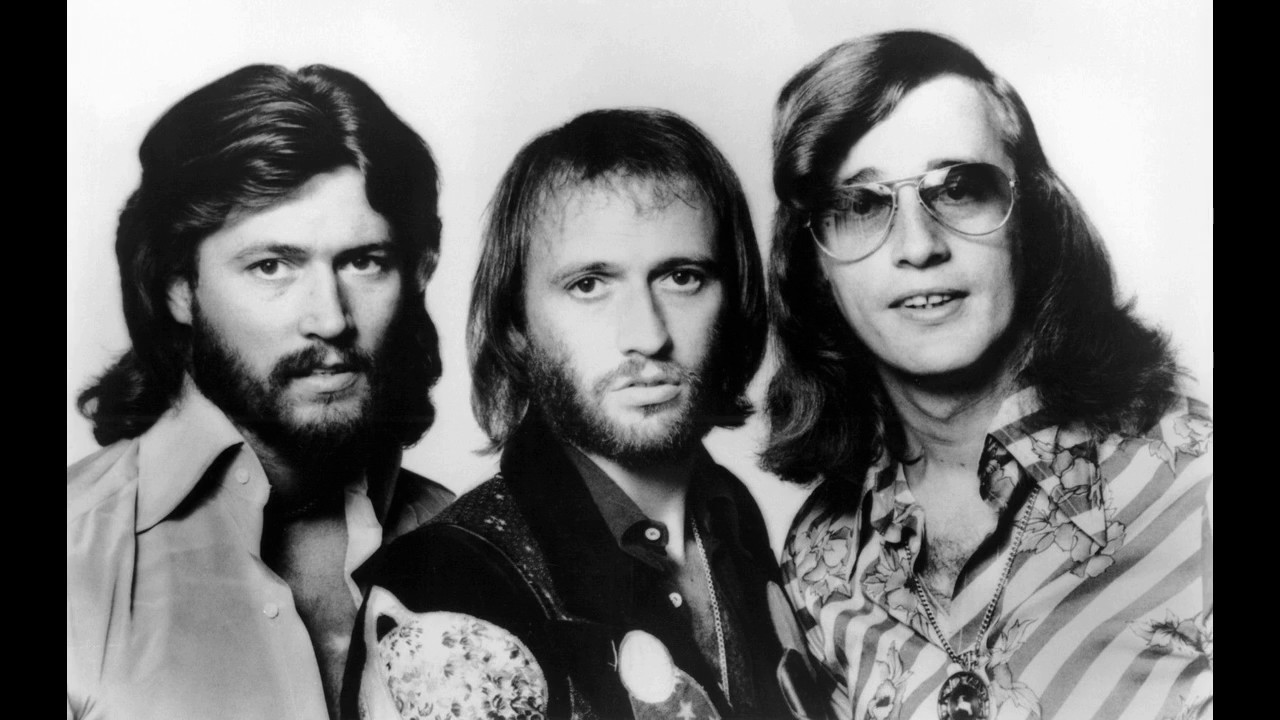
Long before Melba Moore turned it into a dance-floor statement, Bee Gees left “You Stepped Into My Life” tucked inside a 1976 album era that was already changing the way pop could move.
Released on Children of the World in 1976 and later issued as the B-side to “Love So Right”, “You Stepped Into My Life” occupies a fascinating place in the Bee Gees story. It was not presented as a major headline song at first. It lived just off to the side, attached to a single that showed the group’s gift for romantic elegance, while this other track carried a more rhythmic, more body-conscious energy. Yet that contrast is exactly what makes it so revealing. In one small release pairing, you can hear the breadth of what the Gibb brothers were doing in the mid-1970s: tenderness on one side, pulse and motion on the other.
That matters because Children of the World arrived at a moment when the group were not simply enjoying a comeback but reshaping themselves. After the breakthrough of Main Course, the Bee Gees were moving deeper into a sound touched by R&B, funk, and the sleek architecture of dance music, even before Saturday Night Fever would permanently stamp them into public memory. On Children of the World, they sounded tighter, more purposeful, less interested in ornament than in momentum. Songs did not have to shout their intentions. Sometimes the groove was enough. “You Stepped Into My Life” is one of those performances where the confidence is almost casual, which can make its craft easy to miss.
What the song offers in the original Bee Gees version is not disco in its most explosive form but something more controlled and, in some ways, more intriguing. The rhythm has lift, but it also has discipline. The arrangement moves with a clean, polished snap rather than excess. There is a sense of the band understanding exactly how much pressure to apply and exactly when to pull back. That balance gives the track its lasting appeal. It belongs to the same era that produced obvious dance signals, but it does not need to announce itself as a club record to carry that charge. It is the sound of songwriters who already know how melody and groove can share the same room without crowding each other.
Placed behind “Love So Right”, the song becomes even more interesting. A B-side often tells a quieter truth about an artist than the promoted single does. Singles are chosen to focus attention, but flip sides sometimes reveal the range, appetite, and instinct of a recording act at a particular moment. Here, the Bee Gees gave listeners a hidden second angle on their 1976 identity. If “Love So Right” showed the emotional grace that had always been central to their songwriting, “You Stepped Into My Life” suggested how fluently they could fold that emotional intelligence into a groove-driven frame. It feels less like an afterthought than a clue.
That clue became clearer when Melba Moore stepped in. Her later cover did not rescue a weak song. It revealed how much untapped dance potential had been sitting there from the beginning. Moore, whose vocal presence could combine polish, strength, and theatrical precision, approached the composition from a different angle. Where the Bee Gees version carries the smooth confidence of a group feeling out the edges of a new style, her recording leans into release. The pulse becomes more overt, the room gets bigger, and the song opens itself to the full language of late-1970s disco and crossover soul.
That transformation is part of what makes the song so rewarding to revisit. In the Bee Gees version, you hear superb songwriting and a band whose instincts are already pointing toward the dance floor, even if the track remains measured and cool. In Melba Moore’s hands, the same writing proves how adaptable it is. The melody holds. The hook holds. The emotional invitation at the center of the lyric holds. But the setting changes the emotional weather. What once sounded like a stylish album-era groove and a smart B-side suddenly feels built for lights, movement, and physical response. The song does not lose its shape; it discovers another life.
That is one of the finest things about the Bee Gees as writers in this period. They were not only making records that suited their own voices. They were building songs strong enough to travel. A tune like “You Stepped Into My Life” could begin as a polished piece inside the world of Children of the World, then reappear through another artist and sound newly inevitable. When that happens, it tells you something important. The writing was not trapped inside one arrangement or one persona. It had structural grace, rhythmic intelligence, and enough emotional openness to survive reinterpretation.
There is also something quietly moving about the journey from album track and B-side to a later disco success. Popular music history often remembers only the first arrival or the biggest chart moment, but songs do not always reveal themselves all at once. Some wait for a second voice, a different production style, or a cultural moment better suited to what they have been carrying all along. “You Stepped Into My Life” is a beautiful example of that delayed recognition. It began as part of a rich and transitional Bee Gees period, then gained fresh visibility when Melba Moore heard the dance current running through it and followed it all the way out.
So the song remains more than a footnote to either artist. It is a small but telling bridge between two kinds of pop memory: the album craft of the mid-1970s Bee Gees and the fuller disco bloom that a great interpreter could draw from the same material. Heard today, the original still has that gliding poise, that sense of movement held in check. And because Moore later pushed it further into the light, we can hear the earlier version with fresh ears. What once sat on the flip side now sounds like a moment waiting patiently for history to catch up.
