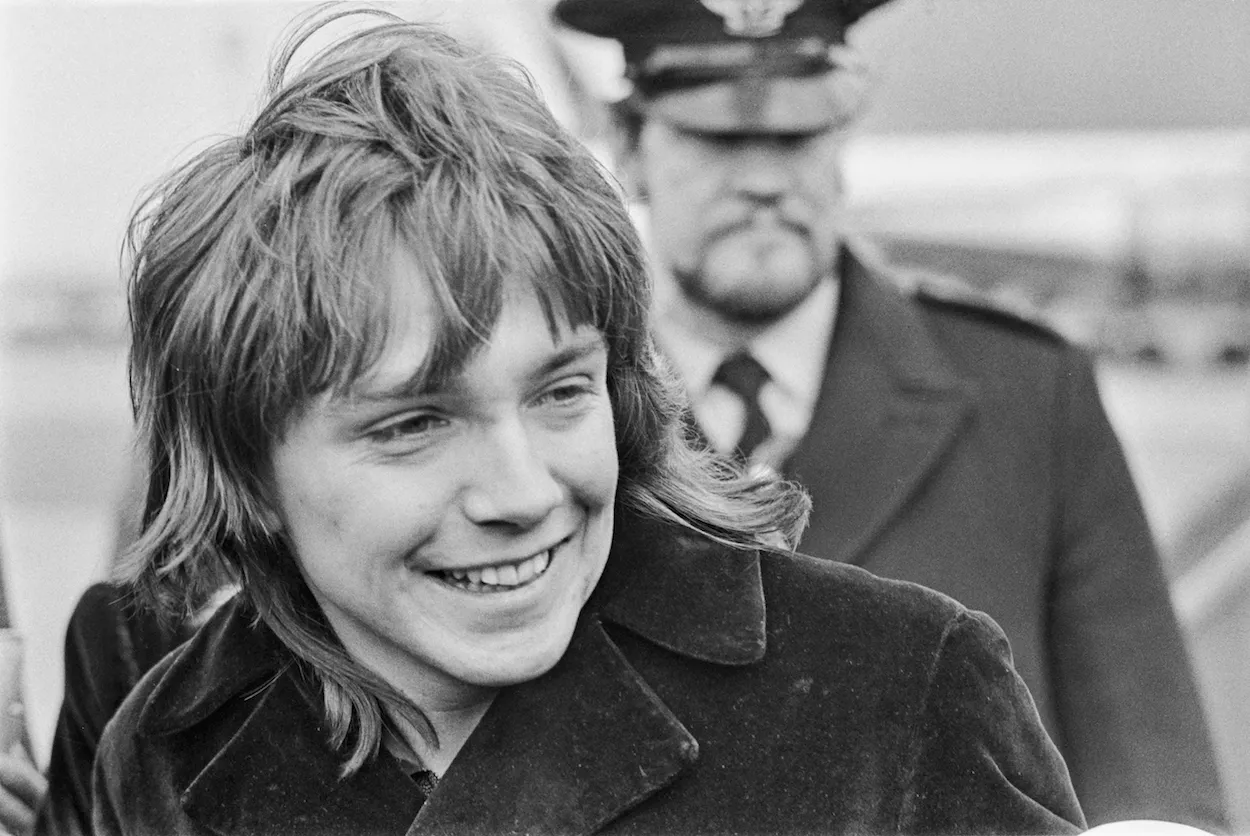
With How Can I Be Sure, David Cassidy turned youthful uncertainty into something hauntingly sincere, and in doing so revealed the tender, unmistakable voice that carried him to a 1972 UK No. 1.
In September 1972, David Cassidy saw How Can I Be Sure reach No. 1 on the UK Singles Chart, where it remained for two weeks. That fact alone explains part of the record’s place in pop history, but not all of it. By then Cassidy was already one of the most visible young stars in music, lifted by television fame, magazine covers, and a level of public devotion so intense that it sometimes overshadowed the quieter truth: he could really sing. How Can I Be Sure remains one of the finest examples of that truth, because it asked him for something more subtle than excitement. It asked for vulnerability, and he delivered it with remarkable poise.
The song itself had already lived an important first life. Written by Felix Cavaliere and Eddie Brigati, it was first recorded by The Young Rascals, whose 1967 version reached No. 4 on the Billboard Hot 100. Even then, it stood apart. This was not a straightforward love song, nor a simple declaration of devotion. It was built on hesitation, longing, and emotional caution. The title asks one of the oldest questions in popular music, but it asks it without bravado: how do you trust what you feel when the heart itself seems unsure? That uncertainty is the song’s real center, and it is exactly where Cassidy found his way in.
What makes David Cassidy’s version so memorable is not sheer power. It is tone, phrasing, and emotional balance. He does not sing the song as if he is trying to conquer it. He sings it as if he understands the danger in the question. There is softness in his voice, but also control. He eases into lines instead of forcing them, letting the melody rise naturally and allowing small hesitations to do the emotional work. That is the signature quality of this performance. He sounds exposed without losing polish, tender without drifting into sentimentality. The result is a reading that feels deeply human.
That mattered especially in 1972, when David Cassidy was still widely viewed through the lens of The Partridge Family and the teen-idol image that followed him everywhere. The frenzy was real, but so was the artistic challenge that came with it. To be adored on that scale can make it harder, not easier, for listeners to hear the singer beneath the phenomenon. How Can I Be Sure helped correct that. It slowed everything down just enough for people to hear the nuance in his voice: the light ache, the careful shaping of a phrase, the sense that he was not merely performing for effect but inhabiting the uncertainty of the lyric.
The arrangement helps him enormously. Rather than overwhelming the vocal, the production gives the song room to breathe. There is a graceful, floating quality to the record, a gentle pop sophistication that suits the emotional ambiguity at its core. The melody moves with a kind of elegant uncertainty, and Cassidy rides it beautifully. He never overstates the pain, never turns the song into melodrama. Instead, he lets doubt remain doubt. That restraint is one of the most impressive things about the recording. Many singers would have treated the song as a showcase. Cassidy treats it as a conversation with himself.
And that is why the record still lingers. The question in the title is not solved by the end of the song. It is simply felt more deeply. In Cassidy’s hands, that becomes the entire point. He makes the uncertainty sound believable. He does not pretend that love is easy, or that reassurance comes neatly wrapped by the final chorus. He gives the song a tremor of emotional truth, the feeling that even in the middle of fame, applause, and chart success, there are questions no public image can answer.
For British audiences, the timing could hardly have been stronger. The UK had embraced David Cassidy with extraordinary warmth, and How Can I Be Sure arrived when his popularity was at full strength. Yet songs do not remain cherished for decades on popularity alone. They last because something in the performance continues to speak after the noise of the era has faded. Here, what survives is the voice itself. Not the headlines, not the hysteria, not even the No. 1 ranking by itself, but the sound of a singer choosing tenderness over showmanship.
There is also a quiet irony that gives the record extra depth. One of the most idolized young men of the early 1970s scored a major hit with a song built on doubt rather than confidence. That contrast gives the performance its emotional glow. Cassidy could have leaned into glamour or certainty, but instead he let the vulnerability stay visible. In doing so, he made the song feel larger than its moment. He turned a well-written cover into a revealing performance.
Decades later, How Can I Be Sure still stands as one of the clearest reminders that David Cassidy was more than a phenomenon. He had a gift for making softness sound significant. He understood that some songs are not won through force, but through care. Heard now, away from the rush of 1972, the record feels even more affecting. The screams faded. The voice stayed. And in that voice, this beautiful question still trembles with the same uncertainty that first carried it all the way to the top of the British charts.
