
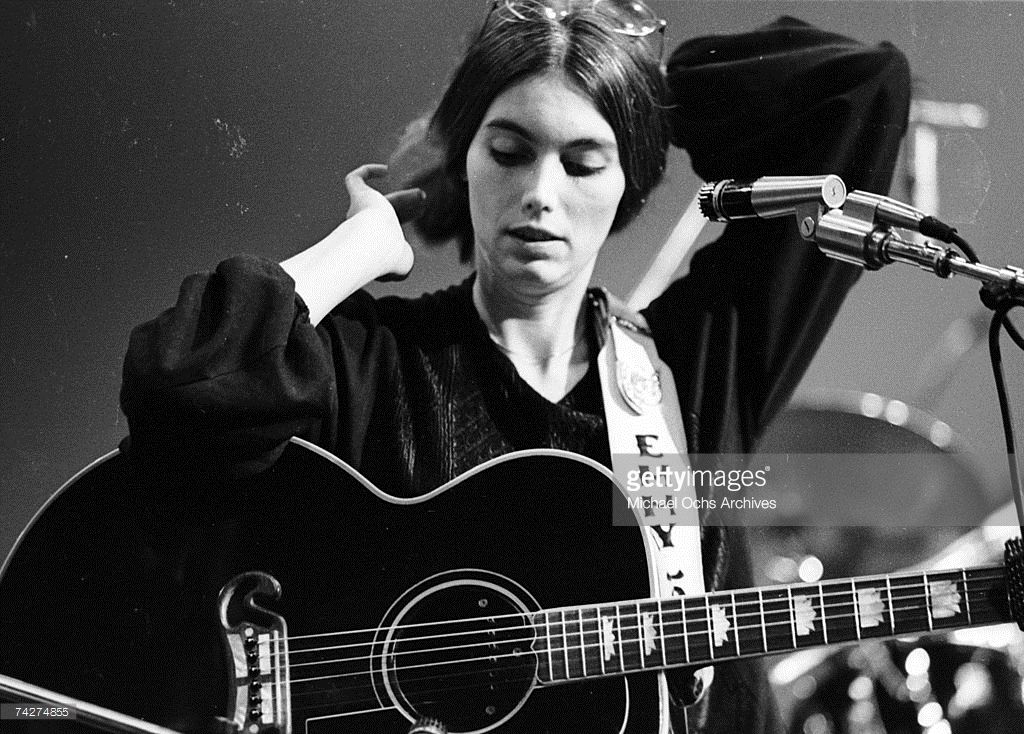
Why “Together Again” still feels so powerful has everything to do with how gently it holds love, hurt, and hope in the same breath.
There are performances that ask to be admired, and there are performances that simply stay with you. Emmylou Harris’ “Together Again” belongs to that quieter, more lasting kind. Nothing in it strains for drama. Nothing pleads. Nothing reaches for grandeur. And yet the song leaves behind an ache so complete, so finely held, that it can feel stronger than many ballads that try much harder to overwhelm the listener.
When Emmylou Harris recorded “Together Again” for Elite Hotel, released at the end of 1975, she was still early in the run that would make her one of the defining voices in modern country music. The song became her first No. 1 hit on Billboard’s country chart in 1976, and that fact matters not only because of its commercial success, but because it says something beautiful about the performance itself: listeners heard, very clearly, that this was not just a fine cover of a beloved song. It was a moment of arrival. Elite Hotel also became her first No. 1 country album, confirming how deeply that sound was connecting.
Part of the song’s lasting power comes from its history. “Together Again” was already a great song before Emmylou touched it, written and first made famous by Buck Owens. In his hands, it carried that unmistakable country blend of devotion and loneliness, simple on the surface and devastating underneath. What Emmylou did was not to overpower that history, but to enter it with extraordinary tact. She sang it as if she understood that love songs do not become timeless by saying more and more; they become timeless by finding the exact emotional distance at which the truth can be felt most deeply.
That is where the quiet power lies. Her voice does not sound broken. It sounds tender, steady, and almost luminous, which makes the longing hit even harder. There is no bitterness in it, no attempt to punish the absent beloved, no dramatic collapse into despair. Instead, the performance seems to live in that fragile place where love has suffered, waited, and somehow remained pure. Many singers can express pain. Fewer can make patience sound this moving.
The arrangement helps create that spell. Elite Hotel was produced by Brian Ahern, and the album’s musicians included players such as Ben Keith, Herb Pedersen, Bernie Leadon, and Linda Ronstadt on backing vocals. That world of sound is central to why “Together Again” feels the way it does. It is country, certainly, but it is country touched by air and space. Nothing crowds the singer. The instruments seem to stand back just enough to let the heartbreak breathe. What emerges is not merely sadness, but grace under sadness.
There is also something deeply compelling in the contrast between the song’s title and its emotional weather. “Together Again” sounds, at first glance, like a promise fulfilled, the kind of phrase that ought to arrive with relief. Yet in great country music, joy and sorrow are often only inches apart. Even when reunion is imagined or longed for, the shadow of separation remains. Emmylou understands that tension instinctively. She does not sing the title as a triumph. She sings it like a hope that has already known loss. That nuance changes everything. It keeps the song from becoming sentimental and allows it to become human.
Her version also arrived at a time when she was shaping a new kind of country stardom, one rooted not in forcefulness but in emotional intelligence. By 1980, she had already collected four No. 1 country songs, and “Together Again” was the one that opened that door. Heard now, it still sounds like a statement of purpose: this was an artist who could honor tradition without sounding trapped by it, who could sing old country sorrow with such clarity that it felt newly discovered.
What remains most beautiful, after all these years, is the song’s refusal to push. It trusts softness. It trusts restraint. It trusts the listener to feel what is trembling beneath the words. That kind of confidence is rare. It is one reason the performance has aged so well. Trends change, production styles fade, reputations rise and fall, but a voice this truthful keeps its hold.
So when people speak of Emmylou Harris’ greatest recordings, “Together Again” continues to glow for reasons that are almost the opposite of flashy. It is not loud. It is not showy. It does not need to announce its own greatness. It simply opens its hands and lets longing rest there, unguarded and dignified. And in doing so, it becomes one of the most quietly powerful love songs she ever recorded.
