
That Lovin’ You Feelin’ Again became more than a duet: it let Emmylou Harris and Roy Orbison turn mature longing into one of the most graceful country crossover moments of the late 1970s.
When Emmylou Harris released “That Lovin’ You Feelin’ Again” from her 1979 album Blue Kentucky Girl, the record did something rare. It pleased country radio, reached No. 6 on Billboard’s Hot Country Singles chart, and went on to win the 1980 Grammy for Best Country Vocal Performance by a Duo or Group. Yet the real triumph of the song was deeper than the trophy case. This was not a duet built on spectacle. It was built on tone, memory, and the kind of emotional understatement that only great singers truly trust.
By 1979, Emmylou Harris was already one of the most admired voices in American music, but Blue Kentucky Girl marked a particularly revealing turn in her career. Produced by Brian Ahern, the album leaned more openly toward traditional country textures than some of her earlier, more hybrid records. That mattered. Harris had long been loved by listeners who heard folk purity, country soul, and West Coast elegance in the same voice. But Blue Kentucky Girl helped bring her even closer to the center of country music without asking her to surrender any of her intelligence or grace. The album itself reached the Top 10 of Billboard’s Country Albums chart, and its success confirmed that refinement could still be commercially powerful.
Inside that setting, “That Lovin’ You Feelin’ Again” arrived like a perfectly chosen conversation. The song was written by Dennis Linde, a songwriter with a gift for turning everyday emotional states into vivid, singable drama. The title sounds simple, almost casual, but the song is not about youthful excitement. It is about recognition. It is about the old current coming back, the return of a feeling once thought lost, and the way love can seem both familiar and newly dangerous at the same time. That emotional balance suited Harris beautifully.
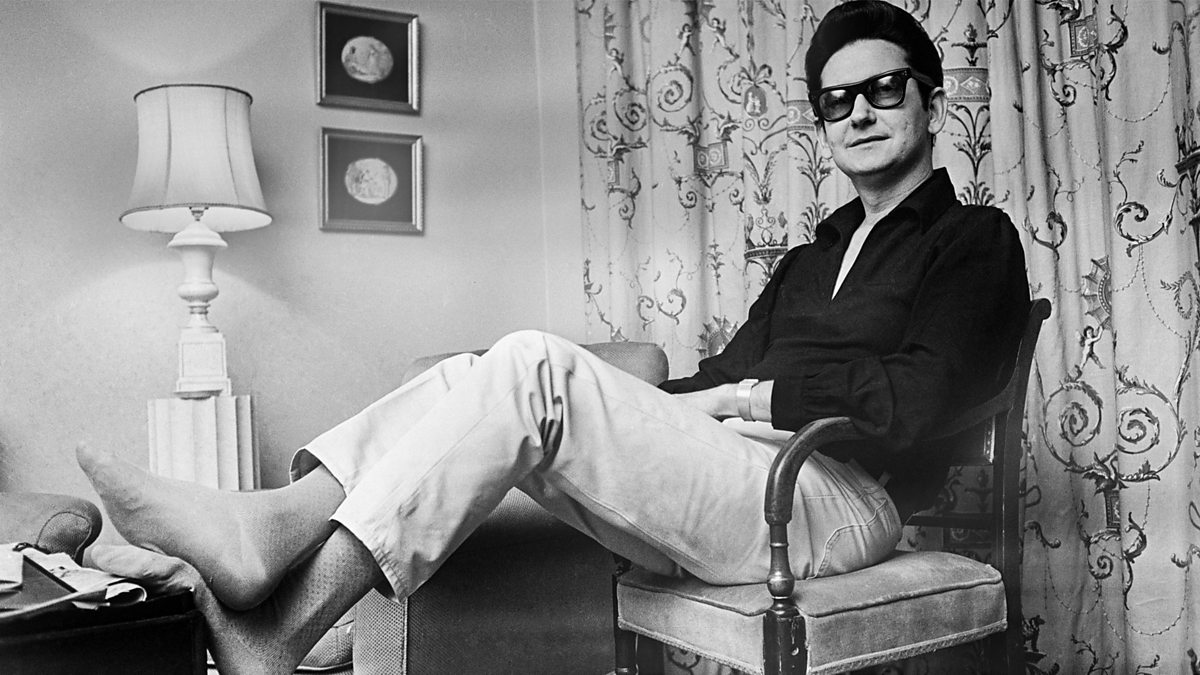
What made the record unforgettable, of course, was the presence of Roy Orbison. By the late 1970s, Orbison was already a legendary figure, but he was not yet in the full glow of the popular revival that would come in the following decade. That gave this duet a special poignancy. Harris was not simply pairing herself with a famous name. She was singing beside one of popular music’s most singular voices, a man whose sound carried loneliness, dignity, and ache in almost every phrase. Orbison did not have to overpower a song to transform it. He only had to enter it.
That is exactly what happens here. Harris sings with poise, clarity, and a kind of luminous restraint. Orbison answers with that unmistakable tremor of longing. Neither singer crowds the other. Neither turns the performance into a contest. Instead, they create a shared emotional space, and that may be the secret of why the duet has lasted so well. So many hit duets are remembered for contrast alone: male and female, soft and strong, country and pop. “That Lovin’ You Feelin’ Again” goes further. It finds complement rather than collision. Harris gives the song shape; Orbison gives it shadow. Together, they make the lyric sound lived in.
That balance also explains why the song became such an elegant crossover moment. Crossover records are often discussed as if they are calculated moves toward a larger market, but this one feels far more organic. Emmylou Harris already had roots in country, folk, and rock audiences. Roy Orbison brought with him the grandeur of early rock and pop balladry. Put those histories together, and the result was not compromise. It was convergence. The record could sit comfortably on country radio, yet it also carried the emotional sweep of classic pop songwriting. It sounded polished, but never slick. It sounded accessible, but never diluted.
There is another reason the song still resonates: it is one of those performances that honors adulthood in love. The emotion here is not reckless. It is measured, even careful, as if both singers understand what it costs to arrive again at tenderness. That makes the song especially moving. A lesser performance might have chased sweetness. Harris and Orbison chose depth instead. They suggest that rekindled feeling is never innocent. It carries memory with it. It carries hesitation. It carries the knowledge of what came before. That is why the song glows rather than merely sparkles.
Within the story of Blue Kentucky Girl, the duet helped show how wide Harris’s interpretive range really was. This was the same album that would also strengthen her country standing in a major way, with “Beneath Still Waters” later becoming a No. 1 country hit. But “That Lovin’ You Feelin’ Again” offered something slightly different from chart momentum. It gave the album emotional stature. It connected Harris to an older lineage of American heartbreak songs while reminding listeners that elegance could still stop them in their tracks.
Today, the duet remains one of the loveliest entries in Harris’s late-1970s catalog and one of the most tastefully judged collaborations of the era. The Grammy mattered. The chart success mattered. But what matters most, after all these years, is the feeling preserved inside the recording. Emmylou Harris and Roy Orbison did not just sing about love returning. They made that return audible. In a few minutes, with no wasted gesture and no excess, they turned a finely written song into a lasting piece of musical grace.
