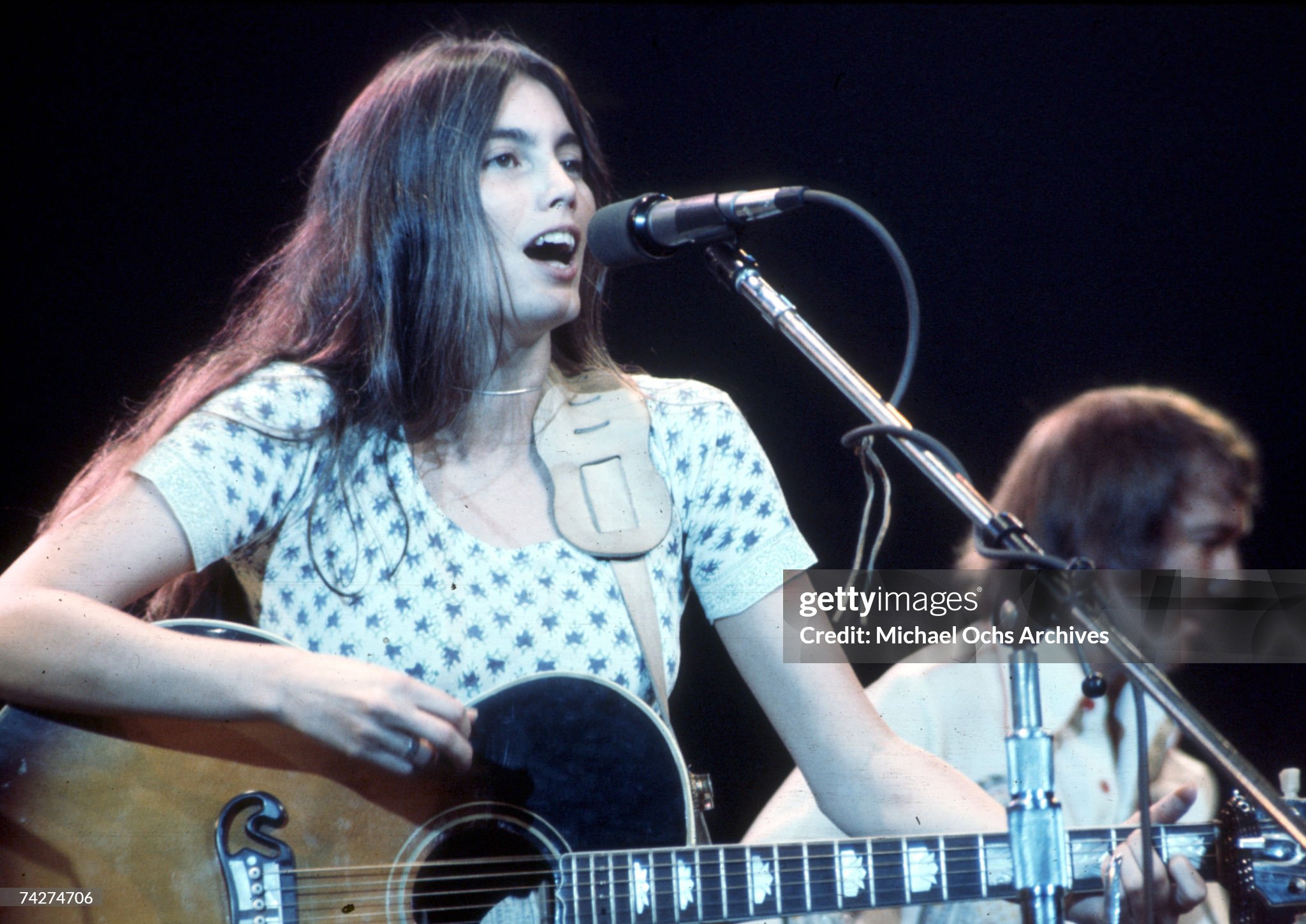
A song about motion, memory, and longing, “Wheels” became something even more tender when Emmylou Harris and Jonathan Edwards sang it together on 1975’s Elite Hotel.
There are recordings that announce themselves with fanfare, and then there are recordings that seem to drift in like evening light through an old window. “Wheels”, as recorded by Emmylou Harris with Jonathan Edwards on Elite Hotel, belongs to the second kind. It was never the album’s headline-grabbing chart single, and it did not arrive with the commercial force of “Together Again” or “Sweet Dreams”, both of which went to No. 1 on Billboard’s Hot Country Singles chart. But in many ways, this graceful duet reveals the deeper soul of the album that carried Harris to No. 1 on Billboard’s Top Country LPs chart and to No. 25 on the Billboard 200. If Elite Hotel proved that Emmylou Harris was not simply passing through country music but helping reshape it, then “Wheels” showed how she did it: through taste, feeling, and the quiet power of musical companionship.
The song itself came from another sacred corner of country-rock history. Written by Gram Parsons and Chris Hillman, “Wheels” first appeared on The Flying Burrito Brothers’ 1969 album The Gilded Palace of Sin. In that earlier form, it carried the lonesome romance of the open road, with all the dust, drift, and uncertainty that Parsons understood so well. By the time Harris recorded it in 1975, the song already had emotional weight. She had sung beside Parsons, absorbed his instincts, and, after his passing, become one of the most eloquent artists carrying forward the country-rock language he believed in so deeply. So this was not just a cover. It was a continuation, almost a conversation across time.
What makes this Elite Hotel rendition so beautiful is the collaboration at its center. Jonathan Edwards, best known to many listeners for his 1971 hit “Sunshine”, was an inspired presence here. His voice does not overpower the track or turn it into a showpiece. Instead, he settles into the song with remarkable humility, giving Harris a warm, grounded partner to lean against. Her singing is luminous, almost windborne, while his feels rooted, conversational, and human-scale. Together they create the kind of harmony that does not sound arranged so much as discovered. It feels lived in. It feels earned.
That is the miracle of this performance: it understands that harmony is not merely two voices blending on pitch. Harmony is trust. Harmony is one singer making room for another. Harris had one of the most unmistakable voices of her era, clear as mountain air and capable of carrying ache without a trace of theatrical strain. Edwards brings a gentler grain, a relaxed phrasing that keeps the song close to the ground. When those sounds meet, “Wheels” becomes less about performance and more about shared feeling. You hear not just melody, but companionship.
The production, overseen by Brian Ahern, deserves praise as well. Elite Hotel is often remembered as one of the defining albums of 1970s country-rock because it never pushes too hard. The arrangements breathe. The instruments support rather than crowd. On “Wheels”, that restraint matters. The song needs room, because its emotional meaning lives in movement and space. This is a song about going somewhere, but never with triumph. The wheels are turning, yes, but they carry uncertainty with them. Travel here is not freedom in the glossy sense. It is longing in motion.
Lyrically, “Wheels” is one of those songs that seems simple until life has given you enough miles to hear what it is really saying. It is about distance, but not only geography. It is about the way people drift from places, from promises, even from former versions of themselves. The image of wheels turning suggests escape, but it also suggests repetition, the cycle of wanting, leaving, remembering, and continuing on. Harris and Edwards sing it with exactly the right emotional intelligence. They do not overstate the sadness. They let it ride beneath the surface, where the deepest songs usually live.
There is also something deeply revealing about Harris choosing this song for Elite Hotel. In 1975, she was emerging not merely as an interpreter of great material, but as an artist with a curator’s instinct and a historian’s heart. She knew how to place songs in fresh light. She could take something already beloved in the country-rock underground and give it a more intimate glow, helping it reach listeners who may never have traced it back to the Burritos. In that sense, her version of “Wheels” did what her best recordings always did: it built bridges between traditions, between scenes, and between generations of songcraft.
And then there is the feeling it leaves behind. Long after the track ends, what lingers is not flash, not virtuosity, not even nostalgia in the simplest sense. What lingers is tenderness. The kind that arrives when musicians understand that a song can be honored by being handled gently. Harris and Edwards do not try to improve on the emotional architecture of Parsons and Hillman. They step inside it and let it breathe again.
That is why this performance still matters. In a catalog full of celebrated recordings, Emmylou Harris’ duet with Jonathan Edwards on “Wheels” remains one of those quietly treasured moments that says everything about collaboration. It reminds us that some songs are not meant to be conquered. They are meant to be carried. And on Elite Hotel, these two voices carry “Wheels” with grace, restraint, and a kind of sorrowful beauty that only seems to deepen with time.
