
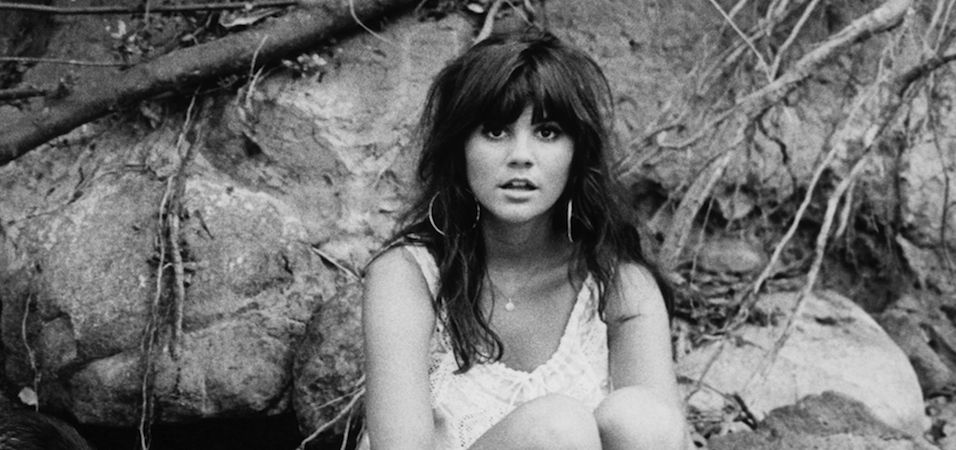
Hay Unos Ojos is more than a love song in Linda Ronstadt’s hands; it becomes a tender return to family, memory, and the quiet power of being truly seen.
When Linda Ronstadt recorded Hay Unos Ojos for her landmark 1987 album Canciones de Mi Padre, she was doing something far more personal than adding another song to a celebrated catalog. She was stepping back into the musical world that had lived in her family long before arena tours, radio hits, and rock stardom. While Hay Unos Ojos was not released as a major standalone pop single, it arrived on an album that reached No. 42 on the Billboard 200, won a Grammy in the Best Mexican-American Performance category, and became the best-selling non-English-language album in U.S. history at the time. Those facts matter, but they only tell part of the story. The deeper truth is that this recording feels intimate, almost inherited, as if Ronstadt were not simply singing the song but receiving it.
Canciones de Mi Padre itself was a deeply meaningful project. Its title, translated as Songs of My Father, points directly to Ronstadt’s family roots and to the Mexican musical traditions she grew up hearing in Arizona. For years, much of the public knew her as the voice behind pop and rock classics, a singer who could move easily from country to rock to standards. But this album revealed another dimension of her artistry: not reinvention, exactly, but recognition. It was a homecoming. In that setting, Hay Unos Ojos shines not as an exotic detour, but as part of the emotional center of the whole work.
The song itself comes from the Mexican traditional repertoire, and that matters enormously. Hay Unos Ojos carries the old-world grace of a melody shaped by repeated singing, by voices passing it from one generation to another. Its central image is simple and unforgettable: a pair of eyes so powerful that they leave the singer emotionally defenseless. Many great love songs speak of devotion, heartbreak, or longing, but this one dwells on the gaze itself, on the mysterious force of another person’s eyes. That is one reason the song lingers. It understands how love often begins not with grand speeches, but with a look that unsettles the heart before the mind can catch up.
What makes Linda Ronstadt’s version so moving is her restraint. She does not crowd the melody with unnecessary drama. She allows it to breathe. Her phrasing is careful, respectful, and emotionally open, carrying the weight of the lyric without forcing it. The performance has elegance, but it never feels distant. Instead, it has the warmth of someone singing from a place of lived affection. Ronstadt had the technical command to overpower a song if she wanted to, yet here she chooses tenderness over display. That choice is everything. It lets the old lyric speak with its original dignity.
Behind her voice, the arrangement serves the song beautifully. The mariachi setting gives Hay Unos Ojos its proud spine and its ache at the same time. The strings and brass do not merely decorate the tune; they deepen its emotional weather. You can hear celebration and sorrow living side by side, which is often the truest sound of traditional romantic music. Ronstadt understood that these songs were not museum pieces. They were alive. By recording them with seriousness and love, she helped many listeners hear that vitality again, perhaps some for the first time.
There is also something quietly courageous about the way Ronstadt approached this material. By the late 1980s, she had nothing left to prove commercially. She had already established herself as one of the defining voices in American popular music. Yet instead of repeating a formula, she turned toward heritage. That decision gave Hay Unos Ojos and the rest of Canciones de Mi Padre a special emotional authority. These were not trend-driven recordings. They were songs bound to lineage, language, and memory. Ronstadt was honoring a musical inheritance that had shaped her long before the world placed labels on her voice.
The meaning of Hay Unos Ojos becomes even richer in that light. On the surface, it is a song of attraction, vulnerability, and surrender to feeling. But through Ronstadt’s performance, it also becomes a meditation on recognition itself. To be moved by someone’s eyes is to be reminded that love can still arrive wordlessly, unexpectedly, and completely. And when an artist sings such a song as part of a return to her own roots, another layer appears: the eyes in the lyric begin to feel almost symbolic, as though the past itself were looking back.
That may be why the performance continues to resonate so deeply. It is not loud. It is not built around spectacle. Its power is quieter and, because of that, more enduring. Linda Ronstadt gives the song clarity, devotion, and emotional honesty. She does not modernize it beyond recognition, nor does she treat it as a delicate relic. She trusts it. In doing so, she reminds us that some songs survive because they carry truths too old and too human to fade: longing, beauty, memory, and the trembling wonder of a single glance.
In the end, Hay Unos Ojos stands as one of those recordings that reveals something essential about the artist singing it. It tells us that Ronstadt’s greatness was never only about range, style, or success. It was also about listening closely to where the music came from and understanding what it meant to the people who carried it forward. On Canciones de Mi Padre, and especially in Hay Unos Ojos, she does not simply perform a tradition. She belongs to it. That is why the song still feels so immediate. Those eyes are not just part of an old lyric. Through Ronstadt, they remain vividly, tenderly alive.
