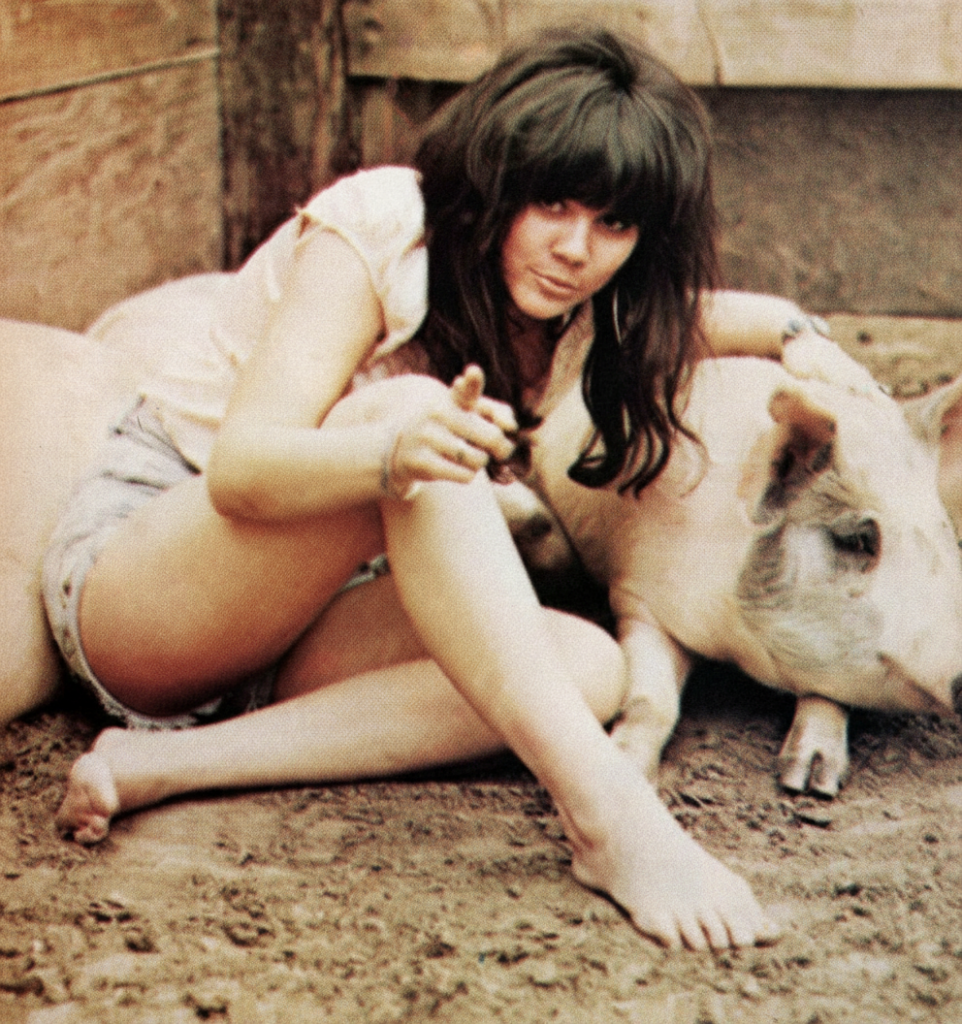
On her 1969 solo debut, Linda Ronstadt sang Bob Dylan’s “I’ll Be Your Baby Tonight” like a quiet turning point—an early country-rock promise before the rest of her career made it obvious.
When Hand Sown… Home Grown arrived in 1969, it introduced Linda Ronstadt as a solo artist after her years with the Stone Poneys and the success of “Different Drum”. Among the album’s most revealing choices was her version of “I’ll Be Your Baby Tonight”, a song Bob Dylan had released just two years earlier on John Wesley Harding. That detail matters. Ronstadt was not reviving some distant standard. She was hearing a recent Dylan song and recognizing, very early, how naturally it could live inside a warmer, more openly country-shaped setting. In that sense, her recording feels less like a cover for its own sake and more like an instinctive statement of direction.
Dylan’s original already carried a casual, after-hours ease, with its invitation, its loosened collar, its sense of the room softening at the edges. Ronstadt does not fight that mood. She leans into it. But where Dylan’s version has a dry, slightly teasing air, her reading opens the song outward. It feels sunnier, gentler, and more rooted in the California-to-Nashville crossroads that would soon define so much of her best-known work. You can hear a young singer discovering that the line between folk, country, and rock is not really a line at all. It is a space of movement, and she is already comfortable inside it.
That is what makes this early interpretation so interesting. “I’ll Be Your Baby Tonight” on Hand Sown… Home Grown does not arrive with the full command of the later Ronstadt records that would make her one of the great interpreters of her era. It arrives with something just as compelling: a sense of emergence. Her voice is fresh, clear, and emotionally alert, but there is also a kind of restraint in it. She does not over-explain the song. She does not treat it like a showcase. She lets its invitation remain easy and conversational, which turns out to be one of the smartest choices she could have made. The performance trusts tone more than display, atmosphere more than force.
That trust became one of Ronstadt’s defining strengths. Across her career, she would sing songs by other writers with unusual clarity, not by burying them under personality but by finding the emotional weather inside them. Here, in 1969, you can already hear that gift forming. Her phrasing gives the Dylan lyric a different kind of light. The song sounds less wry and a little more tender, less guarded and more open-hearted. It is still relaxed, still inviting, but Ronstadt brings a softness that changes the center of gravity. What had felt gently mischievous in Dylan’s hands starts to feel like a real offer of comfort in hers.
The album around it deepens the effect. Hand Sown… Home Grown is often remembered as an early country-rock document, and that reputation has only grown with time. Long before the style hardened into an expected radio format, Ronstadt was already assembling a sound that let acoustic textures, country feeling, and pop instinct live together without friction. Her version of “I’ll Be Your Baby Tonight” sits beautifully in that landscape. It does not announce a movement. It simply sounds natural there, which may be the more important achievement. The record catches a moment when musicians on the West Coast were starting to hear American roots music with new openness, and Ronstadt was one of the artists listening closely enough to turn that openness into something personal.
There is also something quietly bold about choosing Dylan in this way. By the end of the 1960s, his songs were already carrying a certain weight, and many singers approached them with either too much reverence or too much need to reinvent them. Ronstadt does neither. She hears the song as a living thing, something to inhabit rather than decorate. That approach would later serve her brilliantly with writers from many corners of American music, but on this debut it still has the freshness of first discovery. She sounds like an artist learning, in public, what kind of interpreter she is going to be.
And that is why this recording lingers. Not because it is the most famous version of “I’ll Be Your Baby Tonight”, and not because it arrives with the polished confidence of Ronstadt’s peak years, but because it lets you hear the path opening under her feet. On a first solo album that already hinted at where country rock could go, she found a Dylan song that fit her almost before the world fully understood why. There is something moving in that kind of early rightness. The performance feels young, yes, but not uncertain. It feels like an artist stepping into a room she will someday own, and doing it so naturally that the moment can be missed unless you listen closely.
Listen closely, though, and the charm of this 1969 cut becomes something richer than charm. It becomes evidence: of taste, of instinct, of a singer hearing her future in the shape of a borrowed song. That is the quiet beauty of Linda Ronstadt’s early reading here. It does not argue for its importance. It simply opens the door, lets the evening air in, and waits for the rest of the story to catch up.
