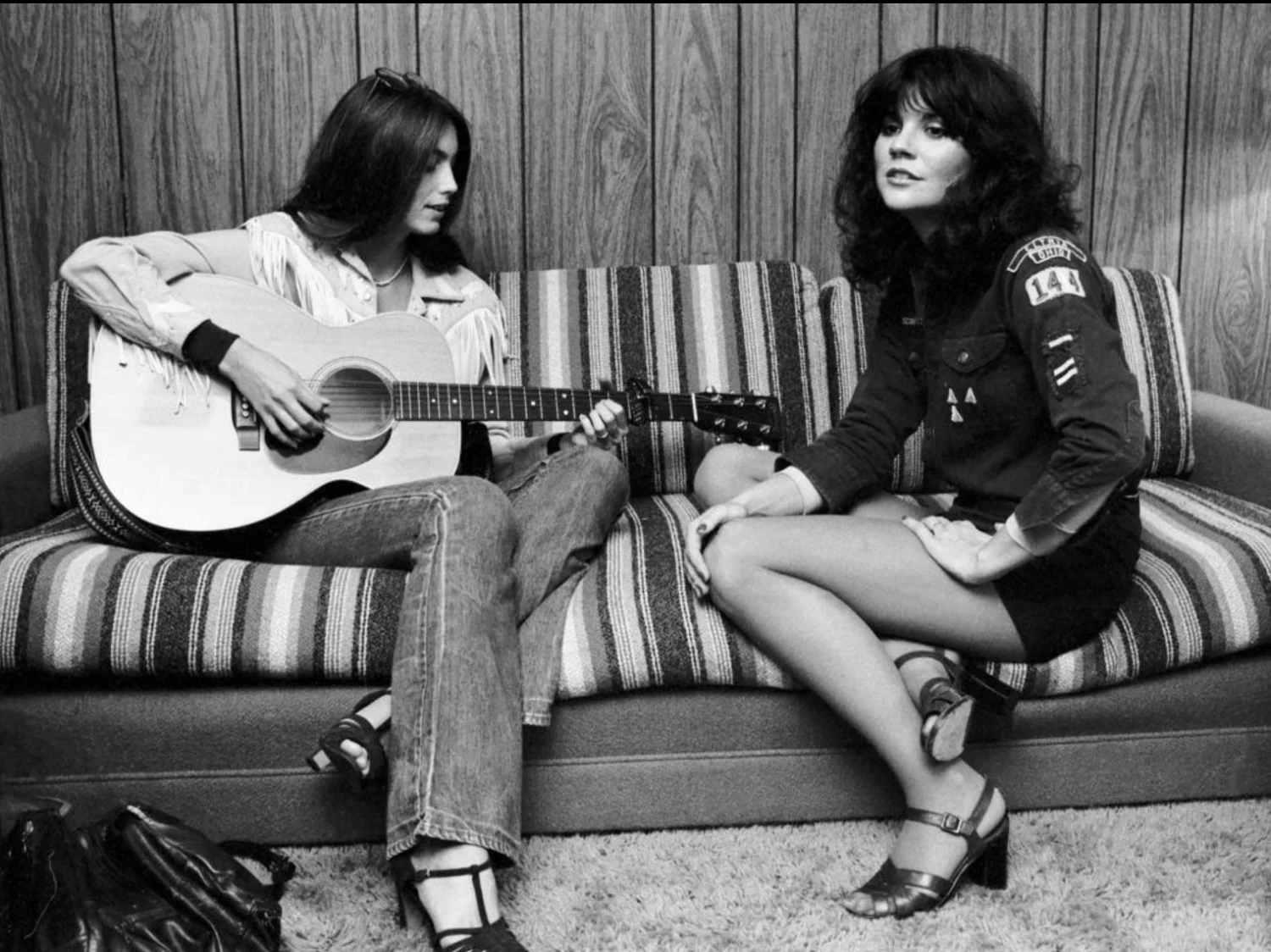
A Timeless Voice and a Rock ’n’ Roll Promise That Never Fades
When Linda Ronstadt released her rendition of “That’ll Be the Day” in July 1976, she wasn’t just revisiting a rock ’n’ roll classic—she was reclaiming an era, breathing new life into a sound that had defined the innocence and electricity of the 1950s. The song appeared on her celebrated album Hasten Down the Wind, a record that captured both her artistic maturity and her deep reverence for American musical roots. Upon its release, Ronstadt’s version climbed steadily on the charts, reaching No. 11 on the Billboard Hot 100 and affirming her place as one of the defining voices of 1970s popular music.
Originally written by Buddy Holly, Jerry Allison, and Norman Petty, “That’ll Be the Day” first took flight in 1957 when Buddy Holly and The Crickets turned it into an anthem of youthful defiance and hope. Nearly two decades later, Ronstadt approached the same melody with a different kind of spirit—no longer the eager spark of teenage love, but a woman’s wistful recollection of promises once made and dreams once believed in. Her voice carried warmth, depth, and a fragile strength that only years of living could give. In her hands, this song was no longer about rebellion; it was about remembrance.
By the mid-1970s, Ronstadt had already established herself as one of the few artists capable of crossing genres effortlessly—country, rock, pop, even soul—and making each one her own. With “That’ll Be the Day,” she looked back at the golden dawn of rock ’n’ roll not with nostalgia alone but with an understanding of how those early chords shaped everything that came after. The arrangement honored the jangling guitars and crisp rhythms of Holly’s original while layering in Ronstadt’s trademark vocal clarity—a sound both gentle and commanding. It was music that remembered where it came from.
Behind this song lies a story of musical lineage: Buddy Holly’s tragic death in 1959 had turned “That’ll Be the Day” into something like a memorial hymn for early rock ’n’ roll’s lost innocence. When Ronstadt recorded it almost twenty years later, she seemed to be stitching that history back together—linking her California country-rock sensibility with Holly’s pure Texas energy. Critics at the time noted how natural her interpretation felt, as if she were conversing across decades with Holly himself. In doing so, she reminded audiences that great songs never truly grow old; they simply find new voices to sing them.
For many who first heard Ronstadt’s version in the summer of 1976, it felt like coming home. It was a familiar melody reborn through a voice that carried both tenderness and power—a sound that could fill a room yet still whisper to memory. The year was changing: disco lights were beginning to flicker across dance floors, and rock itself was splintering into countless forms. But in those few minutes of music, listeners could step back into another time when everything seemed simpler—when love was promised through words like “that’ll be the day,” said not with irony but with faith.
Today, when we listen to Linda Ronstadt’s “That’ll Be the Day,” we hear more than just a cover; we hear an artist tracing her roots through sound, paying tribute to those who came before while leaving behind something distinctly her own. The song endures as a bridge between generations—a melody that remembers laughter on transistor radios, slow dances under dim porch lights, and all those unspoken hopes carried by youth. It is both past and present intertwined, a timeless conversation between two eras of American music.
And perhaps that’s why this version still resonates so deeply: because Ronstadt sang not only with technical brilliance but with heart—with the understanding that every great song carries within it a piece of someone’s yesterday.
