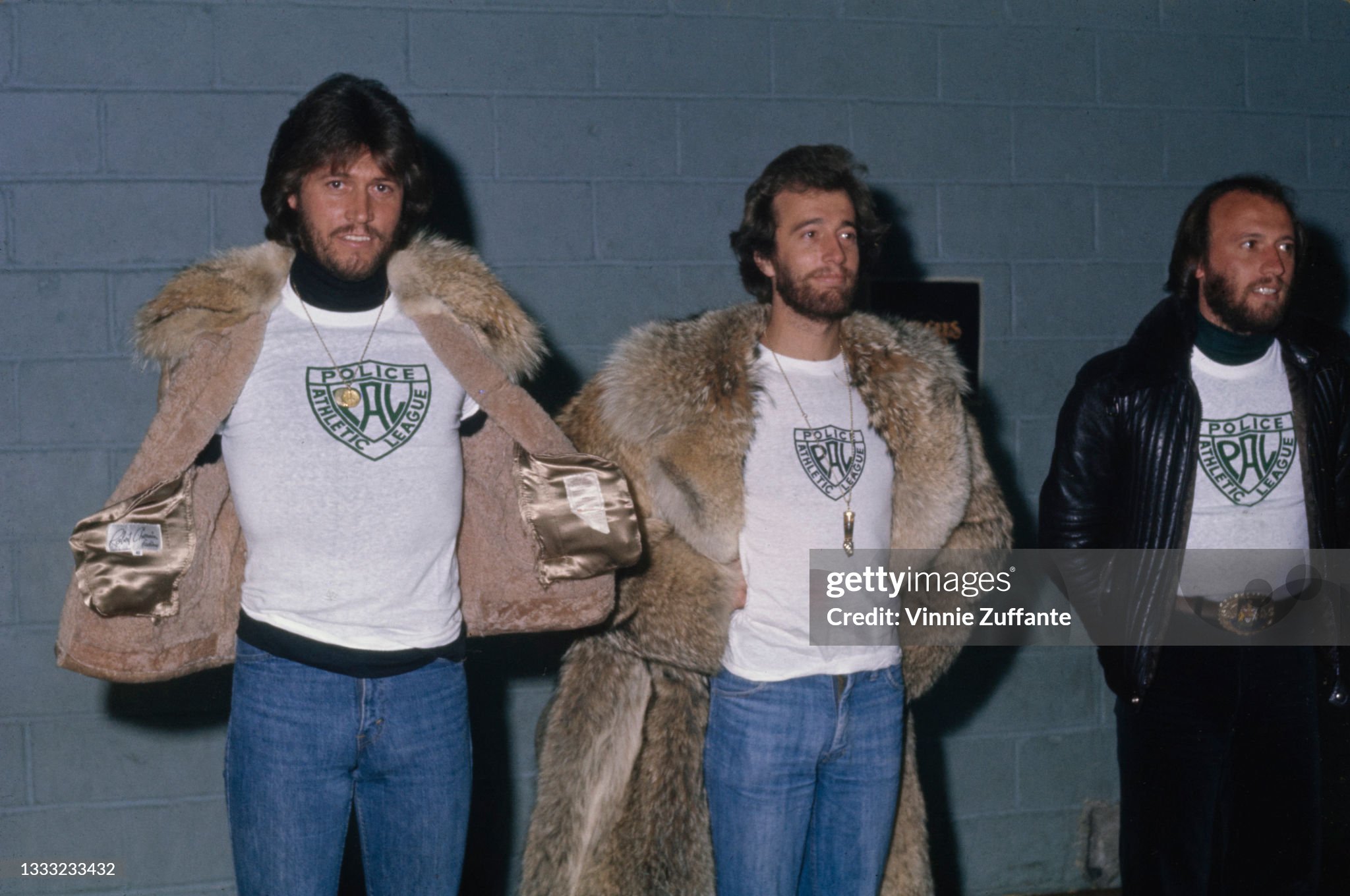
In Walking on Air, the Bee Gees found a late, luminous kind of grace: a song lifted by brotherhood, softened by time, and made unforgettable by the rare lead voice of Maurice Gibb.
There are songs that arrive with noise, chart headlines, and instant cultural thunder. And then there are songs like “Walking on Air”, which enter quietly and stay for reasons far deeper than fashion. Released on the Bee Gees’ 2001 album This Is Where I Came In, the track did not build a chart life of its own, because it was not pushed as a major standalone single. Its public story belongs to the album around it, and that context matters: This Is Where I Came In reached No. 6 on the UK Albums Chart, while the title track gave the group another UK Top 20 hit at No. 18. Yet for many devoted listeners, “Walking on Air” carries something even more lasting than chart action. It gave Maurice Gibb one of his rare late-career lead vocals, and in doing so, it revealed a tenderness at the center of the group that numbers alone could never explain.
That is the first thing worth saying about the song, and perhaps the most important. In the public imagination, the Bee Gees are so often divided into familiar signatures: Barry Gibb and that unmistakable high edge, Robin Gibb and his aching, dramatic phrasing, the shimmering blend that made three brothers sound like one memory. But Maurice was always more than the quiet third point in that famous triangle. He was the musical glue, the instrumental all-rounder, the one who could hold the room together without demanding the spotlight. So when he steps forward on “Walking on Air”, the effect is moving almost before the song has fully unfolded. His voice is warm, grounded, human in a way that makes the song feel close at hand.
By 2001, the Bee Gees were no longer trying to chase the world they had once ruled. That gave This Is Where I Came In a special freedom. Rather than sounding like an act trapped by its own legend, the album feels like a group revisiting its strengths with a calmer heart. There are flashes of classic melody, hints of pop craftsmanship, touches of rhythm, and the deep confidence that only decades of writing together can produce. Within that setting, “Walking on Air” feels almost like a private gift placed in the middle of a public record. It is not loud about its importance. It simply lets it happen.
Musically, the song lives in a lovely balance between uplift and restraint. The title suggests lightness, and the arrangement answers with a breezy, melodic ease. But this is not youthful weightlessness. It is not the sound of rushing headlong into romance. It feels more mature than that, more earned. The rhythm moves with gentle assurance, and the melody rises without strain, as though the song understands that joy does not always need to announce itself. Sometimes it arrives softly, after difficulty, after distance, after years of knowing what really matters.
Maurice Gibb is central to that emotional truth. His lead vocal gives “Walking on Air” a different center of gravity from many of the group’s biggest singles. There is less theatrical ache than a typical Robin showcase, less polished sheen than a Barry-fronted pop statement. What Maurice brings instead is intimacy. He sounds believable in the most valuable sense of the word. He does not merely sing the melody; he inhabits it. Around him, the harmonies from his brothers do what the best Bee Gees harmonies always did: they do not compete with the lead so much as cradle it. That is why the song fits the idea of brotherhood so beautifully. You can hear support in the structure of it. You can hear trust.
And that may be the deepest meaning of “Walking on Air”. On the surface, it can be heard as a song of uplift, affection, and emotional renewal. But within the life story of the Bee Gees, it also feels like something richer: the sound of brothers still making space for one another after a lifetime of shared stages, shared losses, shared reinventions, and shared language through music. There is something deeply touching about hearing Maurice out front on a late album, not as a novelty, not as a footnote, but as the emotional heart of the moment. The song becomes larger because of that. It becomes not only about feeling elevated by love, but about being lifted by the people who know you best.
There is also a quiet dignity in the timing. This Is Where I Came In would become the final studio album released by the Bee Gees. Knowing that now gives “Walking on Air” an added resonance, even though the song itself never leans on farewell. It is not a closing statement in any obvious, dramatic sense. That is partly why it lingers. It stands as a reminder that late-career work can still surprise us, and that some of an artist’s most revealing moments are not always the ones most heavily promoted. Sometimes the songs that mean the most are the ones tucked just beyond the spotlight, waiting for listeners to find them when they are ready.
For longtime admirers of the group, “Walking on Air” is one of those songs that grows rather than fades. The more one returns to it, the more one notices the emotional craftsmanship: the ease of the melody, the generosity of the arrangement, the quiet authority of Maurice Gibb’s vocal presence. It does not ask to be treated as a lost masterpiece. It simply proves itself, gently and completely. And perhaps that is the most Bee Gees thing about it. Beneath every era, every reinvention, every headline, there was always family harmony at the core. On “Walking on Air”, that harmony is not just heard. It is felt.
In the end, the song remains a beautiful late chapter in a remarkable catalogue: not the most famous title, not the biggest hit, but one of the clearest windows into who the Bee Gees really were when all the glitter was set aside. Three brothers. One shared instinct. And for a few precious minutes, the one voice too often left in the background is allowed to carry the light.
