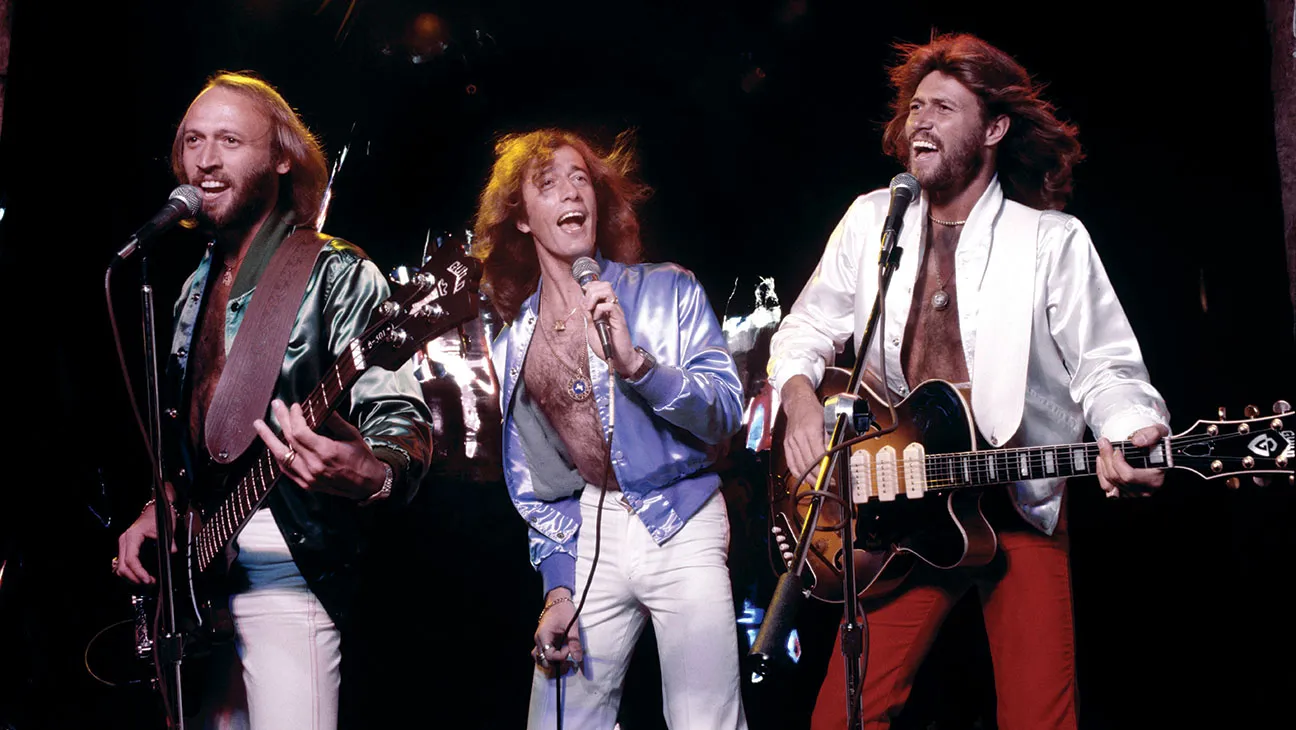
Paying the Price of Love was more than a 1993 single from the Bee Gees—it was the sound of three master songwriters refusing to become a memory.
When Bee Gees released “Paying the Price of Love” in 1993 as the lead single from Size Isn’t Everything, the song carried more weight than a typical first single. It arrived as a statement. After years of being viewed, especially in America, through the narrow lens of the disco era, Barry, Robin, and Maurice Gibb were once again trying to remind the world that they had always been far more than one musical moment. This record did not simply introduce a new album. It opened the door to one of the group’s most quietly important comeback periods of the 1990s.
Commercially, the single was not an overwhelming smash in the way some earlier Bee Gees classics had been. It did not enter the Billboard Hot 100 in the United States, and in the UK it peaked at No. 74. On paper, that may seem modest. But chart numbers do not tell the whole story here. What mattered was the intent behind the record and the creative energy inside it. “Paying the Price of Love” announced that the group was not content to simply trade on nostalgia. They were still experimenting, still chasing contemporary textures, and still writing from a place of emotional intelligence that younger acts often struggled to match.
From its opening, the song feels sharper and more mechanical than the warm, flowing romanticism many listeners associated with the brothers. The production leans into an early-1990s pop sound—harder edges, programmed rhythm, a colder groove—yet the heart of the song remains unmistakably theirs. Beneath that modern surface lies the familiar Bee Gees gift: wounded melody, layered harmony, and a sense that love is never just sweet memory, but often a burden, a lesson, and sometimes a private form of reckoning.
The title itself, “Paying the Price of Love”, is classic Gibb writing. It turns romance into consequence. This is not teenage infatuation. It is adult emotion, spoken by men who understood that devotion can demand more than we expect. The lyric suggests that love is not free simply because it is beautiful. There is always a cost—pride, peace, certainty, time. That theme gave the single its emotional gravity. By 1993, the Bee Gees were no longer singing from youthful fantasy. They were writing from experience, and listeners could hear it.
That maturity is one reason the song deserves a second look. Some singles become classics because they dominate radio. Others become important because they reveal where an artist’s mind is turning. This one belongs to the second category. It is the sound of a legendary group recalibrating. Instead of trying to recreate the satin glide of “How Deep Is Your Love” or the dance-floor electricity of “Stayin’ Alive”, they chose a tougher, more contemporary frame. For some fans at the time, that may have felt surprising. In hindsight, it feels brave.
The album it introduced, Size Isn’t Everything, would go on to contain stronger chart stories, most notably “For Whom the Bell Tolls”, which later became a major hit in Britain and helped confirm that the brothers still had a deep emotional connection with audiences. But comeback eras are rarely built in one dramatic instant. They are usually built in steps, and “Paying the Price of Love” was one of those essential first steps. It reset the conversation. It said: this band is still working, still searching, still alive in the present tense.
There is something moving about hearing the Bee Gees in this period. By then, they had already lived several careers: 1960s beat-pop craftsmen, melancholy balladeers, soundtrack giants, disco monarchs, and elegant adult-pop survivors. Few groups in popular music history have had to reinvent their public identity so many times. That history gives “Paying the Price of Love” an added resonance. The song is not just about romantic cost. In a larger sense, it feels tied to endurance itself—the price artists pay to stay relevant, dignified, and creatively restless after the world thinks it already knows their story.
Vocally, the brothers remain compelling. Barry’s voice, by this point, had acquired a weathered authority, while Robin’s phrasing still carried that unmistakable ache which could make even a simple line feel haunted. Maurice, as ever, helped ground the whole performance with the family chemistry that no outside session ensemble could replicate. That was always the Bee Gees secret weapon: not just the harmonies, but the emotional blend of brothers who sounded as if memory itself were singing.
Today, “Paying the Price of Love” stands as one of those later-period records that reward listeners who return without old expectations. It may not sit at the center of the group’s most famous canon, but it matters because of when it arrived and what it attempted. In 1993, with Size Isn’t Everything, the Bee Gees were not asking for permission to matter again. They were simply doing what they had always done: writing honestly, adapting musically, and trusting that time would be kinder than immediate fashion.
And time has been kind. Heard now, the single feels less like an outlier and more like a declaration. It was the sound before the wider applause returned. It was the first strong signal of a late-era revival built not on gimmick, but on craft, persistence, and emotional truth. That is why “Paying the Price of Love” still lingers. Not because it was the loudest comeback anthem of the decade, but because it captured something more durable: the dignity of artists who kept going until the world listened again.
