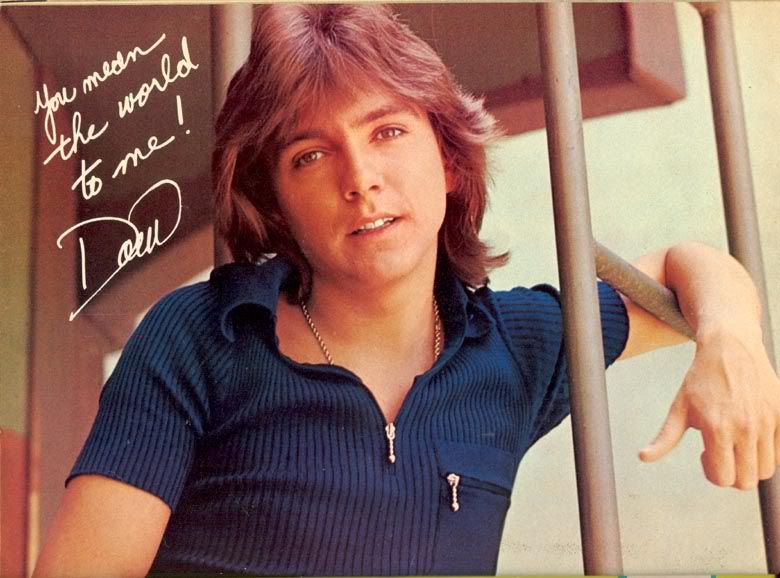
On a hard-to-find 1976 album, David Cassidy reached past the poster image and found a sharper kind of pop nerve inside a Harry Nilsson song.
David Cassidy recorded his version of The Story of Rock and Roll for the rare 1976 release Gettin’ It in the Street, a record that sits in one of the most revealing corners of his career. By then, Cassidy was no longer simply the smiling face from The Partridge Family, nor just the young singer whose records had filled bedrooms, radios, and magazine pages in the early 1970s. He was an artist trying to move through the narrow doorway that fame had built around him, looking for material that could suggest wit, urgency, and a life beyond the machinery of teen stardom.
That makes his choice of Harry Nilsson especially interesting. The Story of Rock and Roll was a Nilsson-penned song that had already found pop life in the 1960s, most notably through The Turtles, whose 1968 recording captured the playful, bright-eyed side of the tune. Nilsson’s writing often carried a double edge: it could sound cheerful on first contact, almost tossed off, but underneath the melody there was usually a clever twist, a slightly slanted view of show business, love, loneliness, or the strange theater of popular music. He wrote with a craftsman’s ear and a mischief-maker’s smile, and his songs often made room for singers to reveal more than they seemed to be saying.
On Gettin’ It in the Street, Cassidy’s cover does not feel like a museum piece or an act of simple revival. It belongs to a moment when he was trying to roughen the edges of his public sound. The album itself has become something of a collector’s item, partly because it never settled into the familiar David Cassidy story in the way his early solo hits did. It arrived after the loudest days of television fame, when the question around him was no longer whether he could make girls scream, but whether listeners would allow him to become something less easily packaged.
That pressure gives The Story of Rock and Roll a different charge in his hands. A song about rock and roll history, image, and momentum becomes, almost by accident, a comment on Cassidy’s own position. He had lived inside one of pop culture’s most visible machines. He knew what it meant for music to be sold with a face attached, for audiences to love a version of you that might not match the person in the room. Singing a Nilsson song in 1976, he was not just borrowing from another songwriter’s catalog; he was stepping into a sharper, more knowing pop language.
The appeal of the cover lies in that tension. Cassidy’s voice had always carried more nuance than his image was sometimes allowed to admit. Beneath the clean phrasing and radio-friendly brightness, there was a slightly restless quality, a sense of someone pushing against the frame. In The Story of Rock and Roll, that restlessness has somewhere to go. The song’s buoyant construction keeps it moving, but the performance suggests a singer aware of the joke and the ache behind the spectacle. It is not heavy-handed. It does not announce itself as reinvention. It simply lets the listener hear Cassidy in a less predictable light.
Nilsson’s fingerprints matter here because his songwriting was never content with the obvious emotional surface. He could make a tune bounce while quietly pulling the floor out from under it. Cassidy, whose public career had often depended on a smooth surface, found in this material a way to lean into irony without sounding bitter. The result is a cover that feels less like imitation than conversation: one pop survivor singing another pop outsider’s song, with the bright machinery of rock and roll humming in the background.
For many casual listeners, Gettin’ It in the Street remains outside the main road of Cassidy’s catalog. It does not carry the immediate recognition of I Think I Love You or the early solo records that made him a household name. Yet that is exactly why this 1976 recording deserves attention. It catches him in motion, between the old expectation and a more complicated adult identity. The rarity of the album only deepens that feeling, as if the performance were tucked away in a side room of his story, waiting for listeners willing to hear more than the headline version of his career.
What makes Cassidy’s The Story of Rock and Roll linger is not that it overturns everything people thought they knew about him. It is subtler than that. It shows how a singer often dismissed as a product of television could understand the strange comedy of pop fame from the inside. It shows how a Nilsson song, already clever and quick on its feet, could become a small act of self-definition when placed in the mouth of someone who had been both adored and underestimated.
In the end, this cover is a reminder that careers are rarely as simple as their most famous photographs. A familiar name can hide a curious record. A bright song can carry an uneasy grin. And a singer once trapped in the glow of youth can, for a few minutes on a rare 1976 album, sound as if he is telling the story of rock and roll from somewhere closer to the cost of it.
