
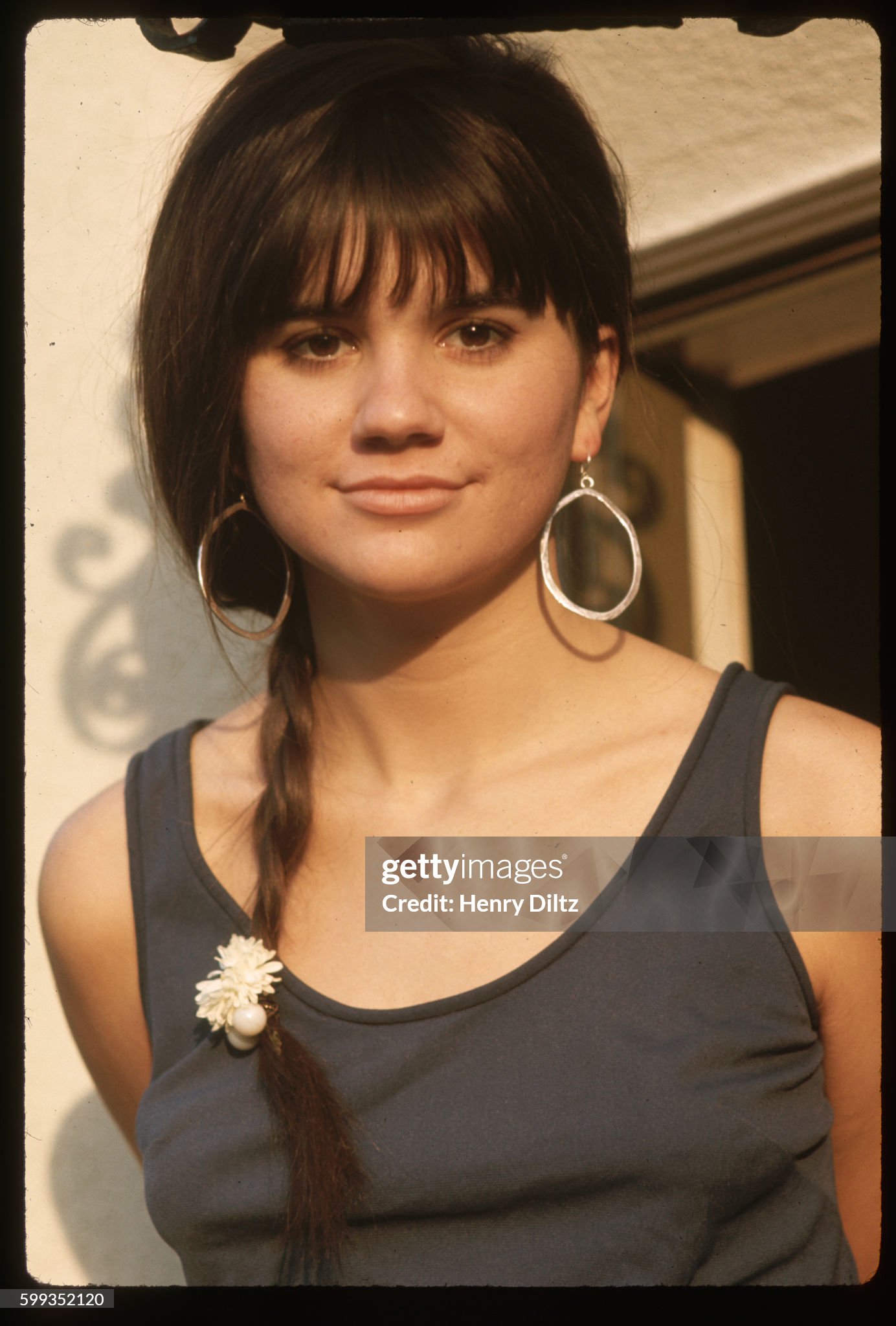
On Mad Love, Linda Ronstadt takes Neil Young’s “Look Out for My Love” and changes its weather, turning a wary, open-ended song into something sleeker, tenser, and startlingly direct.
When Linda Ronstadt recorded “Look Out for My Love” for her 1980 album Mad Love, she was doing more than adding a respected songwriter’s work to her set list. Neil Young had introduced the song on his 1978 album Comes a Time, where it carried the looseness, uncertainty, and unguarded feeling that often run through his best writing. Ronstadt, working with producer Peter Asher, placed that same song inside a very different frame. Mad Love was a sharper, more nervous, more compact rock record than many listeners expected from her at the time, and that setting changed the emotional pressure of the song from the first note.
That matters because Mad Love arrived at a fascinating moment in Ronstadt’s career. By 1980, she had already become one of the defining voices in American popular music, an artist who could move through country-rock, pop, torch songs, and classic songwriting with unusual ease. But Mad Love did not sound like an artist coasting on familiarity. It leaned toward a brisker, more contemporary rock language, drawing energy from the tense edges of the late 1970s and the start of a new decade. In that context, “Look Out for My Love” feels less like a simple cover choice and more like a statement of intent. Ronstadt was not using the song to reassure the audience. She was using it to redraw the room.
The difference between the two versions is not a matter of one being gentler and the other louder. It is deeper than that. In Young’s original, the song feels as if it is being discovered while it unfolds. His phrasing has that half-spoken, half-sung vulnerability that makes even a warning sound personal, improvised, and a little unsure of its own destination. Ronstadt hears something else inside it. She keeps the emotional caution, but she gives it firmer shape. Her vocal lines are cleaner, more centered, and more decisive. Where Young often sounds as if he is circling the feeling, Ronstadt steps directly into it.
That change in approach transforms the title phrase itself. In Young’s hands, “look out for my love” can feel like a plea, an admission, even a murmur of concern wrapped in self-doubt. In Ronstadt’s performance, it lands with more force. It still carries tenderness, but it also carries risk. She does not flatten the song into bravado, and she does not soften it into easy warmth. Instead, she lets beauty and alertness exist in the same breath. The result is compelling because it sounds like someone who fully understands the promise in the lyric and the danger that shadows it.
The arrangement on Mad Love helps make that emotional shift audible. Ronstadt’s version lives in a brighter, tighter rock space than the one most listeners associate with Young’s late-1970s recording style. The performance has forward motion, clean attack, and an almost bracing sense of control. Nothing drifts. Nothing sags. That alone changes how the song is heard. A lyric that once seemed to arrive out of open country now feels lit by sharper angles, as if the same human feeling has been pulled from a wide horizon into city light. The song loses none of its emotional complexity, but it becomes more immediate, more exposed, and in some ways more modern.
What makes the performance so rewarding is that Ronstadt never treats interpretation as imitation. This was one of her greatest gifts as a singer. Across her career, she had an instinct for hearing what a song could become when placed in a new voice, a new tempo of feeling, a new emotional atmosphere. On “Look Out for My Love,” she does not try to sound like Neil Young, and she does not approach the song as a prestige exercise in tasteful admiration. She identifies the tension at its center and then reroutes it through her own strengths: precision, tonal clarity, and a remarkable ability to make vulnerability sound disciplined rather than diffuse.
That is why the track sits so naturally on Mad Love. The album is often remembered for its harder edges and its willingness to let Ronstadt inhabit a more contemporary rock attitude, but this song reveals the emotional intelligence behind that shift. It shows that the album’s toughness is not merely stylistic. Beneath the brighter surfaces and tauter structures, there is still the same interpretive seriousness that made Ronstadt such a singular artist in the first place. She was never just singing songs well. She was listening for where they bent, where they trembled, where another singer might have left them untouched.
There is also something quietly revealing in the choice of a Neil Young song for this particular record. Young’s writing often holds tenderness and unease in a delicate, unstable balance, and that emotional instability fits Mad Love far better than a casual glance at the album title might suggest. Ronstadt’s version understands that a love song can also be a warning, and that a warning can sometimes sound most convincing when sung with composure. She brings a kind of elegant pressure to the material. The voice is still luminous, but it is not drifting above the song. It is inside the friction of it.
For that reason, “Look Out for My Love” remains one of the most revealing performances on Mad Love. It captures Ronstadt at a point where reinvention did not mean abandoning feeling; it meant changing the form through which feeling arrived. She took a song born in Neil Young’s restless, searching world and recast it in her own language of focus, nerve, and emotional exactness. That is what a great cover can do. It does not erase the original. It opens a second doorway into it. And once Ronstadt walks through this one, the song never sounds quite the same again.
