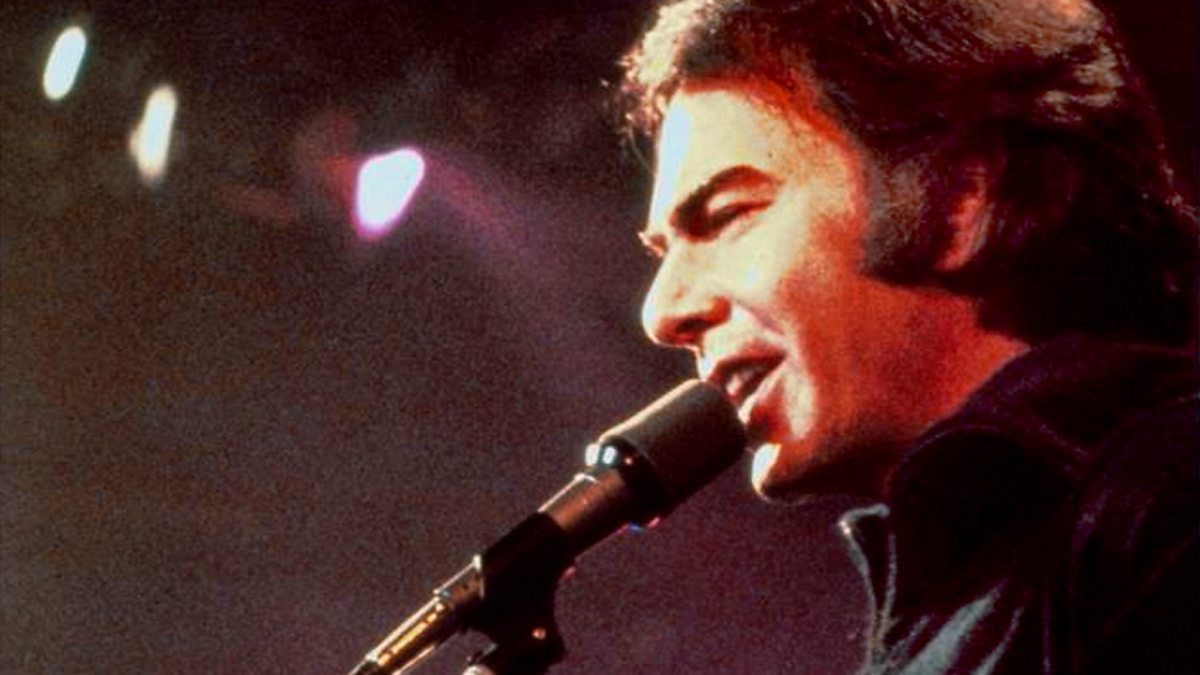
Some songs reach the chart with a shout; in 1984, Neil Diamond chose a softer entrance. Sleep With Me Tonight gave Primitive a poised Adult Contemporary Top 25 moment and showed how naturally he could live inside the sound of the decade without losing his own center.
In 1984, Neil Diamond released Sleep With Me Tonight from the album Primitive, and the single reached the Adult Contemporary Top 25. That may look like a smaller statistic beside the giant landmarks in his catalog, but it tells a revealing story about Diamond’s mid-1980s position. This was a period when mainstream pop was growing glossier, more image-driven, and more tightly tied to new production styles. Established artists had to decide whether to resist the moment or step inside it. On this record, Diamond did something subtler. He adapted without sounding strained, and that quiet adjustment is part of what makes the song worth returning to.
By the time Primitive arrived, Diamond had already built a career large enough to tempt any artist into self-imitation. He could have relied only on the broad, instantly recognizable gestures that made earlier hits so durable. Instead, this single works by narrowing the emotional frame. It does not go after the kind of towering singalong that defined some of his biggest records. It comes closer, lowers the lights, and trusts tone, pacing, and phrasing. That choice matters. It shows an artist who understood that maturity in pop music is not just about staying present; it is about finding the right scale for the moment.
What gives Sleep With Me Tonight its particular character is the balance between invitation and restraint. The title suggests urgency, but the performance is measured rather than theatrical. The arrangement carries the polished touch of the era, with a smooth rhythmic glide and a carefully shaped studio surface, yet the center of the song remains Diamond’s voice. He sings with control instead of force, leaning into the melody as if the most persuasive thing he can do is refuse to oversell it. The result is romantic without becoming grandiose. It feels like a song meant for late-night radio, for the hour when a familiar voice can sound more honest because it is not trying to win the room all at once.
That is where the chart story becomes more interesting than a simple number. The Adult Contemporary format was a natural home for a record like this, because it rewarded clarity, melodic assurance, and an emotional vocabulary that did not need youth culture to explain itself. Reaching the Top 25 there meant that Diamond was not merely surviving on name recognition. He was still communicating in a language radio listeners wanted to hear. In the middle of the 1980s, with so much attention fixed on flash and novelty, Sleep With Me Tonight earned its place by sounding composed, adult, and confident.
The song also says something important about the Primitive era as a whole. The album is sometimes remembered less vividly than the giant chapters surrounding it, which is often what happens to work made in transition. But transition records can reveal an artist with unusual honesty. They show the negotiation between legacy and present tense, between habit and curiosity. On Primitive, Diamond was clearly listening to the decade around him, yet he was not erasing the qualities that had always made his performances recognizable: directness, warmth, a slightly hushed intensity, and a gift for turning simple phrases into something personal.
There is also a broader lesson in the way this single is remembered. Not every meaningful chart moment comes packaged as a career-defining smash. Sometimes a Top 25 Adult Contemporary entry tells a richer story than a more explosive crossover hit. It can show where an artist’s voice still carried trust, where listeners still made room for sophistication, and where a song found its truest audience. For Diamond, Sleep With Me Tonight stands as that kind of marker. It did not need to overpower the decade to belong to it. It simply had to find the frequency where his style and the period’s production could meet.
Listening now, the single feels less like a footnote than a small, polished window into how durable artists endure change. You hear a singer who knows the value of understatement. You hear a record that understands intimacy can travel just as far as spectacle. And you hear why that 1984 chart milestone still matters: because it captured Neil Diamond in the act of staying current without becoming unrecognizable, letting Sleep With Me Tonight carry the sleek mood of Primitive into radio with grace rather than force. Some songs announce themselves. This one settled in and stayed.
