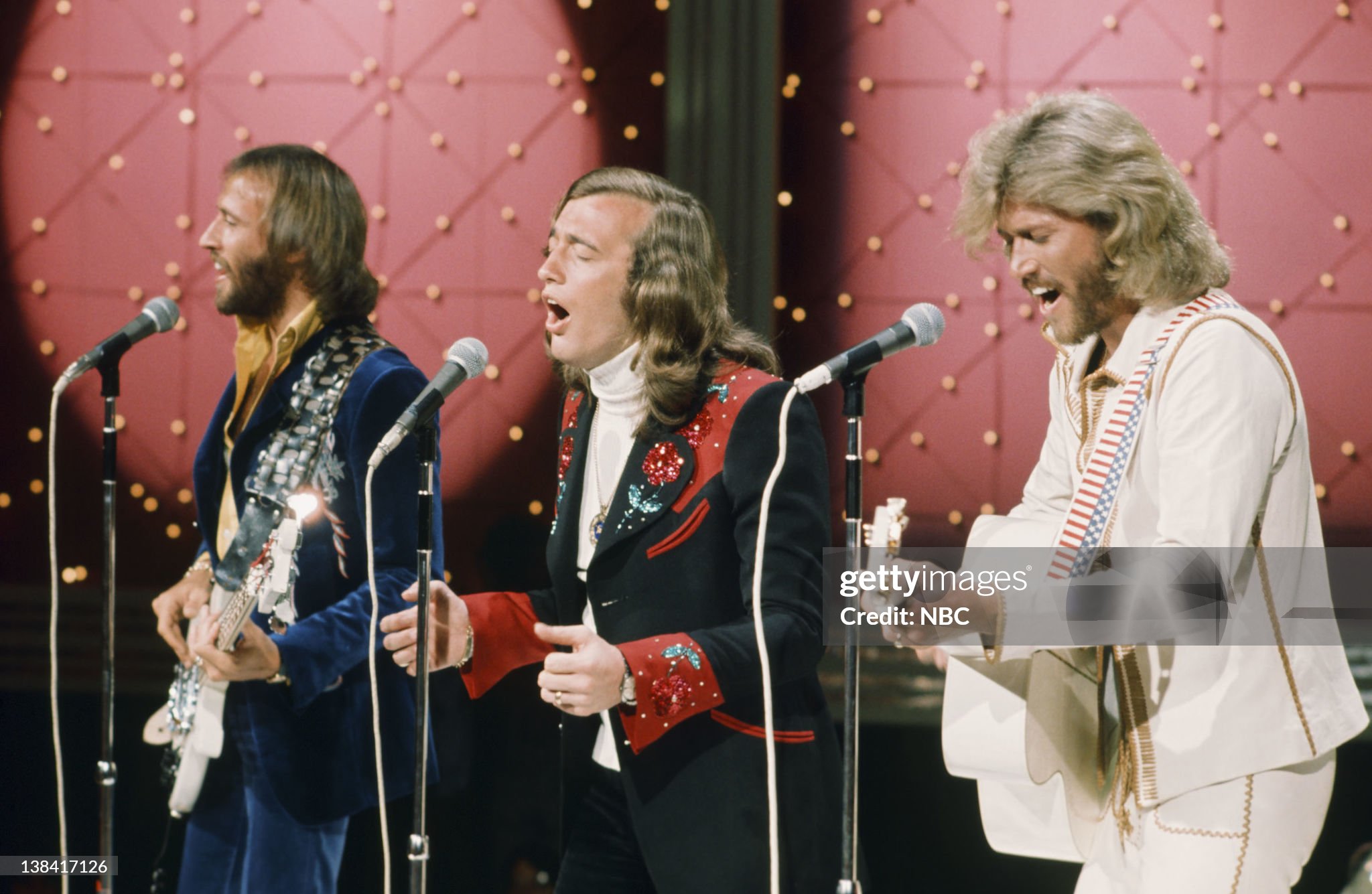
“Disco Inferno” is one of the great memory tricks of the disco age: forever linked to the Bee Gees era, yet truly belonging to The Trammps, whose fiery anthem helped define Saturday Night Fever.
There are songs that people remember exactly, and then there are songs that memory gently reshapes over time. “Disco Inferno” belongs to that second category. Mention the title, and many listeners instantly place it beside the Bee Gees—under the same mirror ball, on the same dance floor, inside the same white-suited mythology of Saturday Night Fever. But the truth is more interesting, and somehow even richer. “Disco Inferno” was not a Bee Gees recording at all. It was the work of The Trammps, a Philadelphia soul group whose explosive performance gave the disco era one of its most enduring anthems.
That distinction matters, not because it takes anything away from the Bee Gees, but because it restores credit to a record that earned its place in history on pure heat, rhythm, and timing. First released in 1976 on The Trammps album Disco Inferno, the song initially reached No. 53 on the Billboard Hot 100. That was respectable, but hardly the kind of chart finish that guarantees immortality. Then came Saturday Night Fever. Included on the soundtrack that became one of the defining pop-cultural documents of the late 1970s, the song was reissued and rose dramatically, reaching No. 11 on the Billboard Hot 100 in 1978 and No. 16 on the UK Singles Chart. Sometimes a song does not change; the world simply catches up to it.
The confusion with the Bee Gees is understandable. Their songs were the emotional and commercial center of Saturday Night Fever. “Stayin’ Alive,” “Night Fever,” “More Than a Woman,” and “How Deep Is Your Love” did more than soundtrack a film—they helped define an era. The Bee Gees became, for many people, the very sound of disco’s mainstream peak. So when “Disco Inferno” exploded from the speakers in that same universe, memory folded it into the Bee Gees orbit. Yet what makes the record special is precisely that it adds another color to the picture. It reminds us disco was never just one group, one voice, or one songwriting team. It was a whole electric city of sound.
Written by Leroy Green and Ron Kersey, “Disco Inferno” was built less as a delicate pop composition than as a full-body event. Everything in it feels designed for movement: the relentless groove, the mounting tension, the shouted release of the chorus, the sense that the room itself is getting hotter by the second. The famous cry—“Burn, baby, burn”—is one of those lines that escaped its own recording and became part of popular language. In the song, it is not about destruction. It is about surrendering to rhythm, giving yourself over to a moment so alive it feels almost combustible.
And that may be the real meaning of “Disco Inferno”. Beneath the glitter and the pulse, disco at its best offered release. It gave ordinary people a place to let the week fall away. The dance floor became theater, refuge, flirtation, reinvention, and communion all at once. The Trammps captured that feeling with unusual force. Their version does not politely invite you in; it sweeps you up. Even now, decades later, the record still sounds physical. You can almost feel the floorboards answer back.
There is also something wonderfully grand about the way the track was arranged. The longer album version stretches past ten minutes, allowing the groove to breathe, build, and transform itself. That was part of disco’s genius, and part of its honesty. These songs were not always meant to be consumed quickly. They were meant to live in a room, to unfold among lights, motion, conversation, and anticipation. In that setting, “Disco Inferno” was not simply a hit single. It was a centerpiece.
What gives the song its lasting emotional power, though, is not just nostalgia for a vanished nightlife. It is the feeling of collective joy embedded in the recording. The beat is commanding, but never cold. The vocals are exuberant without losing their soul roots. And while the Bee Gees often brought elegance, melancholy, and melodic polish to disco, The Trammps brought a different kind of force here—rawer, more communal, more ecstatic. That contrast is exactly why the song remains so essential to the Saturday Night Fever story.
So yes, the Bee Gees may be the first name many people think of when “Disco Inferno” starts playing. But the deeper, more satisfying truth is that this was The Trammps’ triumph. The song survived because it was too alive to fade, and because one unforgettable soundtrack gave it the wider stage it deserved. In the end, that is part of what makes the disco era so moving to revisit. Behind the biggest legends, there were other voices, other grooves, other sparks that kept the whole night burning. “Disco Inferno” is one of the brightest of them all.
