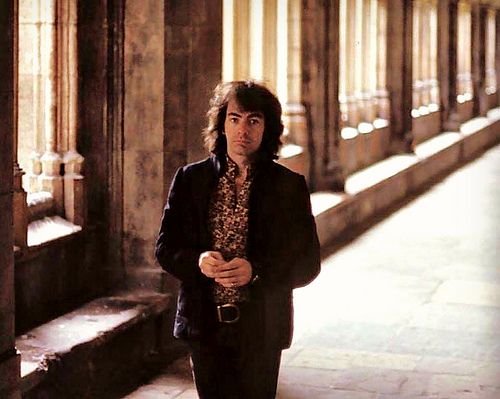
In 1970, Neil Diamond tucked a quiet doorway into Tap Root Manuscript, and Childsong became the opening breath of an ambitious album-side journey.
Childsong belongs to one of the more revealing corners of Neil Diamond’s early-1970s catalog: the African Trilogy on his 1970 album Tap Root Manuscript. The record is often remembered first for the easy radio brightness of Cracklin’ Rosie, the song that helped carry Diamond into a wider popular spotlight. But on the second side of the LP, Diamond did something more unusual. He turned away from the compact certainty of the single and built a connected suite, a sequence that reached for theater, ritual, folk color, and album-era scale. Childsong sits at the front of that sequence, making it less a stray album track than an entrance into a larger idea.
That matters because Tap Root Manuscript arrived during a moment when the long-playing record was becoming a serious canvas for popular musicians. By 1970, listeners were no longer surprised when rock, pop, soul, and folk artists used an album side as a journey rather than a collection. Diamond, already known for a gift that could turn direct feeling into durable melody, chose that broader format to test a different kind of storytelling. The African Trilogy, sometimes described in connection with the album as a folk-ballet-like suite, was not simply about making a hit. It was about arranging mood, movement, and atmosphere into a continuous musical frame.
Heard in that setting, Childsong has a modest but important role. It does not have the immediate commercial shape of Cracklin’ Rosie, nor the big communal lift that many listeners associate with Soolaimon, another key piece of the same album world. Instead, it feels like a threshold. The title itself suggests beginning, innocence, and a smaller human scale before the suite expands outward. Diamond understood the power of openings. A beginning can announce grandeur, or it can ask the listener to lean closer. Childsong chooses the latter path, helping prepare the ear for an album side that was meant to be experienced as progression rather than interruption.
The emotional interest of the track comes partly from its placement. On side one of Tap Root Manuscript, Diamond could still sound like the master of the stand-alone song: clear, melodic, persuasive, instantly accessible. Side two asks a different question. What happens when that melodic instinct is placed inside a larger dramatic setting? Childsong is where that question begins. It reminds us that Diamond was not only a writer of choruses built for radios and concert halls. He was also, at this stage, a composer curious about structure, sequence, and the way songs can speak to one another across an album side.
To hear the African Trilogy now is also to hear the album through the complicated lens of its time. In 1970, many American and British pop musicians were looking outward, borrowing textures, rhythmic ideas, and imagined settings from beyond the standard boundaries of mainstream pop. Diamond’s African framing carries that period’s sense of curiosity and ambition, but also its broad-brush romanticism. It should not be mistaken for an ethnographic document or a strict representation of African musical tradition. It is better understood as a pop composer’s theatrical, African-inspired suite, filtered through the language, imagination, and limitations of its era.
That distinction makes Childsong more interesting, not less. The track is part of a moment when Diamond was trying to widen the emotional vocabulary of his albums. He was reaching for something ceremonial and communal, but he began with a word that points to the most intimate scale possible: child. That contrast gives the piece its quiet pull. Before the rhythm grows larger, before the suite gathers its full sweep, there is this suggestion of first voice, first step, first melody remembered before it is explained. Diamond often had a way of making simple musical gestures carry more weight than their surfaces suggested, and here that ability is folded into a more ambitious frame.
For listeners who know Diamond mainly through the great concert sing-alongs, Childsong can feel like a private room inside a public career. The familiar elements are nearby: the melodic confidence, the sense of forward motion, the instinct for emotional clarity. Yet the track also belongs to a version of Diamond that was still testing what an album could hold. He had not yet become the full arena figure many people picture when they hear his name. He was still shaping the bridge between Brill Building directness, late-1960s introspection, and the grander stagecraft that would define much of his later image.
That is why Childsong deserves attention within the Tap Root Manuscript era. It is not the loudest moment on the record, and it was never meant to stand in isolation the way a single does. Its importance lies in how it opens a door. It asks the listener to move from the radio-friendly Neil Diamond into the album-minded Neil Diamond, from the crisp satisfaction of a three-minute song into a suite that wants room to breathe. More than five decades later, that small opening still tells us something valuable: even at the edge of great popularity, Diamond was listening for a larger horizon.
