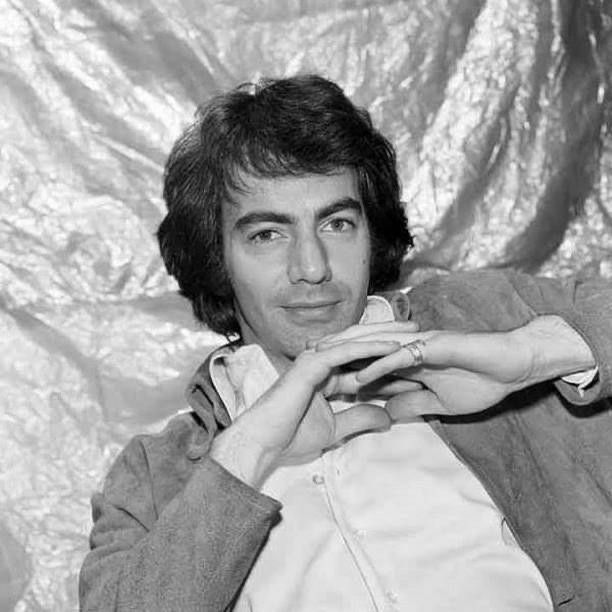
In Neil Diamond’s 2010 reading of Ain’t No Sunshine, Bill Withers’ spare ache becomes a late-career meditation on absence, restraint, and the weight of a familiar room.
Neil Diamond included Ain’t No Sunshine on his 2010 album Dreams, a collection built around songs he had lived with, admired, and chosen to interpret rather than simply perform. That context matters. This was not a young singer trying to prove his power with a beloved soul classic, and it was not a glossy studio remake designed to compete with Bill Withers’ original. It was Diamond, decades into a career defined by grand choruses, bruised romance, immigrant longing, and arena-sized emotion, stepping into one of the most economical songs ever written about absence.
Withers first released Ain’t No Sunshine in 1971 on his debut album Just as I Am. Written by Withers and produced by Booker T. Jones, the song became one of the defining records of early-1970s soul: brief, direct, almost conversational, yet emotionally complete. Its famous repeated “I know” passage does not explain loneliness; it circles it, as if the mind has become stuck in the doorway after someone has gone. The original recording had a kind of unvarnished stillness around it, a feeling that the singer was not presenting sorrow so much as discovering it in real time.
Diamond’s version on Dreams approaches that stillness from another direction. By 2010, he was no longer only the writer of Sweet Caroline, Cracklin’ Rosie, or Solitary Man in the public imagination; he was also an elder interpreter of American song, a performer whose voice had grown darker and more weathered, with a grain that could make even simple lines sound inhabited. His Ain’t No Sunshine does not need to imitate Withers’ restraint because Diamond brings a different kind of restraint: the discipline of a singer who knows how easily emotion can become too large for the room.
That is what gives the cover its quiet tension. Diamond’s career often leaned toward the dramatic sweep: the uplift of a crowd singing back, the theatrical phrasing, the big emotional gesture. But Ain’t No Sunshine asks for less. It leaves space where explanation might be. It depends on the listener sensing the empty chair, the silent hallway, the routine that no longer feels ordinary. On Dreams, Diamond seems to honor that design by letting the song’s ache remain close to the ground. The performance feels less like a declaration than a private admission made after the noise has stopped.
The album itself was part of a late-career chapter in which Diamond revisited songs associated with other writers and performers, bringing them into the weather of his own voice. Dreams included material connected to several corners of popular music, from folk and rock to country and soul, and it followed a period in which Diamond had been increasingly framed not only as an entertainer but as a serious craftsman of song. Cover albums can sometimes feel like exercises in taste, but the strongest moments happen when the singer finds a personal reason to stand inside someone else’s lyric. In this case, the reason seems to be the song’s discipline. It gives Diamond very little decoration to hide behind.
What changes most in his interpretation is the sense of time. Withers’ original feels immediate, like a door has just closed. Diamond’s 2010 version carries the impression of a feeling remembered and understood after years have passed. The absence is not sharper because it is new; it is heavier because it has become familiar. His voice, with its lower register and seasoned texture, makes the central phrase sound less like youthful bewilderment and more like recognition. He is not asking why the sunshine is gone. He sounds as if he already knows how often life returns to rooms like this.
That difference is the value of a thoughtful cover. It does not erase the original, and it does not try to solve it. It stands beside it at another hour of the day. Bill Withers gave the song its essential shape: lean, soulful, and unprotected. Neil Diamond, on Dreams, gives it the shadow of a long career and a voice that understands performance as both exposure and protection. The familiar lyric remains the same, but the emotional temperature shifts. What once sounded like the shock of absence now feels like the ritual of living with it.
In that sense, Diamond’s Ain’t No Sunshine is not memorable because it transforms the song beyond recognition. It matters because it resists doing that. It lets the melody keep its narrow path. It lets the pauses speak. It reminds us that some songs are strong enough to hold more than one lifetime inside them, and that a great interpreter does not always need to raise his voice to reveal what time has added.
