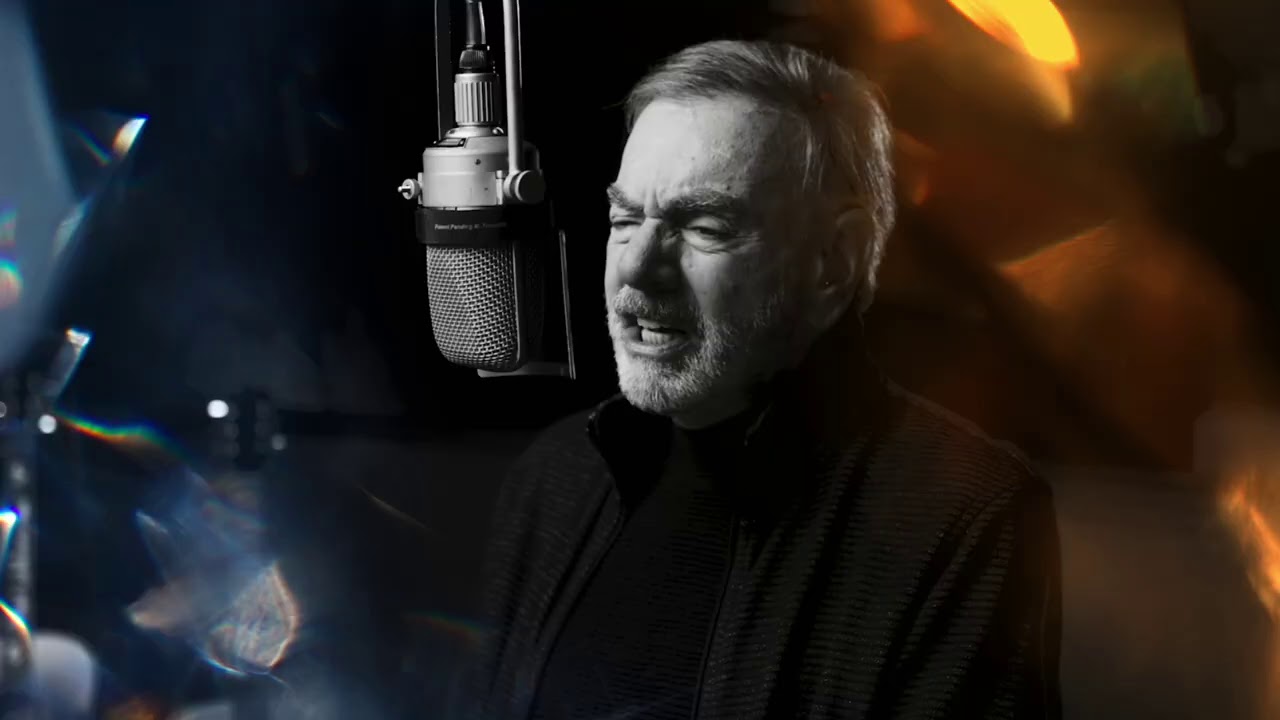
On High Rolling Man, Neil Diamond let the smooth surface of his Moods era reveal a sharper, more restless kind of hunger.
Neil Diamond released “High Rolling Man” as an album track on Moods, his 1972 studio album that also carried the enormous public glow of “Song Sung Blue” and the intimate pull of “Play Me.” In that setting, the song is easy to pass by if one is listening only for the hits. But the deeper reward of an album like Moods is not only in the songs that entered radio memory; it is in the way its lesser-discussed tracks show Diamond working through character, motion, and mood with a novelist’s instinct for atmosphere.
By 1972, Diamond was no longer simply the gifted Brill Building songwriter who had written compact pop singles with bright hooks and streetwise force. He had become a major recording artist with a growing command of the long-playing album as a dramatic space. Moods, released during his Uni Records period and produced in an era when pop, folk, country, and orchestral singer-songwriter craft were frequently brushing against one another, found him shaping songs that could be tender, theatrical, plainspoken, or searching from one track to the next. “High Rolling Man” belongs to that album-era world: not a spotlight-grabbing single, but a character piece with the feeling of someone moving too quickly through his own appetite.
The title alone carries a certain American outline. A “high rolling man” suggests money, risk, swagger, rooms where the talk is fast and the exits are always near. Diamond had a particular gift for singing characters who seem larger than life while still letting a flicker of vulnerability show at the edges. He rarely needed to overexplain them. In a song like this, the drama comes less from confession than from momentum. The figure at the center feels familiar: the man chasing the next chance, the next room, the next sign that the world still bends toward him. Yet beneath that surface is a question that keeps the song from becoming simple bravado. What does a person lose when winning becomes a way of staying in motion?
That question fits neatly inside the emotional architecture of Moods. The album is often remembered through the warmth and singable melancholy of “Song Sung Blue,” a song built on the idea that sadness can become communal once it is given a melody. But the record as a whole is more varied than that single reputation suggests. It moves between intimacy and performance, gentleness and restless self-invention. “High Rolling Man” adds a different shade to the palette. It does not ask to be comforted. It leans into forward motion, personality, and the slightly uneasy shine of a life lived in pursuit of the next bright thing.
Diamond’s voice is crucial to that balance. In the early 1970s, his singing had deepened into a recognizable blend of strength and grain: direct enough for pop radio, but textured enough to carry implication. He could make a line feel like a declaration, then let the next phrase suggest that the declaration might be covering something more fragile. On “High Rolling Man,” that quality matters. The song’s emotional charge is not simply in what is being said, but in the stance of the singer. There is energy in the delivery, but also a kind of pressure, as if the character’s confidence must keep proving itself.
Hearing the track today, its place as an album cut becomes part of its appeal. Songs that were not pushed into the center of public memory often preserve an artist’s working imagination in a different way. They show the side roads, the experiments in tone, the small dramatic sketches that surrounded the hits and helped define the era more honestly. “High Rolling Man” is one of those songs that reminds listeners how carefully Diamond’s albums were shaped around contrasts. A famous single may give an album its public face, but tracks like this give it depth, movement, and shadow.
The broader 1972 context also matters. Popular music was expanding its emotional vocabulary. Singer-songwriters were writing less like anonymous hitmakers and more like people trying to map ambition, loneliness, desire, faith, fatigue, and self-mythology in real time. Diamond stood at an interesting crossroads: part craftsman, part showman, part introspective narrator. Moods reflects that crossroads. It has polished surfaces, but it is not empty polish. It has commercial confidence, but it also contains songs that seem interested in what happens when public shine meets private restlessness.
That is why “High Rolling Man” deserves more than a footnote. It captures a side of Neil Diamond that can be overshadowed by the vast familiarity of his biggest songs. Here, he is not only offering melody; he is drawing a figure against the backdrop of an age fascinated by success, movement, and reinvention. The song’s value lies in that tension. It lets the listener stand close enough to the high roller to notice the charm, but far enough away to wonder what the motion is protecting him from.
In the end, the track remains compelling because it does not flatten its subject into simple celebration or warning. Like many strong album-era songs, it leaves room around the character. The man keeps moving. The music keeps its pulse. And somewhere inside the confidence, Diamond lets us hear the quiet cost of a life built around the next turn of fortune. On Moods, that makes “High Rolling Man” more than a deep cut. It becomes one of the album’s sharper reflections on glamour, appetite, and the restless search for something that never stays won for long.
