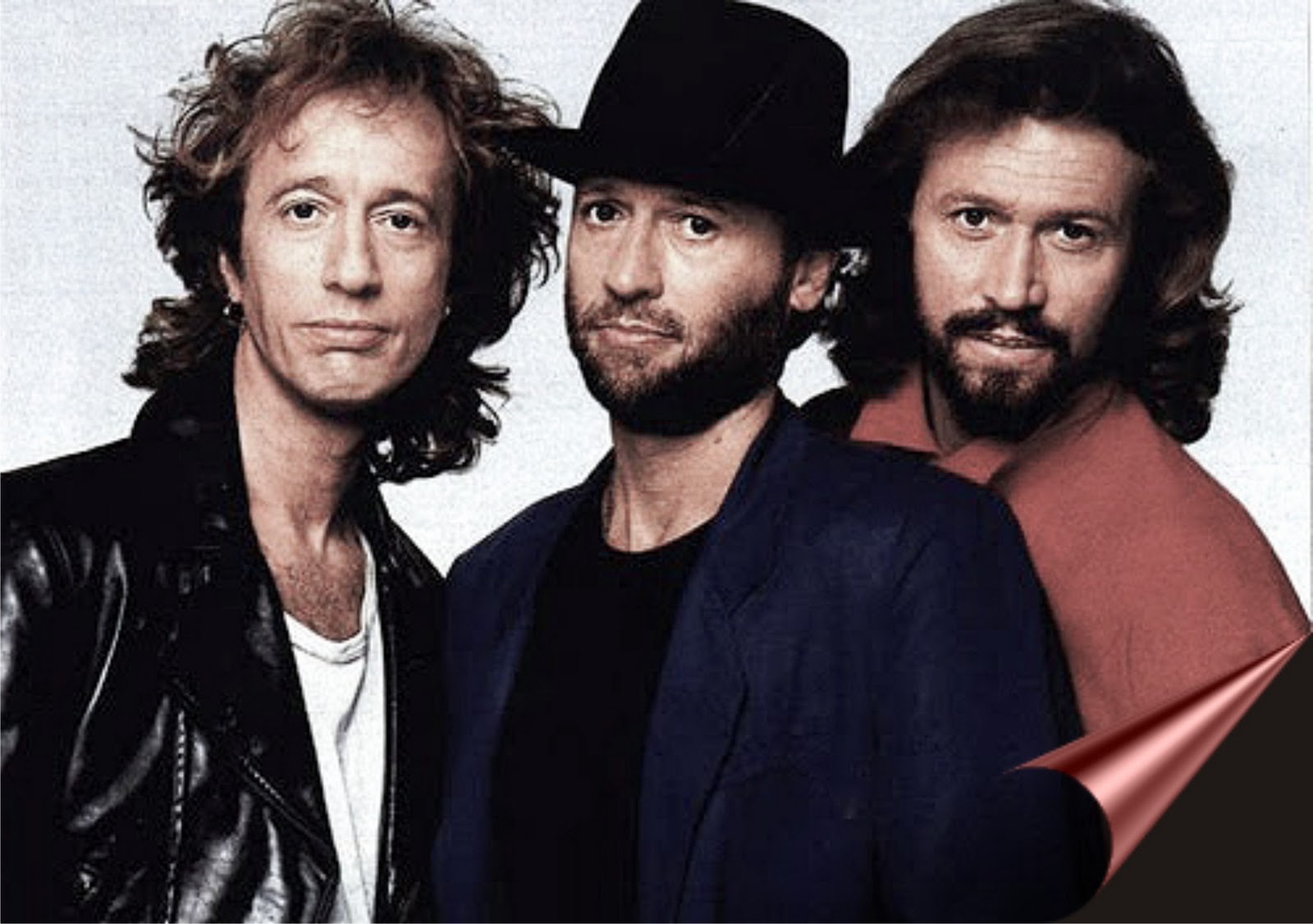
In “Paradise”, the Bee Gees softened the glare of their imperial pop years into a harmony ballad where restraint carried its own quiet drama.
“Paradise” sits on the Bee Gees’ 1981 album Living Eyes, a record released at a complicated point in the group’s story. After the immense success surrounding Saturday Night Fever and the polished confidence of Spirits Having Flown, Barry, Robin, and Maurice Gibb were no longer simply making songs in the shadow of fame; they were making them under the pressure of expectation. Living Eyes, issued by RSO, arrived as the musical climate was shifting, and it deliberately stepped away from the dance-floor identity that had come to define the Bee Gees for many listeners. Within that setting, “Paradise” stands out as a lush harmony ballad, later issued as a regional single, and it carries an extra studio detail that gives it a distinctive place in the album’s texture: Don Felder of the Eagles appears on electric guitar.
That combination is easy to miss if the song is heard only as another smooth Bee Gees album track. But “Paradise” belongs to a transitional moment, and that makes its softness more interesting. The Bee Gees had always been more than the bright falsetto peaks of their late-1970s triumphs. Before the disco-era spotlight, they had been writers of melancholy pop, baroque ballads, country-leaning sketches, and tightly braided brother harmonies that could make even simple lines feel suspended in memory. On Living Eyes, the group seemed to be searching for a way forward without pretending the previous years had not happened. “Paradise” answers that problem not by shouting for reinvention, but by leaning into grace.
The track’s emotional power is in its polish, but not the kind of polish that removes feeling. The Bee Gees’ harmonies arrive with their familiar precision, yet the arrangement gives them room to breathe. The voices do not sound like they are racing toward a pop climax; they seem to settle into the song as if the melody is unfolding across a private room. Barry’s lead presence and the blended voices of the brothers give the record its central glow, while the instrumentation frames that glow rather than competing with it. There is a suspended quality to the music, a sense of romance held carefully in place, as if the song is trying to preserve a beautiful thought before it disappears.
Don Felder’s electric guitar matters because it adds another shade without turning “Paradise” into a rock statement. Felder was associated with the cleanly sculpted guitar language of the Eagles, a sound that could bring open-road clarity, studio finesse, and a slightly sharper edge to even the most elegant arrangement. On a Bee Gees ballad, that presence feels less like a guest-star moment than a subtle crossing of worlds: Miami studio craft, soft-rock sophistication, and the Gibb brothers’ instinct for melody meeting inside one carefully arranged recording. The guitar does not steal the song’s identity. It gives the edges of the ballad a little more air.
By 1981, the Bee Gees were also dealing with the strange burden of having been too successful in one particular sound. Public taste had turned quickly, as it often does, and the group’s name had become linked in many minds to a cultural moment that some listeners wanted to move beyond. Living Eyes did not dominate the charts the way their previous late-1970s records had, but that very fact allows songs like “Paradise” to be heard today with fewer expectations attached. It is not competing with a phenomenon. It is simply a beautifully constructed ballad from three writers and singers who understood how harmony could suggest longing without spelling everything out.
As a regional single, “Paradise” did not become one of the universally recognized Bee Gees titles, and that has helped preserve its quieter character. It feels like a song discovered slightly off the main road of their catalog, tucked between the famous eras and the later reassessments. For listeners who come to it after knowing only the massive hits, it can be surprising how understated the drama is. There are no grand declarations announcing the song’s importance. Instead, it relies on the oldest Bee Gees strength: voices moving together so naturally that the emotion seems to appear between them.
What makes “Paradise” linger is the way it reflects a group standing between identities. The disco light had not fully vanished from public memory, but the brothers were already reaching back toward the ballad tradition that had always been part of them. The result is not a retreat, exactly, and not a reinvention in the loud sense. It is a measured, elegant pause. In that pause, the song finds its meaning: three familiar voices, a carefully placed guitar line from Don Felder, and a melody that suggests the Bee Gees were still searching for beauty in the spaces fame could not simplify.
