
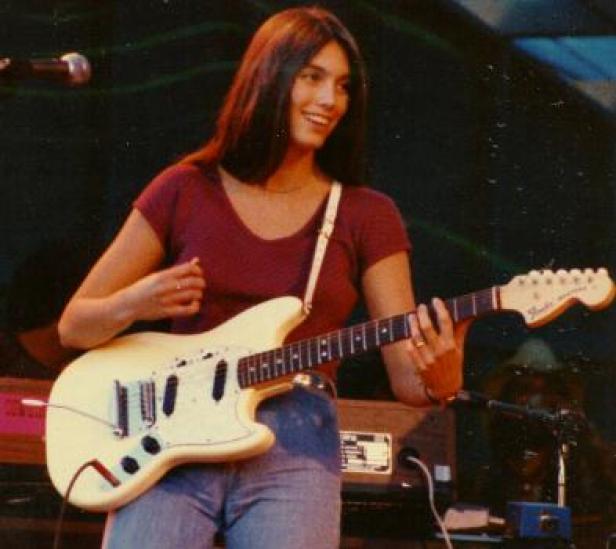
Big Black Dog finds Emmylou Harris staring into a familiar darkness and giving it shape, sound, and a strangely tender presence that feels both feared and understood.
Released in 2011 on Hard Bargain, Big Black Dog arrived as part of one of the most reflective and emotionally exposed records of Emmylou Harris‘ later career. The song itself was not a charting hit single, which fits its nature perfectly. It was never built for the quick life of radio. It belonged to an album that reached No. 18 on the Billboard 200, a strong showing for a veteran artist making deeply personal music on her own terms. That matters, because Big Black Dog is the kind of song that proves chart numbers only tell a small part of the story. Some songs are meant to climb. Others are meant to haunt.
Hard Bargain is full of memory, reckoning, and hard-earned grace. It includes songs shaped by loss, by history, by friendship, and by the long trail of experience that great artists carry with them. In that setting, Big Black Dog stands out as one of the album’s most quietly unsettling moments. The title immediately suggests something physical and near at hand, but the deeper meaning feels larger than any one image. The old phrase black dog has long been associated with melancholy, with depression, with the kind of sadness that does not announce itself loudly but remains close, persistent, and difficult to shake. Harris understands that symbolism, yet she never treats it like a slogan. She gives it breath.
That is part of what makes the song so moving. Emmylou Harris does not overplay the emotion. She lets it arrive in a measured way, through mood, through phrasing, through the weight of a voice that has learned how to carry pain without theatrical display. By the time she recorded Big Black Dog, her singing had acquired an even deeper silvered quality than in her early years. The famous clarity was still there, but now it came wrapped in weather, patience, and knowledge. She sounds like someone who has lived long enough to recognize sorrow when it enters the room, and perhaps long enough to know that fighting it is not always the same as escaping it.
There is also a personal echo here that makes the song feel especially true. Harris has long been known for her devotion to dogs and for her rescue work through Bonaparte’s Retreat. Because of that history, the image in Big Black Dog can be heard in more than one way. It may feel like a literal creature, a companion, a presence at the edge of the door. It may also feel like a metaphor for grief, loneliness, or the emotional shadows that follow a person through quiet hours. The brilliance of the song is that it never forces the listener to choose only one reading. It lives in that ambiguity, and that is exactly why it lingers.
Musically, the performance serves the song’s emotional purpose with admirable restraint. The arrangement moves with a grounded, rootsy patience rather than with dramatic flourish. Nothing is wasted. Nothing is overdecorated. That spareness gives Harris room to inhabit the song rather than simply sing it. The sound feels lived in, almost like an old room where every object carries memory. It is one more reminder that some of the most affecting work in American music has never depended on volume. It depends on truth of feeling, and Emmylou Harris has always known how to find that truth.
The backstory of Big Black Dog becomes even richer when placed beside the wider emotional landscape of Hard Bargain. This was not an album of surface reflections. It held songs such as The Road, which looked back toward Gram Parsons, and Darlin’ Kate, written in memory of Kate McGarrigle. In other words, Harris was writing from a place where love and absence were already deeply intertwined. Big Black Dog belongs to that world. It feels like part confession, part observation, part midnight conversation with oneself. The song does not ask for sympathy. It asks for recognition.
And that may be why it continues to resonate so strongly with listeners who return to Harris not merely for beauty, but for emotional honesty. Many songs about sadness try too hard to explain themselves. Big Black Dog does something wiser. It gives sorrow a body, lets it walk beside us for a few minutes, and trusts that we know what it means. That trust is one of Emmylou Harris‘ greatest gifts as an artist. She leaves room for memory. She leaves room for private understanding. She leaves room for the listener’s own shadows to answer back.
In the end, Big Black Dog is not simply a dark song. It is a compassionate one. It recognizes that pain can be intimate, familiar, even oddly faithful in the way it returns. Harris does not romanticize that feeling, but she does humanize it. She turns it into art with dignity and understatement, and in doing so she gives the song a lasting emotional weight. It may not be one of the most widely discussed titles in her catalog, but it is one of those songs that reveals more of itself with time. Like much of Hard Bargain, it does not rush to meet the listener. It waits. And when it finds you, it stays.
