
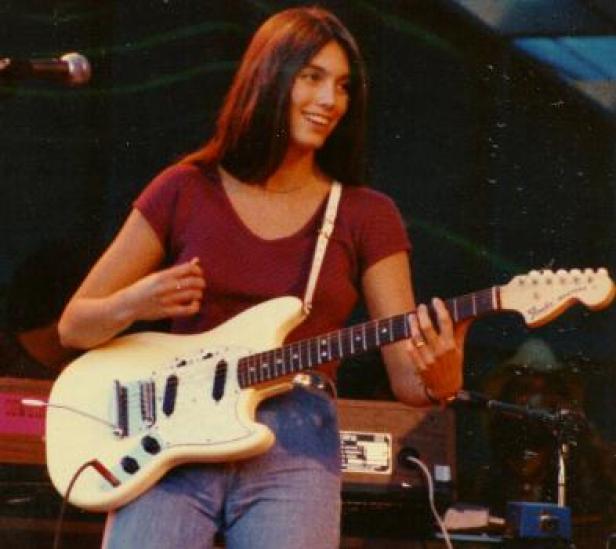
A quiet meditation on endings, memory, and endurance, “Bang the Drum Slowly” reveals Emmylou Harris in one of her most intimate and reflective moods.
Some songs arrive with fanfare. Others arrive like evening light through an old window—soft, slanting, and impossible to forget once they touch you. “Bang the Drum Slowly” belongs to that second kind. Recorded by Emmylou Harris for her 1993 album Cowgirl’s Prayer, the song was never a major Billboard country hit single, and in many ways that tells you everything about its character. This was not a record made to chase radio fashion. It was made to linger. It was made to be lived with.
That makes its place in Harris’s catalog especially meaningful. By the time Cowgirl’s Prayer arrived, Emmylou Harris had already long secured her place as one of the most elegant and respected voices in American music. She had given listeners classic albums like Pieces of the Sky, Elite Hotel, and Blue Kentucky Girl. She had moved effortlessly through country, folk, rock, and traditional music with rare grace. But the early 1990s found her in a different artistic space—less concerned with the machinery of the charts, more drawn to songs that carried emotional weather inside them. “Bang the Drum Slowly” feels very much like part of that mature, searching period.
What gives the song its power is the restraint. Even the title suggests ceremony rather than spectacle. To bang the drum slowly is not to make a scene; it is to mark time, to honor a feeling, to let sorrow or memory move at a human pace. In Harris’s hands, that idea becomes deeply affecting. She does not oversing the song. She never has to. Her phrasing does what great singers do when they trust both the material and the listener: it leaves room for the ache to breathe.
There is a special kind of wisdom in the way Emmylou Harris approaches songs like this. She had always possessed purity of tone, but by this stage in her career there was something else in the voice too—a weathered calm, a silvered patience, a sense that the singer understood not only heartbreak, but also what comes after heartbreak: the quiet, the remembering, the acceptance. That is why “Bang the Drum Slowly” feels less like a performance than a conversation with time itself.
The story behind the song is inseparable from the moment in which Harris recorded it. Cowgirl’s Prayer is often overshadowed by the artistic rebirth that would soon follow on Wrecking Ball in 1995, yet that is precisely why this song matters. It stands as part of the bridge between the Emmylou of the classic country years and the more atmospheric, searching artist she would soon become. If Wrecking Ball opened a new chapter in bold letters, songs like “Bang the Drum Slowly” were already writing the emotional preface in a much quieter hand.
Musically, the song carries the kind of arrangement that never forces itself on the ear. It supports the lyric rather than competing with it. That balance has always been one of Harris’s great gifts as an interpreter. She understands that a song about memory, parting, or emotional distance can be weakened by too much decoration. Here, the beauty comes from space, pacing, and atmosphere. The melody moves gently, but underneath that gentleness there is tremendous emotional weight. It is the sound of someone standing still long enough to hear what the heart has been saying all along.
As for chart history, it is worth saying plainly: “Bang the Drum Slowly” is not remembered as a chart success, and that has perhaps kept it from receiving the wider attention it deserves. But some songs are not measured well by numbers. They survive in a different way. They become personal songs. They become the tracks listeners return to late at night, or after long years, when louder hits no longer say enough. In that sense, its legacy may be richer than its commercial footprint ever suggests.
The meaning of the song rests in its emotional poise. It is about carrying feeling with dignity. It is about the slow toll of memory, the rhythm of loss without melodrama, the way love and regret can echo long after the moment itself has passed. And because Emmylou Harris sings it with such tenderness, the song never feels heavy-handed. It feels honest. It feels grown. It feels like a truth recognized rather than announced.
That may be why “Bang the Drum Slowly” continues to touch devoted listeners so deeply. It reminds us that not every masterpiece announces itself in bright lights. Some simply wait—patiently, gracefully—until the right season of life brings us back to them. When that happens, a song once overlooked can suddenly feel essential. In the hands of Emmylou Harris, this one does exactly that. It moves quietly, but it stays with you for a very long time.
