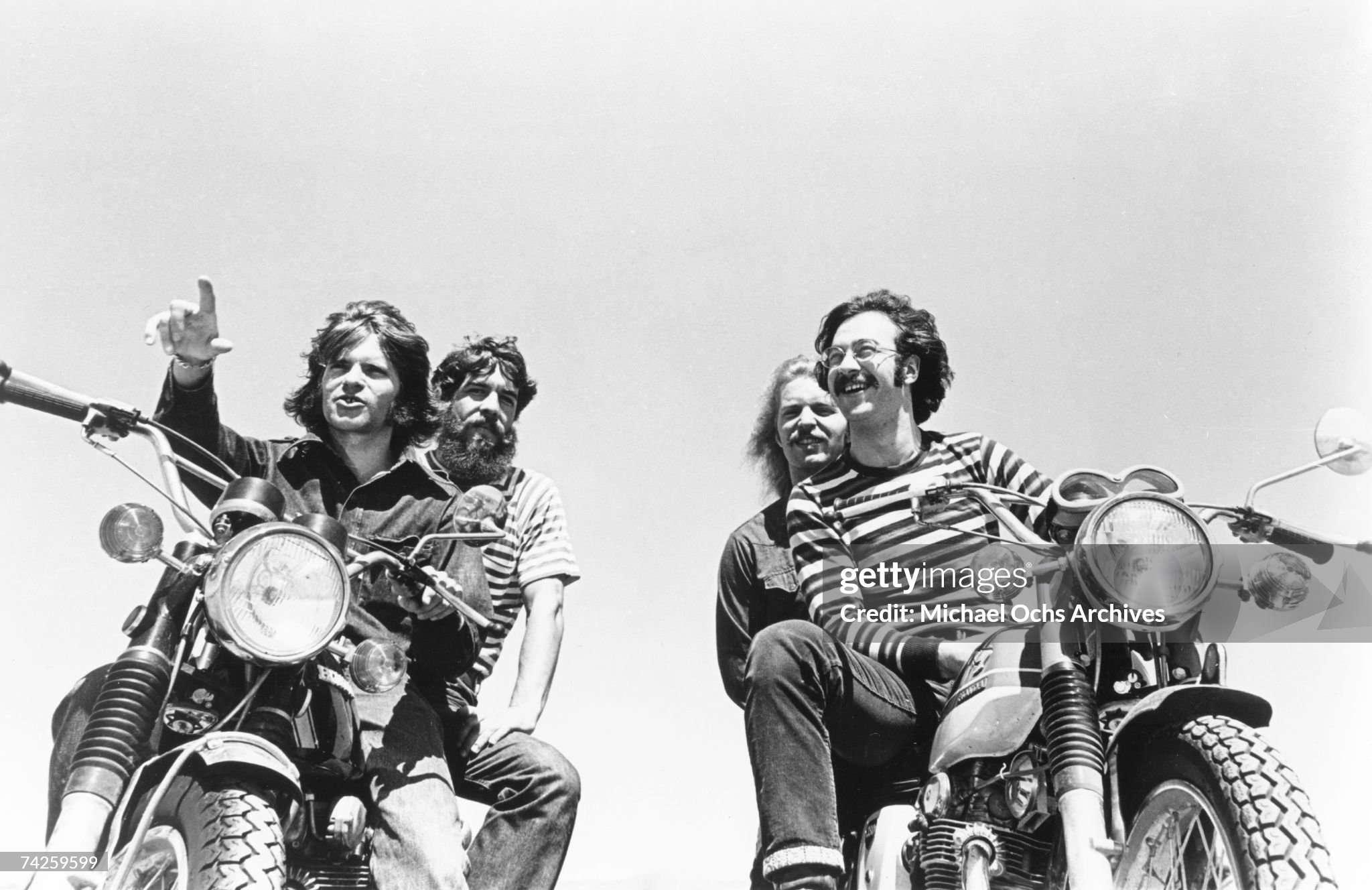
Proud Mary was always more than a hit single; in Oakland on January 31, 1970, Creedence Clearwater Revival turned it into a living, breathing testament to motion, grit, and freedom.
The remastered performance of Creedence Clearwater Revival playing Proud Mary at the Oakland Coliseum on January 31, 1970 captures the band at a moment when they seemed almost impossibly sharp. By then, the song was already part of American radio memory. First released in early 1969 from the album Bayou Country, Proud Mary became CCR’s breakthrough smash, climbing to No. 2 on the Billboard Hot 100. But the studio recording, as great as it remains, is only one side of its power. On stage in Oakland, the song sounds leaner, tougher, and more urgent, as if the band were not revisiting an old triumph but proving, once again, exactly why it mattered.
That is what makes this live document so stirring. The version preserved from Oakland is not about polish. It is about pressure, momentum, and the peculiar electricity that only a band in full command of itself can create. By the start of 1970, Creedence Clearwater Revival had already built one of the most astonishing runs in rock history. In 1969 alone they released Bayou Country, Green River, and Willy and the Poor Boys, while sending songs such as Bad Moon Rising, Green River, Down on the Corner, and Fortunate Son deep into the culture. They were not merely successful; they were relentless. The Oakland show came during that extraordinary stretch, and you can hear it in every bar.
The beauty of Proud Mary has always lived in its contradictions. It is a song about leaving, but it feels like arrival. It speaks of escape, yet it never sounds dreamy or delicate. John Fogerty built it from vivid fragments: the image of leaving a good job in the city, the pull of the river, the promise of movement, and the relief of slipping free from the machinery of everyday life. In that sense, the song has always spoken to something deeper than geography. The river in Proud Mary is not just a place. It is release. It is dignity regained. It is the hope that life can still open up and carry you somewhere better.
That emotional core helps explain why the song connected so quickly in 1969. Proud Mary arrived at a time when rock music could still sound muscular and plainspoken without losing poetry. John Fogerty did not dress the lyric in abstraction. He gave it a worker’s weariness, a traveler’s longing, and a pulse that felt built for the open road. And though Creedence Clearwater Revival came from Northern California, they had an uncanny way of summoning a whole Southern landscape in sound: riverboats, back roads, freight-line rhythm, and weathered American myth. The setting may have been imagined, but the feeling was absolutely real.
What makes the Oakland Coliseum performance so memorable is the way that feeling hardens into force. The band does not sentimentalize Proud Mary. They drive it. Doug Clifford gives the beat a hard, disciplined push. Stu Cook locks the bottom end in place with that compact, steady bass movement that keeps the song rolling forward. Tom Fogerty adds the rhythmic body that makes the whole arrangement feel full without ever becoming heavy. And at the center stands John Fogerty, singing not as a distant narrator but as someone still living inside the urgency of the lyric. His voice in this performance has bite, grain, and command. He does not oversing; he insists.
The remastered sound matters here because this is music that lives in attack and texture. A cleaner presentation lets the listener hear how economical CCR really were. There is very little wasted motion. No ornate detours. No indulgent stretching. The performance is direct in the best sense of the word. Every instrument serves the song, and every second moves with purpose. That economy was one of Creedence Clearwater Revival’s greatest strengths. They could sound enormous without ever sounding inflated.
There is also a bit of history around these Oakland recordings that longtime fans often remember well. Material from this concert was later associated with the live album The Concert, a release that spent years surrounded by confusion because it was originally misidentified as a Royal Albert Hall recording. In truth, these performances came from Oakland. That makes this January 31, 1970 document even more meaningful now. Heard in its proper setting, it is not some vague live artifact. It is a real night, a real room, and a real band at full strength.
And perhaps that is why this version of Proud Mary still lands so hard. It reminds us that some songs do not survive simply because they were well written. They survive because, in the right hands, they keep revealing new weight. The studio single gave the world one of the defining records of its time. The live Oakland performance shows what happened when that same song was carried into a hall, put under lights, and played by four musicians who knew exactly how much power lived inside its frame.
There is something deeply moving about hearing Creedence Clearwater Revival at this stage of their journey. No theatrics, no unnecessary ornament, no distance between intention and sound. Just a song about motion played by a band that, for a few remarkable years, seemed incapable of standing still. In this remastered Oakland performance, Proud Mary does not drift by like a memory. It rolls on with force, with conviction, and with that unmistakable sense that great rock and roll can still make the past feel vividly present.
