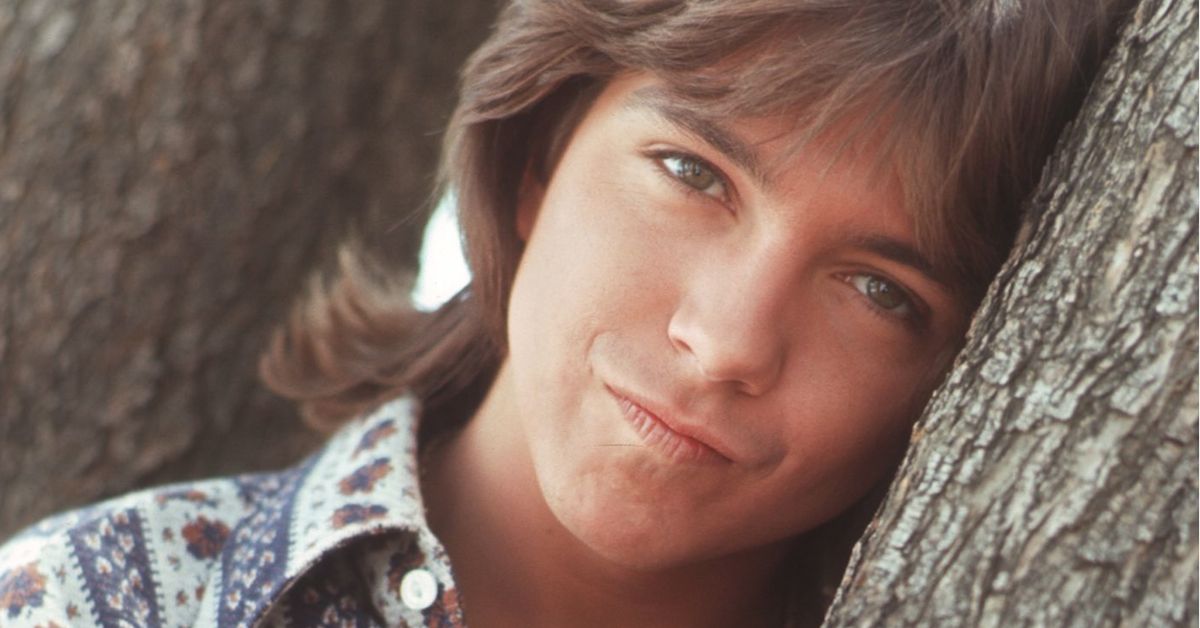
On Cassidy Live!, David Cassidy turns “Delta Lady” into something more than a cover. It becomes a living document of the fierce, unguarded rock energy he could summon on stage when the lights were hot and the crowd was real.
There are performances that entertain, and then there are performances that quietly correct the record. David Cassidy’s live reading of “Delta Lady” on the 1974 album Cassidy Live! belongs in that second category. For listeners who only knew him through the polished television frame of The Partridge Family or the fever of early-1970s pop stardom, this track still lands with a kind of jolt. It reminds us that beneath the posters, the magazine covers, and the teen-idol commotion, there was a singer who wanted the stage to feel dangerous, physical, and alive.
It helps that “Delta Lady” already carried serious rock pedigree. Written by Leon Russell, the song first became widely known through Joe Cocker’s 1969 version, which reached No. 10 on the UK Singles Chart and No. 69 on the Billboard Hot 100 in the United States. By the time David Cassidy took it on in concert, the song already had grit in its bones. It was not lightweight material, and that is exactly why his choice matters. He did not reach for something safe or decorative. He stepped into a song built for pressure, swagger, and release.
That is what makes the 1974 live version so revealing. On Cassidy Live!, David Cassidy does not sing “Delta Lady” as a polished homage. He attacks it. The performance has the heat of a man pushing against the limits of the image the public had fixed around him. His phrasing is more urgent than pretty, more committed than cautious. There is a roughness in the delivery that serves the song beautifully. He leans into the groove, rides the pulse of the band, and gives the performance a sense of motion that feels earned rather than arranged.
That rawness is the whole point. The stage often reveals truths that studio recordings smooth away, and Cassidy Live! is valuable precisely because it captures David Cassidy in a more exposed musical environment. A live album can preserve flaws, strain, spontaneity, and instinct. Here, those things become strengths. On “Delta Lady”, you can hear a performer refusing to be boxed in by the soft edges of celebrity branding. He sounds hungry. He sounds present. He sounds like someone determined to prove that the screaming audience had not imagined a musician into existence; there really was one standing there.
The arrangement contributes to that feeling. The rhythm has muscle, the band gives the song a driving backbone, and the atmosphere is less about polish than momentum. Even without turning the track into something entirely different, David Cassidy bends it toward his own dramatic instinct. He brings a harder edge to the vocal attack, and he understands that a song like “Delta Lady” needs movement more than decoration. It must feel like it is being lived through in the moment. This version does.
There is also something poignant in hearing David Cassidy embrace material like this in 1974. By then, he was already living inside a strange contradiction: he was one of the most visible young stars in the world, yet public visibility can flatten an artist just as easily as it can elevate one. Many listeners saw the face before they heard the intention. They saw the phenomenon before they noticed the musical ambition. That is why performances like this have aged so well. They let the artist step out from under the packaging and meet the audience with far fewer filters.
In that sense, “Delta Lady” on Cassidy Live! is not merely a good cover. It is a clue. It tells us what kind of singer David Cassidy could be when he was allowed to push harder, sing looser, and inhabit material with genuine rock-and-soul force. It also helps explain why so many listeners who revisit his work later in life hear more complexity than they did the first time around. Time has a way of clearing the fog around artists who were once overexposed. When the noise dies down, the voice remains.
And that voice, on this track, is not dainty, careful, or content to coast on charm. It is animated by tension. It wants the room. It wants the band to answer back. It wants to be measured not against celebrity, but against the much older and tougher standards of stagecraft: conviction, stamina, attack, and command. David Cassidy meets those standards here more convincingly than many people ever gave him credit for.
So when we return to 1974’s Cassidy Live!, “Delta Lady” stands out as one of the clearest pieces of evidence that the story of David Cassidy was always larger than his image. This is the sound of him straining toward something real, something louder, something less easily packaged. It is the sound of a performer insisting that charisma alone was never the whole story. For anyone willing to listen past the mythology, this track still burns with the excitement of discovery.
