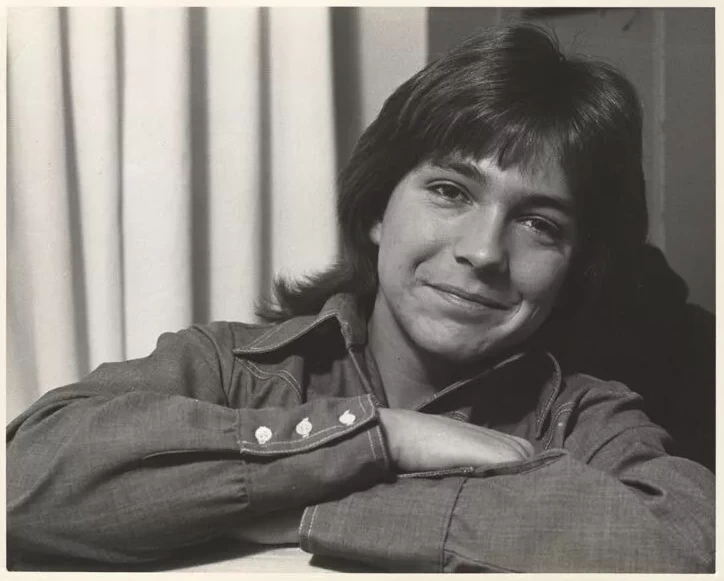
Before Barry Manilow turned it into an American chart-topper, David Cassidy gave I Write the Songs a more vulnerable, overlooked life in 1975.
There is something quietly haunting about songs that history remembers through the wrong voice. “I Write the Songs” is one of those rare cases. Most listeners now connect it instantly with Barry Manilow, whose recording reached No. 1 on the Billboard Hot 100 in early 1976 and became one of the defining pop statements of that era. But several months earlier, David Cassidy had already taken the song into the UK Singles Chart, where his version peaked at No. 11 in 1975. It came from his album The Higher They Climb, and in many ways it tells a different emotional story altogether.
That alone makes Cassidy’s recording worth revisiting. It was not a footnote at the time, and it was certainly not a novelty. In Britain, where David Cassidy still had a devoted and remarkably loyal following, the single was heard as part of his determined move beyond the teen-idol frame that had first made him famous. By 1975, the shrieking headlines of the early Partridge Family years were fading, and Cassidy was trying to be taken seriously as an adult recording artist. The Higher They Climb belongs to that chapter of his career, a moment when polish, maturity, and self-definition mattered deeply.
That is one reason his version of “I Write the Songs” lands with such unusual feeling. Written by Bruce Johnston of The Beach Boys, the song has often been misunderstood as a statement of personal ego, as if the singer were boasting about creating all music itself. Johnston explained that it was never meant that way. The song speaks from the perspective of the spirit of music, something larger than any one performer, writer, or star. Once that is understood, the lyric becomes less self-congratulatory and more almost spiritual, a meditation on inspiration, memory, and the mysterious force that seems to move through melody itself.
David Cassidy was an unexpectedly good fit for that interpretation. His reading does not sound like a victory parade. It sounds more intimate, more searching, and at moments almost reflective. Where Barry Manilow would later turn the song into a grand, undeniable declaration, Cassidy approached it with a gentler emotional shading, as though he were standing just slightly apart from the spotlight, considering what music had given him and what it had cost him. That difference is part of what makes the 1975 recording so compelling now. It captures an artist who was famous enough to understand the machinery of pop, yet sensitive enough to sing about music as something more than applause.
There is also a historical irony here that makes the story richer. The version that became the most famous was not the first version many listeners heard in Britain. For UK fans in 1975, David Cassidy was not covering a sacred American pop classic. He was delivering a current song with conviction, and for a brief but meaningful moment, that version was the song’s public life. Then Barry Manilow recorded it, the arrangement reached a wider commercial peak in the United States, and memory shifted. Popular culture often works that way. The biggest hit becomes the official version, and the earlier performance is left in the shadows, even when it helped prepare the ground.
Listening back now, Cassidy’s recording feels tied to a very specific and touching moment in his career. He was no longer simply the golden face on a magazine cover, and not yet the nostalgic figure later generations would rediscover with new sympathy. He was in between, trying to hold onto credibility, artistry, and emotional truth in an industry that rarely allowed former teen idols the dignity of reinvention. In that context, “I Write the Songs” becomes more than a strong single. It becomes a statement of artistic seriousness. Not loud, not defiant in an obvious way, but quietly insistent.
The chart facts matter because they remind us this was not revisionist wishful thinking. David Cassidy’s version genuinely connected, reaching No. 11 in the UK before Barry Manilow carried the song to No. 1 in America. Yet the emotional truth matters even more. Cassidy’s performance preserves the song before it hardened into pop monument, before it became inseparable from one singer’s public identity. In his hands, it still feels open, tender, and slightly uncertain, which may be closer to the song’s real heart than many people realize.
That is why this version deserves another listen. Not because it is better in some competitive sense, and not because history got everything wrong, but because it reveals another path the song once traveled. It reminds us that pop history is full of near-missed ownership, alternate memories, and artists who briefly held a song in a different light. David Cassidy did that with “I Write the Songs”. He turned it into a 1975 UK hit, carried it on The Higher They Climb, and left behind a recording that feels more moving with time, not less. Sometimes the overlooked version is not merely a curiosity. Sometimes it is the one that lets us hear the song’s soul before the world decided who it belonged to.
