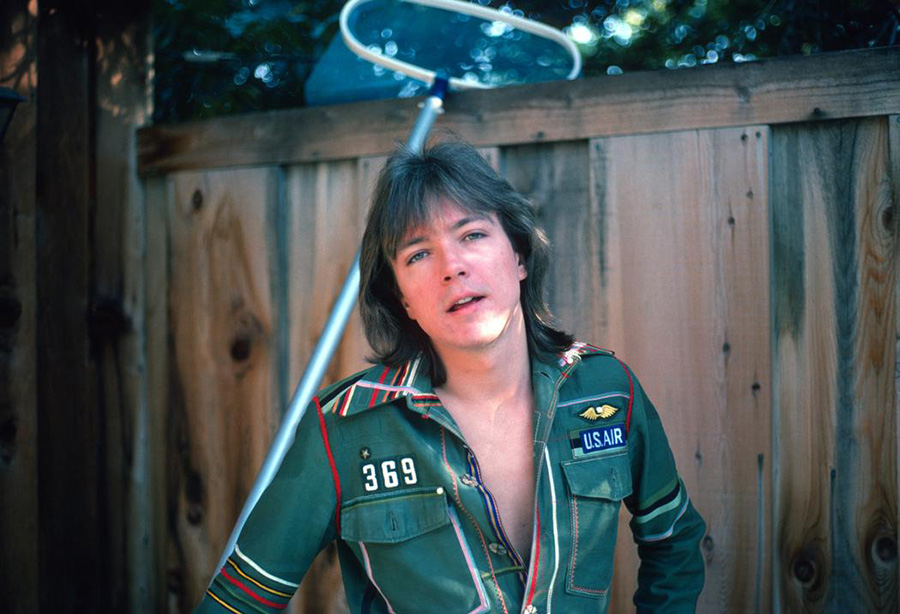
A soft, soulful turn in 1975, David Cassidy‘s Get It Up for Love revealed the mature singer hidden behind the teen-idol legend.
There are songs that dominate an era, and there are songs that quietly wait for history to catch up with them. David Cassidy‘s 1975 recording of Get It Up for Love, tied to The Higher They Climb, The Harder They Fall, belongs firmly to the second category. It was not one of the giant chart records that once made his name impossible to avoid. It did not arrive with the same fever that surrounded The Partridge Family years, nor did it storm the major U.S. or U.K. singles charts in the way earlier Cassidy releases had done. And yet, heard now, it may tell us more about the real artist than many of the bigger hits ever could.
That is what makes this recording so fascinating in any reassessment of Cassidy’s career. By 1975, he was no longer simply the bright face on a magazine cover or the star who had inspired extraordinary levels of fan devotion at the start of the decade. He was trying to be heard differently. The public image had been fixed early: youthful, photogenic, hugely successful, and almost impossibly famous. But Get It Up for Love comes from another emotional address altogether. It is smoother, warmer, more inward-looking. Instead of selling excitement, Cassidy leans into restraint. Instead of trying to overwhelm the listener, he draws them closer.
The song itself, written by Ned Doheny, carries a gentle but deeply human message. At its heart, Get It Up for Love is about opening the heart rather than guarding it. The phrase in the title may sound casual at first glance, but the emotional current beneath it is tender: let yourself rise to love, trust it again, stop hiding from what connection asks of you. In Cassidy’s hands, that idea becomes even more affecting. He does not sing it like a command. He sings it like someone who knows the cost of emotional exposure and still believes it is worth the risk.
The connection to The Higher They Climb, The Harder They Fall only deepens the poignancy. Even the title of that 1975 film sounds like a warning about fame, illusion, and the price of being lifted too quickly into public myth. Whether listeners came to the song through the film itself or discovered it later, the association now feels almost uncannily fitting for Cassidy. Few performers of his generation understood more personally what it meant to be elevated by mass adoration and then judged, sometimes unfairly, when the culture moved on. In that light, this recording no longer sounds like a side note. It sounds like a clue.
Musically, the performance sits in that rich mid-1970s space where soft rock, soul, and singer-songwriter sophistication began to overlap. There is an ease to it, but not laziness. The arrangement gives Cassidy room to phrase more delicately than many casual listeners might expect. His voice, often discussed in the shadow of his image, shows real control here. He sounds less interested in projecting star power than in finding the emotional center of the lyric. That choice matters. It tells us that he was not merely a manufactured phenomenon trying to survive changing tastes; he was an artist listening for a more adult language.
And that may be why the song has aged so well. Because it was not a massive chart event, it escaped the overfamiliarity that sometimes dulls a famous hit. Unlike I Think I Love You, Cherish, or How Can I Be Sure, this is not the David Cassidy performance most people carry around in memory. When they hear it now, the surprise can be profound. The brightness is still there, but so is a kind of weariness, a kind of earned softness. It is the sound of someone stepping away from the noise and asking to be judged by tone, phrasing, and feeling.
In commercial terms, Get It Up for Love did not become a major chart marker at the time of release, and that is part of its story. It stands outside the easy narrative of rise, hit, decline, and nostalgia. It invites a more generous reading of Cassidy’s career, one that notices the craft between the headlines. This was not simply a former teen idol trying to repeat old formulas. This was a singer moving toward a more nuanced identity, even if the marketplace was no longer listening with the same intensity.
There is something especially moving about that now. Many artists spend years trying to escape the very image that first made them beloved. Some do it loudly, through reinvention. Others do it quietly, through records that reveal who they were becoming. David Cassidy‘s Get It Up for Love belongs to that quieter tradition. It is not a declaration. It is a refinement. It does not ask for sympathy. It asks for attention.
And perhaps that is why it matters more with time. Heard today, especially in the specific context of The Higher They Climb, The Harder They Fall, the song feels like a mature, almost hidden chapter in the Cassidy story. It reminds us that careers are rarely summed up by their loudest moments alone. Sometimes the truth of an artist is waiting in the overlooked recording, the soundtrack detour, the performance that never became a smash but reveals everything essential. If you want to hear the distance between the public image of David Cassidy and the artist he was trying to become in 1975, this is one of the finest places to start.
