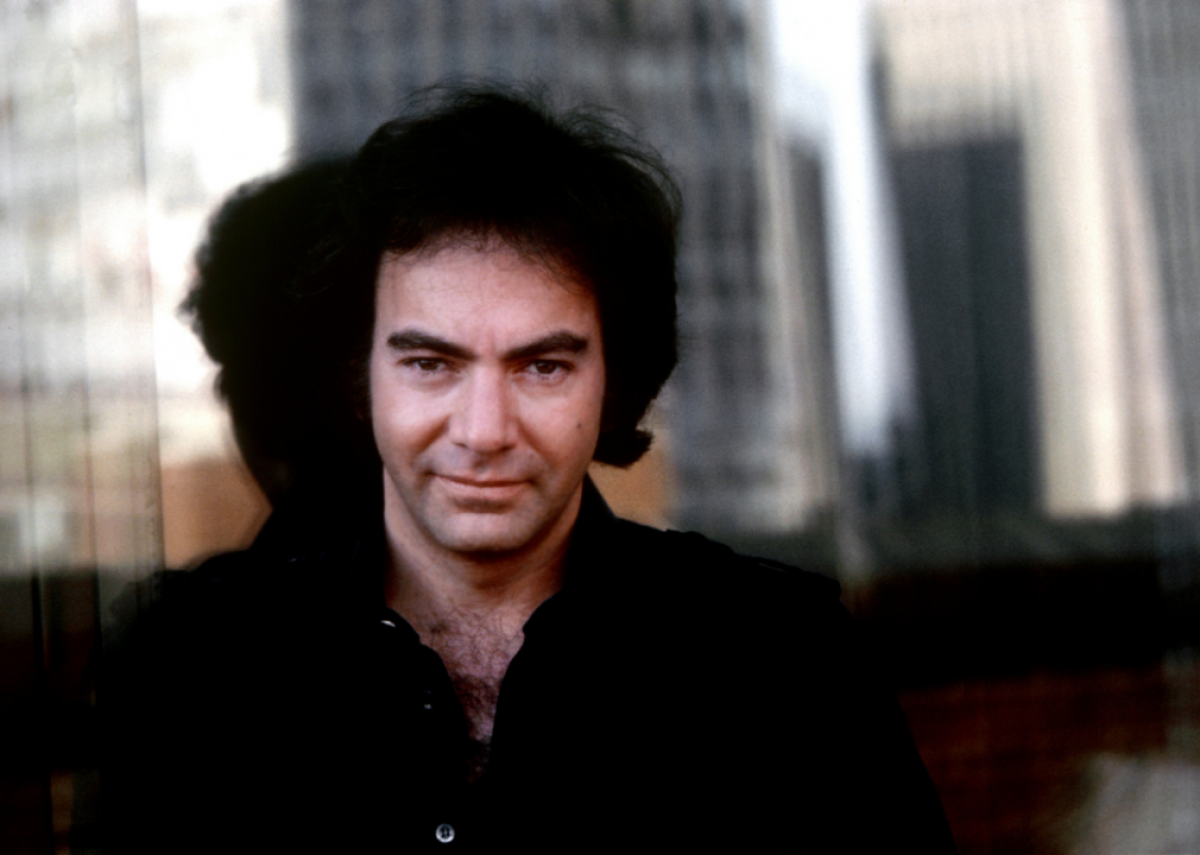
On “Crazy”, Neil Diamond let the sleek surface of 1984 carry something more restless underneath.
Neil Diamond recorded “Crazy” for his 1984 album Primitive, a project produced by Richard Perry at a moment when mainstream pop was being reshaped by sharper studio textures, brighter rhythm tracks, and a new kind of emotional gloss. That context matters. This is not the raw folk-rock Diamond of the late 1960s, nor the thunderous stage figure preserved on Hot August Night, nor only the romantic hitmaker many listeners remember from radio ballads. “Crazy” belongs to the 1980s Neil Diamond: mature, polished, still dramatic, but framed by an era that asked even established voices to find new surfaces for old longings.
The title alone could mislead a casual listener. “Crazy” is not about spectacle or novelty. In Diamond’s hands, the word feels more like pressure building inside a well-dressed room. By 1984, he had already lived several artistic lives: Brill Building songwriter, solitary pop craftsman, arena performer, soundtrack presence, and adult contemporary mainstay. Primitive arrived after the early-decade visibility of The Jazz Singer soundtrack and during a period when veteran artists were negotiating the sound of a decade defined by synthesizers, tight drum patterns, and highly controlled studio atmospheres. With Richard Perry guiding the production, “Crazy” carries that negotiation in its bones.
Perry’s role is important because he was never merely a technician arranging microphones around a singer. His best-known work often placed strong personalities inside polished pop architecture, giving emotional performers enough structure for their impulses to become radio-shaped without sanding away their character completely. On “Crazy”, that kind of production sense helps explain the track’s tension. The sound does not collapse into looseness; it moves with intention. The edges are clean. The rhythm feels designed. Yet Diamond’s voice keeps pulling human friction into the arrangement, as if the song is resisting its own neat frame.
That is one of the quiet pleasures of Diamond’s 1980s recordings. His voice was never a purely pretty instrument. It had weight, grain, and a certain theatrical directness that could make a line sound both intimate and declamatory. In the setting of Primitive, that quality becomes especially interesting. The decade’s production language could sometimes make singers seem sealed behind glass, but Diamond’s phrasing has a way of leaning forward. He sings as though he is still trying to reach someone across the room, even when the track around him is bright, orderly, and modern for its time.
“Crazy” works as an album track because it does not need to carry the full burden of a career statement. Instead, it reveals a smaller but telling corner of Diamond’s musical identity. There is a difference between a song built to announce itself and one that deepens the color of an album. On Primitive, a record with a title that suggests instinct and original feeling, “Crazy” becomes part of a larger contrast: polished 1984 production wrapped around feelings that are anything but settled. The album’s surface may be sleek, but its emotional vocabulary still belongs to a songwriter drawn to obsession, distance, desire, and the strange private weather of love.
Hearing the track now, the period details are not something to apologize for. They are part of the point. The 1980s studio sound gives “Crazy” its particular temperature. The production places Diamond in a landscape of firm grooves and controlled sparkle, but the song’s emotional center is less polished than its surroundings. That contrast is what makes the track linger. It catches a veteran artist not trying to erase the passing of time, but moving through it, adapting to it, letting a new decade press against an old instinct for confession.
For listeners who know Diamond mainly through the huge communal lift of “Sweet Caroline”, the lonely grandeur of “I Am… I Said”, or the romantic sweep of his most familiar ballads, “Crazy” offers another angle. It shows him inside the machinery of 1984 pop without disappearing into it. The song does not ask to be treated as his definitive recording, and that may be why it remains interesting. It is a snapshot of craft under changing light: an established writer and singer trusting a producer’s contemporary frame while still letting his own unmistakable intensity push through.
That is where the record finds its pulse. Not in nostalgia for one era over another, but in the friction between them. Neil Diamond had always understood how a simple word could become a dramatic doorway. On “Crazy”, with Richard Perry shaping the 1984 sheen around him, the doorway opens onto a room where control and unease sit side by side. The song’s appeal is not that it sounds untouched by its time. It is that it sounds completely marked by its time, and still recognizably human beneath the surface.
