
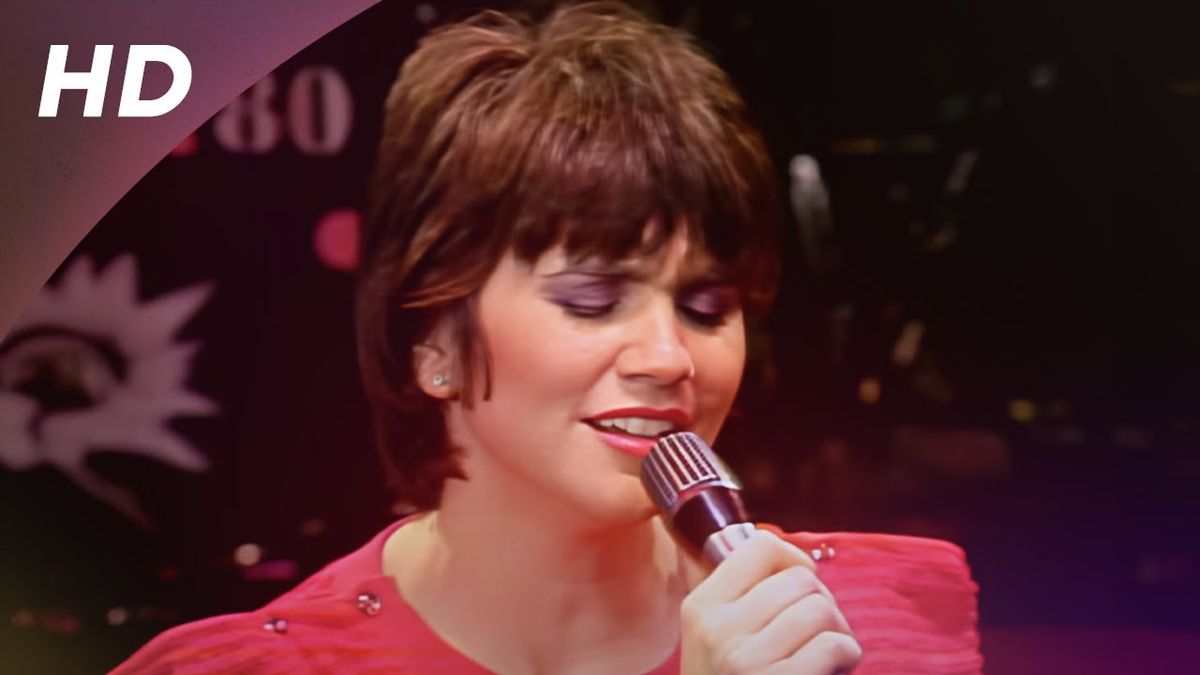
“Y Andale” bursts with the sound of homecoming—one of those rare recordings where Linda Ronstadt turns heritage, joy, and memory into a living family celebration.
When Linda Ronstadt released Mas Canciones in 1991, she was not chasing trends, and she certainly was not trying to prove anything to the pop world she had already conquered. She was returning, once again, to the music that had lived in her long before fame arrived—the rancheras, mariachi songs, and festive traditions that linked her to family, language, and ancestry. In that setting, “Y Andale” lands with special force. It does not simply play like a song; it feels like a doorway opening. From the first notes, it carries the warmth of a gathering already in progress, as if laughter, clapping hands, and old stories are waiting just beyond the threshold.
In commercial terms, Mas Canciones may not have been a mainstream pop blockbuster on the level of Ronstadt’s biggest crossover albums, but it still made a meaningful mark. The album reached the Billboard 200 and is widely noted for peaking at No. 88, a respectable showing for a Spanish-language traditional music record in the American market of the early 1990s. More importantly, it reinforced the remarkable cultural success Ronstadt had already built with Canciones de Mi Padre, proving that this chapter of her career was no side trip. It was a deeply serious artistic commitment. “Y Andale” stands right in the heart of that commitment, radiant and unforced.
What gives the recording its lasting spark is the way Ronstadt understands celebration. So many festive songs are performed loudly but feel empty. “Y Andale” is different. Here, joy is not decoration—it is memory. Ronstadt sings with the kind of authority that comes not from theatrical display, but from belonging. Her voice is bright, agile, and affectionate, yet never rushed. She seems to know exactly where the song breathes, where it laughs, and where it lifts. That is why the performance still feels fresh more than three decades later. It is lively without becoming flashy, polished without losing the rustic pulse that gives this music its soul.
There is also something moving in the larger story behind Ronstadt’s Spanish-language work. Born in Arizona, she grew up with strong Mexican roots on her father’s side, and she often spoke about hearing this music in family settings long before audiences knew her as a rock or country star. By the time she recorded projects like Canciones de Mi Padre and Mas Canciones, she was not borrowing from a tradition; she was honoring one she had inherited. That distinction matters. In “Y Andale”, listeners can hear not only skill, but affection. Ronstadt is not standing above the material, reshaping it for prestige. She is standing inside it, letting its communal spirit speak in full color.
The arrangement deserves praise too. Traditional Mexican instrumentation gives the song its buoyant frame, but what lingers is the sense of motion. The music seems to sway forward with invitation, as though every phrase is encouraging one more voice to join in. That is part of the beauty of so much ranchera and mariachi repertoire: even when performed by a major artist, it can still feel collective. “Y Andale” carries that spirit beautifully. One can almost picture a table filled with food, relatives calling across the room, elders smiling at the familiar melody, and younger listeners suddenly realizing that tradition is not something dusty or distant. It is alive. It moves. It sings back.
And perhaps that is the hidden reason the song still gives such a joyful jolt today. It reminds us that celebration in music is rarely just about happiness in the simple sense. It is also about continuity. It is about hearing something that existed before us and feeling, for a moment, that we belong to a longer story. Ronstadt had always been a singer of emotional intelligence—equally persuasive in heartbreak, longing, tenderness, and strength. But in “Y Andale”, she offers another gift: the sound of delight rooted in identity. That is harder to achieve than it looks. Many singers can project energy. Far fewer can make energy feel ancestral.
Listening now, “Y Andale” still carries the glow of a family celebration because it never depended on novelty. Its power comes from something older and sturdier than fashion. Ronstadt brings reverence without stiffness, fun without superficiality, and precision without coldness. The result is a recording that feels generous. It welcomes listeners in, whether they grew up with this music or are only discovering this side of her artistry for the first time.
In the end, that may be why the song continues to resonate. It is not merely a lively track from a respected album. It is a reminder of what Linda Ronstadt did so well across her career: she made songs feel inhabited. In “Y Andale”, she inhabits not just a melody, but a whole world of kinship, pride, and celebration. And every time it plays, that world opens again—bright, welcoming, and wonderfully alive.
