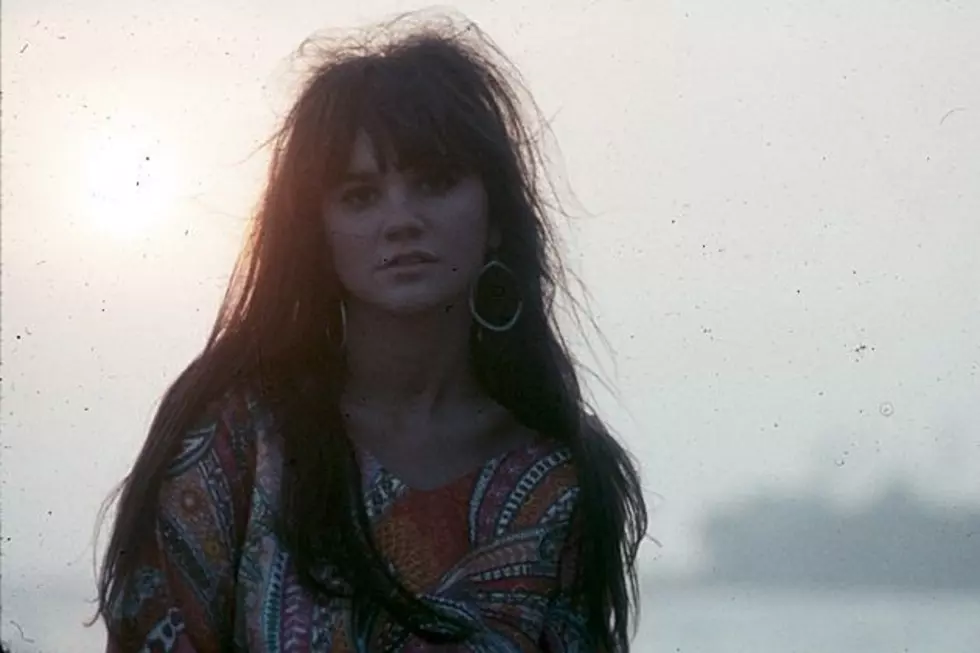
On Living in the USA, Linda Ronstadt gave Just One Look the kind of bright, urgent lift that makes an old hit feel young all over again.
When Linda Ronstadt released Living in the USA in 1978, she was no longer simply one of the most admired voices in American music. She was, by then, a defining one. The album reached No. 1 on the Billboard 200, and it arrived at a moment when Ronstadt had already proven that she could move between country, rock, pop, and rhythm and blues with rare ease. Inside that chart-topping record, her version of Just One Look may not always be the first track people mention, but it remains one of the album’s quickest thrills: sharp, immediate, and alive with motion.
That matters because Just One Look already had history behind it. The song, associated first with Doris Troy, was a Top 10 hit on the Billboard Hot 100 in 1963, and its appeal was built on simplicity. There is no long confession in it, no elaborate storytelling. It is the oldest kind of pop revelation: one glance, one instant, one emotional shift so sudden it feels almost unreasonable. Written by Doris Troy and Gregory Carroll, the song captured the breathless force of attraction in the cleanest way possible. Ronstadt understood that perfectly, and instead of slowing it down or dressing it in nostalgia, she pushed it forward.
Her version on Living in the USA is not reverent in the museum sense. It is respectful, yes, but also restless. The tempo feels eager, the guitars flash and snap, and the rhythm section keeps everything moving with the kind of confidence that defined so much of Ronstadt’s best late-1970s work. Under the guidance of producer Peter Asher, the performance has polish, but it never sounds overhandled. It keeps the emotional directness of the original while giving it a more muscular, contemporary charge. What had once been a compact soul-pop hit becomes, in Ronstadt’s hands, something closer to a pop-rock surge.
That is where her gift as an interpreter comes into focus. Linda Ronstadt never sang a cover as if she were merely revisiting the past. She sang it as if the feeling had just happened to her. On Just One Look, that quality is unmistakable. She does not make the lyric dreamy or distant. She makes it urgent. Her voice comes in with brightness, but there is a little edge in the phrasing, a sense that this is not just delight but surrender to momentum. She sounds thrilled, certainly, yet also slightly overtaken by the speed of the emotion. That is one reason the track still feels so fresh: it understands that infatuation is not calm. It is a rush.
Placed within Living in the USA, the song also reveals something larger about Ronstadt’s musical identity. This was an album that moved confidently across different strands of American popular song, from rock and roll to modern songwriting to older emotional traditions. Ronstadt had a rare instinct for choosing material that looked familiar on paper but felt transformed in performance. Just One Look fits that pattern beautifully. It connected her to early-1960s soul, but it also sounded entirely at home in the sleek, radio-ready world of 1978. That bridge between eras was one of her great strengths. She could remind listeners where a song came from without trapping it there.
The meaning of Just One Look has always lived in its economy. It says that life can change before the mind has time to catch up. There is something almost innocent in that idea, but also something unsettling. One look should not be enough, and yet anyone who has ever heard a voice, seen a face across a room, or felt recognition arrive too quickly knows the song is telling the truth. Ronstadt leans into that truth by refusing to soften it. Her performance does not linger in memory like a faded photograph. It comes at the listener like a present-tense feeling.
That may be why the track continues to reward attention. Some songs on major albums carry the weight of headlines, while others carry the spirit of the record itself. Just One Look belongs to the second category. It shows Linda Ronstadt doing what she did better than almost anyone of her era: taking a well-made song, trusting its bones, and then singing it with such conviction that it seems to belong to her life as much as to its original writer or first hitmaker. The performance is concise, but it leaves a strong afterglow. It reminds us that pop music, at its best, does not need grand statements to feel complete. Sometimes it only needs the right singer, the right tempo, and the courage to let a simple emotion move at full speed.
So while Living in the USA is rightly remembered as one of the major commercial peaks of Ronstadt’s career, this track deserves its own moment in the light. Her take on Just One Look is more than a lively album cut. It is a small masterclass in interpretation: faithful to the song’s core, alert to its history, and bold enough to make it sound as if it were written for her own fast-beating heart. That is why it still jumps from the speakers. And that is why, decades later, it still feels like more than a cover. It feels like recognition at first sight.
