
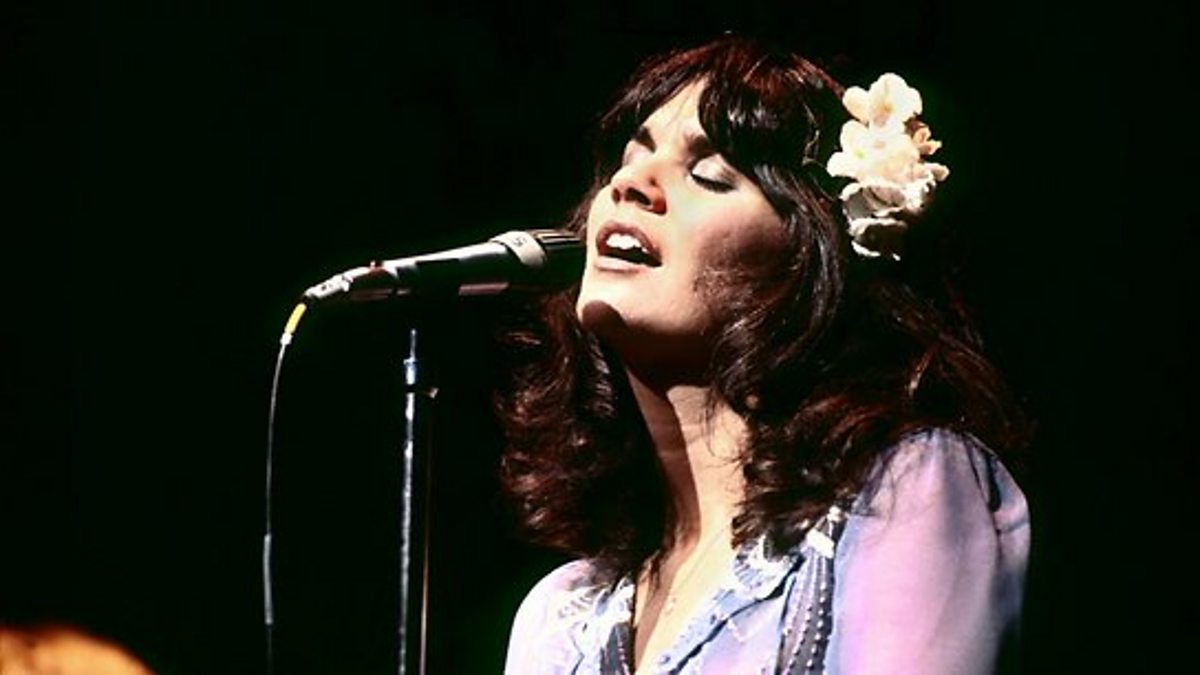
In “Back in the U.S.A.,” Linda Ronstadt does not just revive a rock-and-roll classic—she turns it into a flash of arrival, appetite, and hard-earned exhilaration, so alive that it now feels bigger than nostalgia and sharper than simple revival.
There are cover songs that feel like affectionate tributes, and there are cover songs that sound as if the singer has found a way to step inside the old material and wake it up for a different age. Linda Ronstadt’s “Back in the U.S.A.” belongs to the second kind. When she released it in 1978 as the opening track and first single from Living in the U.S.A., she was already one of the biggest singers in America, coming off the enormous success of Simple Dreams. The album itself was released on September 19, 1978, became her third and final No. 1 album on the Billboard 200, and her version of “Back in the U.S.A.” rose to No. 16 on the Billboard Hot 100. In other words, this was not a side excursion or a clever little throwback. It stood right at the front of one of her peak-era records.
But the reason the song hits harder now has less to do with chart history than with the feeling Ronstadt brought to it. Chuck Berry’s original, released in 1959, already had one of rock-and-roll’s great homecoming pulses—fast, bright, and full of relief after being away. Berry reportedly wrote it after returning to the United States from Australia, and his version reached the U.S. Top 40. Ronstadt kept that motion, but she changed the emotional temperature. What had been swagger in Berry becomes, in her hands, something warmer, freer, and somehow more communal. She does not sing it like a museum piece from the first golden age of rock. She sings it like a woman standing at the height of 1970s American popular music, reclaiming the old rock-and-roll bloodstream for herself.
The most revealing story behind her version is wonderfully human. According to the documented history of the song, Ronstadt heard Chuck Berry’s original while riding around Los Angeles with Glenn Frey, with the track playing on a homemade cassette in his car. In that moment, after joking about how hard life had once seemed when they were younger and broke, she heard “Back in the U.S.A.” and suddenly thought it would be a great song for her to sing. That small anecdote matters because it gives the performance its real spark. This was not chosen as an academic nod to early rock history. It was chosen out of recognition, delight, and instinct. You can hear that in the recording: it sounds seized, not merely selected.
And that is why the song feels like more than just a rock revival now. Revival suggests distance—a return to something safely finished. Ronstadt’s version does not feel distant. It feels immediate. On Living in the U.S.A., she surrounded herself with crack players and producer Peter Asher, and the whole album balances polish with drive. But this track, especially, has a joyful shove to it. It opens the record like a door flung wide. Even the album’s commercial story supports that sense of arrival: Living in the U.S.A. was the first album ever to ship double platinum on preorders alone, a sign of how fully Ronstadt had become a national musical presence by then. So when she sings “Back in the U.S.A.”, it no longer sounds only like one traveler touching down. It sounds like a superstar grabbing the old American rock vocabulary and proving it still has gasoline in it.
There is also something deeper in hearing it now. Time has changed the emotional weather around songs like this. In 1978, Ronstadt’s version could be heard as a bright, expertly delivered rocker from a singer at the top of her commercial powers. Today, it also feels like a reminder of how elastic and generous her artistry was. She could move from country-rock ache to standards, from folk-rooted material to pure pop craftsmanship, and here she steps into early rock and roll without sounding borrowed or strained. The song becomes a statement of continuity: Chuck Berry’s America, the Los Angeles band culture that shaped Ronstadt, and the late-1970s mainstream all rushing together in under three minutes.
What makes it so satisfying, finally, is that Ronstadt never treats the song as a history lesson. She does not over-reverence it. She lets it move. That is the secret. The best revivals do not embalm old songs; they return them to circulation. Her “Back in the U.S.A.” still feels so alive because it understands that rock and roll was always about motion—planes landing, radios blaring, streets flashing by, hearts lifting before the mind has time to explain why. In her voice, the song becomes more than a salute to an earlier era. It becomes a celebration of American pop energy itself: loud enough to travel decades, warm enough to feel personal, and sharp enough that, even now, it lands with the thrill of fresh wheels touching the runway.
