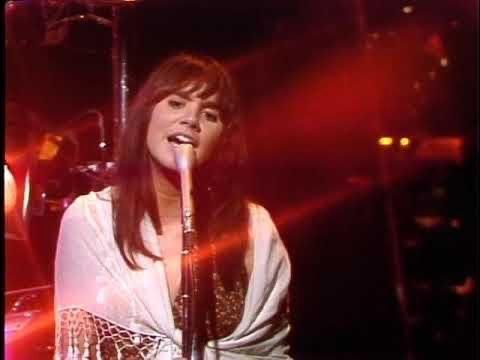
Dreams to Dream is the quiet emotional center of An American Tail: Fievel Goes West, and Linda Ronstadt sings it like a promise made in the dark and kept by morning.
When Linda Ronstadt returned to the world of Fievel in 1991, she was stepping back into a very special corner of soundtrack history. The first film, An American Tail, had already produced one of the era’s defining movie ballads in Somewhere Out There, the duet Ronstadt recorded with James Ingram. That song became a major crossover success, reaching No. 2 on the Billboard Hot 100 and No. 1 on the Adult Contemporary chart. So when An American Tail: Fievel Goes West arrived with Dreams to Dream, the new song faced an almost impossible task: it had to serve the sequel on its own terms while standing in the shadow of a modern soundtrack classic.
That chart context matters, because Dreams to Dream did not repeat the same kind of major pop-chart breakthrough in 1991. It is remembered less as a radio phenomenon than as the emotional soul of the film itself. And perhaps that is exactly why the song has endured. It was never built as a flashy hit. It moves with more tenderness than ambition, more feeling than force. Instead of chasing the kind of dramatic pop momentum that often defined soundtrack singles of the period, it settles into something gentler and, in the long run, more lasting.
Written by composer James Horner and lyricist Will Jennings, Dreams to Dream carries the same grace that made Horner such a powerful storyteller in film music. He understood how to write melodies that felt instantly familiar, as if they had always existed somewhere in memory, waiting to be found. Here, he pairs that gift with a melody that rises like a lullaby and an anthem at once. Jennings, meanwhile, gives the song language that is simple without ever being slight. The lyric speaks to longing, fear, and faith in a way that children can feel and adults can recognize all too well.
The soundtrack context is essential to understanding the song’s beauty. An American Tail: Fievel Goes West shifts the Mousekewitz family from the crowded immigrant dream of the city toward the mythic promise of the American West. It is a sequel with dust on its boots, but also hope in its heart. Dreams to Dream captures that movement perfectly. It is not merely an attractive ballad placed over the story; it grows out of the story’s deepest themes. Tanya’s hunger for a bigger life, the family’s westward hope, and the old American promise that tomorrow might still open another door all seem to gather inside this one melody.
That is where Linda Ronstadt becomes so important. By the early 1990s, she had already proven herself one of the most versatile singers in American music, moving from rock to country to standards to traditional Mexican repertoire with astonishing ease. But versatility alone does not explain why this performance still feels so moving. Ronstadt brings emotional intelligence to the song. She does not treat Dreams to Dream as a grand showcase number. She sings it with restraint, with warmth, with the kind of quiet conviction that makes a listener lean closer rather than step back. It is a beautiful reminder that a strong voice does not always need to sound overpowering. Sometimes its greatest strength lies in how gently it can carry hope.
There is also something deeply fitting about Ronstadt singing this particular song. Born in Arizona and steeped in American roots traditions, she had a natural connection to the textures of the Southwest and the emotional landscape of songs about distance, belonging, and desire. In Dreams to Dream, that background seems to glow beneath every phrase. The performance feels open-skied and intimate at the same time. You can almost hear the frontier in the arrangement, but you can also hear something more private: the ache of wanting a life larger and kinder than the one in front of you.
For many listeners, that is why the song still lingers. It belongs to that rare category of soundtrack music that outlasts the marketplace that first received it. It may not have claimed a headline chart position the way Somewhere Out There did, but it has remained alive in memory for other reasons. People remember it from a VHS tape, from a family room, from a child singing along without fully understanding why the melody felt so comforting. And later, with time, the meaning deepens. What once sounded like a lovely animated-film song begins to reveal itself as a meditation on resilience.
The title says everything. To dream is hopeful. To keep dreaming when the world feels uncertain is brave. That is the quiet message inside Dreams to Dream, and it is one of the reasons the song still feels so human. It does not offer easy triumph. It offers trust. It does not deny fear. It answers fear with tenderness. In that sense, it is one of the most emotionally honest songs ever attached to a family film sequel.
Looking back now, the beauty of Dreams to Dream lies partly in what it refused to do. It did not try to outshine the earlier franchise hit. It did not force itself into pop grandeur. Instead, it gave An American Tail: Fievel Goes West exactly what the film needed: a heart, a hush, and a voice capable of making hope sound believable. That is why Linda Ronstadt’s 1991 soundtrack performance still matters. It may not be the loudest song in her catalog, but it remains one of the most tender.
