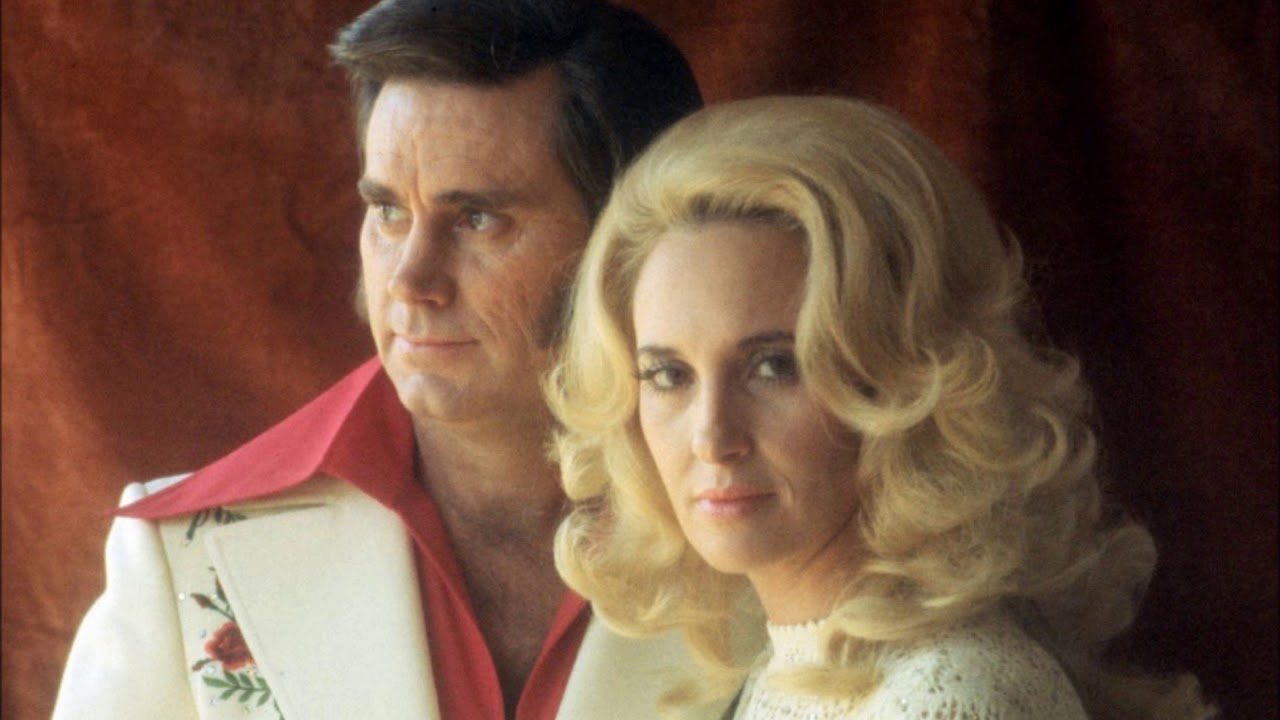
In Tammy Wynette’s 1968 anthem, devotion sounded less like surrender than a woman’s voice holding its ground.
Released in 1968 on Epic Records, Stand by Your Man was written by Tammy Wynette with producer Billy Sherrill and became the title track of her album that year. It rose to No. 1 on the country chart and quickly settled into a larger role than most hit singles ever have to carry: signature recording, cultural argument, comfort, provocation, and shorthand for an entire idea of womanhood. Its public life has often been louder than its three minutes of music, but the reason it could bear that weight begins with the voice.
The record arrives with the elegance associated with Sherrill’s Nashville productions: controlled piano, country steel, swelling strings, and a structure that seems to lift Wynette step by step toward the chorus. The arrangement does not crowd her. It frames her. Around her, the music has the polish of late-1960s countrypolitan country, but at the center is something sharper and more exposed. Tammy Wynette does not sing Stand by Your Man as a simple domestic instruction. She sings it as if every word must pass through a bruise before it becomes advice.
That tension is the source of the song’s power. On paper, the lyric asks for patience and loyalty from a woman toward a flawed man. In 1968, as public conversations about women’s roles were changing rapidly, that message could sound painfully traditional. For some listeners, it affirmed devotion; for others, it seemed to ask women to accept too much. The song’s cultural resonance grew from that conflict. It was embraced, resisted, quoted, parodied, defended, and debated, yet it never disappeared into any single interpretation because Wynette’s vocal keeps complicating the surface meaning.
Her performance is not fragile in the usual sense. There is ache in it, but also force. She shapes the opening lines with a conversational steadiness, almost as if she is trying to make a difficult truth sound ordinary. Then the chorus rises, and the voice opens into something commanding. The title phrase becomes less a plea than an announcement, and the final notes carry the strain of someone holding a position that costs her something. That is why the recording can feel both vulnerable and formidable at once. Wynette’s sound contains heartbreak, but it does not collapse under it.
By the time she recorded Stand by Your Man, Wynette had already become closely associated with songs about domestic sorrow, separation, and endurance. The same year brought D-I-V-O-R-C-E, another record in which ordinary family language becomes almost unbearable through the way she sings it. Her great subject was not sadness alone, but the pressure placed on women to speak calmly while carrying emotional weight. In that sense, Stand by Your Man belongs to a larger body of work where female heartbreak is not decorative. It is the main instrument.
The song’s later life only intensified its contradictions. It traveled beyond country radio into political speech, comedy, television, and public debate. When Hillary Clinton referred to the title in a 1992 television interview, the phrase became part of another national conversation, showing how deeply the song had entered American language. Few country recordings have become so useful as a cultural symbol, and few symbols have been asked to mean so many opposing things. Yet returning to the original single is clarifying. Before it was a slogan, it was a performance.
That performance matters because Wynette refuses to let the listener hear obedience without pain, or loyalty without dignity. The record does not erase the unease of its lyric; it preserves it. The beauty of the singing lies in the way it makes a complicated position audible. Whether one hears the song as comfort, compromise, confession, or contradiction, the vocal power is undeniable because it is tied to restraint. She does not overstate the hurt. She controls it, and that control becomes its own kind of force.
In the end, Stand by Your Man endures not because its message is simple, but because Tammy Wynette made its simplicity impossible. Her voice turned a line of counsel into a chamber where love, duty, pride, pain, and cultural expectation all echo at once. The song asks listeners to sit with a difficult emotional inheritance. It does not resolve the argument around it. It lets a woman’s voice stand at the center of that argument, steady enough to be heard, strong enough to remain unresolved.
