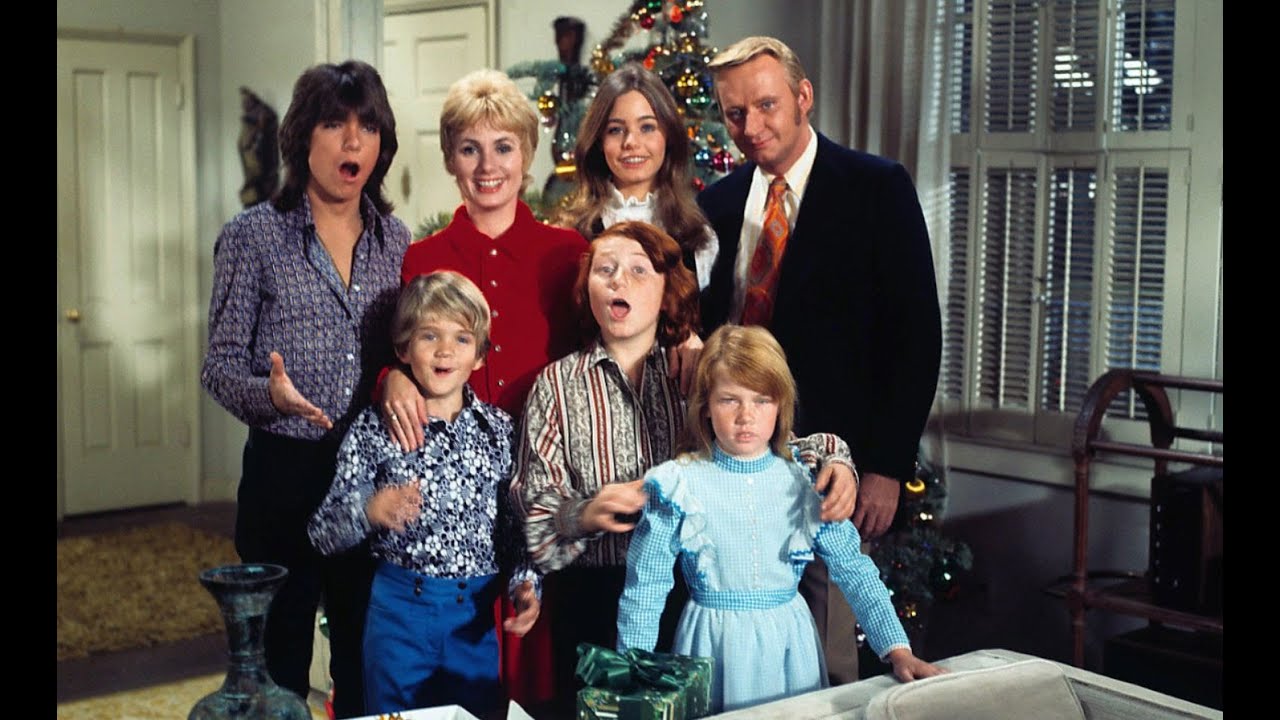
On Sound Magazine, a modest album cut becomes a reminder that David Cassidy could make polished television pop feel unexpectedly private.
The Partridge Family’s I’m on My Way Back Home appeared on the 1971 Bell Records album Sound Magazine, released during the height of the television group’s popularity and the rapid rise of David Cassidy as one of the era’s most visible young singers. The album is often remembered first for brighter, more familiar Partridge Family material, especially I Woke Up in Love This Morning, but tucked inside that same collection is a track that works in a quieter, more revealing way. I’m on My Way Back Home does not need to announce itself as a major statement. Its appeal comes from the way Cassidy carries the song, turning a neatly made pop recording into something that feels closer to confession than product.
That distinction matters because The Partridge Family catalog has always lived in a complicated space. The name belonged to a television family, the records were tied to a weekly ABC sitcom, and the image was deliberately bright: a painted bus, matching optimism, catchy choruses, and youth-market momentum. Yet the recordings themselves were not imaginary. They were professional pop productions shaped by producer Wes Farrell, studio players, arrangers, songwriters, and, crucially, Cassidy’s lead voice. In that voice, the Partridge Family records found their human center. Even when the surrounding machinery was glossy, Cassidy often sang as if there was a more uncertain story happening beneath the surface.
That is what gives I’m on My Way Back Home its staying power as an overlooked Sound Magazine cut. The title suggests return, repair, and movement toward somewhere emotionally safer, but the performance does not reduce the idea to simple cheerfulness. Cassidy’s vocal is not showy in the heavy-handed sense. He does not have to force drama into the track. Instead, he lets the melody carry a kind of restless tenderness. There is a softness in the way he approaches the line, a sense of someone trying to sound hopeful while still carrying the weight of distance. For a song housed inside a highly commercial pop album, that emotional shading is easy to miss on a casual listen and hard to ignore once heard closely.
The arrangement belongs unmistakably to early 1970s studio pop: clean, melodic, radio-friendly, and carefully balanced. Nothing feels jagged or unruly. The track is shaped for warmth and accessibility, with the kind of polished backing that made The Partridge Family records move easily from television screens to turntables. But that smoothness creates a useful contrast. Around Cassidy, the music offers order; inside his delivery, there is motion. He sounds young, but not lightweight. He sounds sincere without becoming theatrical. That balance was one of his strongest gifts as a singer, and I’m on My Way Back Home gives listeners a concentrated example of it.
It is also the kind of album track that helps explain why Cassidy’s appeal extended beyond the surface of teen-idol fame. The posters, magazine covers, and screaming crowds could make the phenomenon seem simple from a distance, but the records often reveal something more nuanced. Cassidy’s best Partridge Family vocals have an immediacy that does not feel manufactured, even when the production around him clearly was. He had a way of making a bright pop song feel as if it had been caught in the middle of a private thought. On I’m on My Way Back Home, that quality becomes the whole point. The song is less about spectacle than about the emotional credibility he brings to a familiar pop theme.
Within Sound Magazine, this track can feel like a small corridor away from the most obvious sunshine. The album was released at a moment when The Partridge Family brand was operating at full speed, and listeners often approached the music through the television show’s charm. But albums can preserve details that singles and memories sometimes overlook. A cut like I’m on My Way Back Home gives the record another dimension. It shows how Cassidy could work inside the boundaries of a family-friendly pop format while still suggesting longing, hesitation, and the desire to be understood.
Hearing the track now, it becomes less useful to ask whether The Partridge Family should be treated like a conventional band and more interesting to ask what these records captured despite their unusual origins. They captured a particular moment in pop culture, certainly, but they also captured a young vocalist learning how to turn mass exposure into personal communication. Cassidy would spend much of his career negotiating the distance between the image placed on him and the artist he wanted to be. In a quiet way, I’m on My Way Back Home points toward that tension. The voice is already doing more than the packaging required.
That is why this overlooked Sound Magazine track deserves to be heard not as a minor leftover, but as a small showcase. It does not ask for grand claims. It simply offers a melody, a polished arrangement, and a lead vocal that gives the song its emotional pulse. The Partridge Family may have been designed for television brightness, but on I’m on My Way Back Home, David Cassidy lets a shadow pass through the sunlight. That shadow is what makes the recording linger.
