
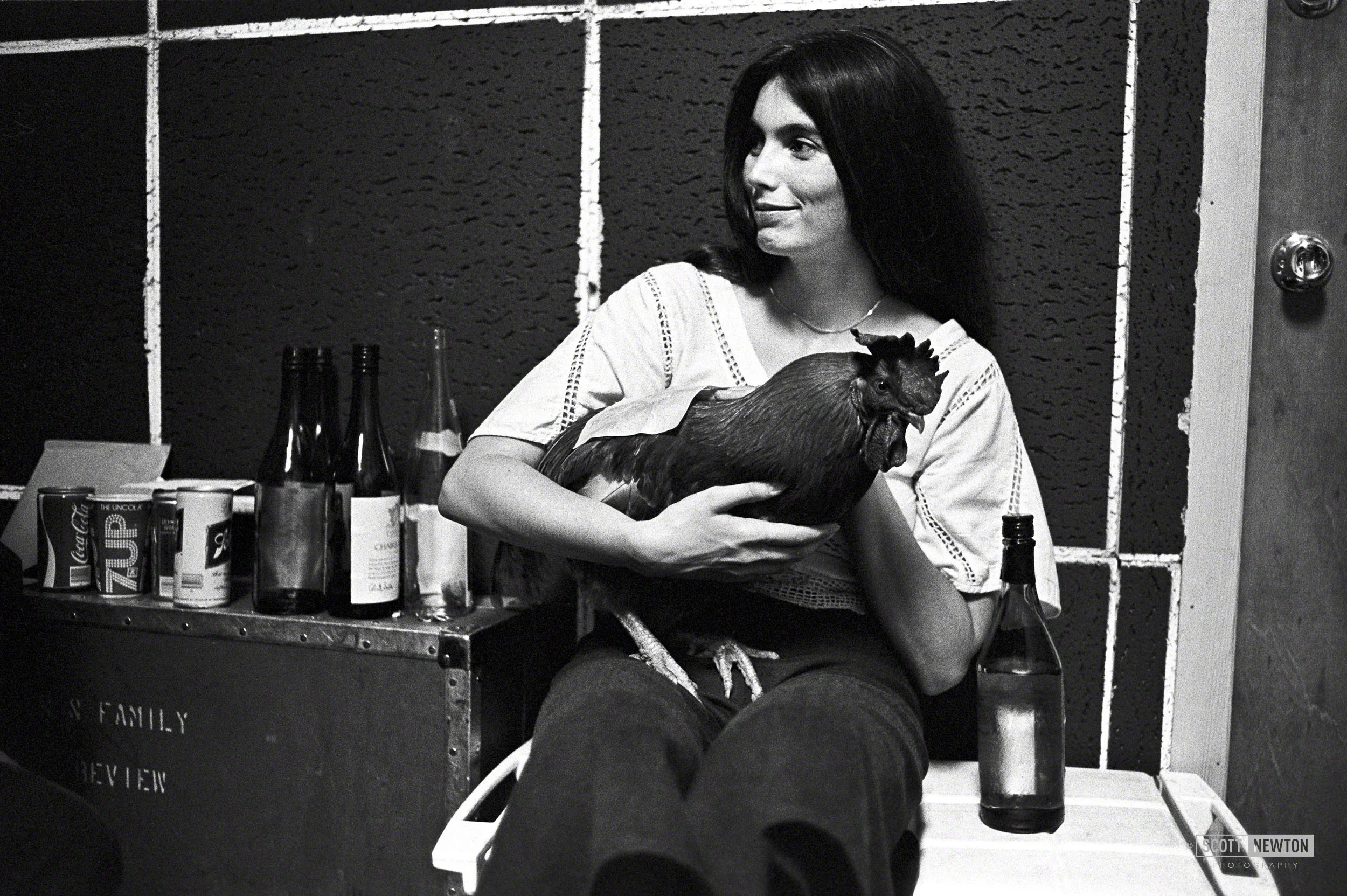
On “The Light,” Emmylou Harris sings as if comfort itself had been given a melody—soft, luminous, and quietly everlasting, a song where devotion feels both earthly and gently touched by grace.
When Emmylou Harris recorded “The Light,” she placed it near the very front of one of the most underrated albums of her career. The song appears as track two on Cowgirl’s Prayer, released on September 28, 1993 by Asylum/Elektra, and credited to Emmylou Harris and Kieran Kane. It was not pushed as one of the album’s headline singles, so it did not build a separate chart history of its own. Instead, it lived inside the larger fate of the album, which reached No. 34 on Billboard’s Top Country Albums and No. 152 on the Billboard 200. That context matters, because “The Light” belongs to a record that arrived in a difficult commercial moment for Harris—well reviewed, deeply musical, but not loudly embraced by country radio. In retrospect, that only makes the song feel more precious: a quiet jewel on an album that asked to be heard with patience rather than consumed by fashion.
The title tells the story before the lyric even begins. “The Light” sounds spiritual not because it preaches, but because it reaches for one of the oldest symbols in all of song and faith: light as guidance, light as relief, light as love, light as the thing that makes darkness bearable. A lyric excerpt associated with the song gives away its emotional center—“I see the light at the end of the tunnel… and the light, darlin’, is you”—and with that single turn, Harris and Kane transform a familiar phrase into something more tender and more intimate. The song is not simply about escape from sorrow. It is about finding one human presence that becomes illumination itself. That is why the performance feels both romantic and devotional at once.
What makes the recording so moving is the way Emmylou Harris refuses to force the feeling. On Cowgirl’s Prayer, the production was handled by Allen Reynolds and Richard Bennett, and the album as a whole was widely described as subdued, thoughtful, and acoustically grounded. In that setting, “The Light” has room to breathe. The personnel listed for the track—Harris on voice and harmony vocals, Kieran Kane on gut-string guitar, Al Perkins on pedal steel, Roy Huskey Jr. on acoustic bass, and Larry Atamanuik on drums and percussion—suggest exactly the kind of arrangement the song needs: intimate, unhurried, transparent. Nothing crowds the lyric. Nothing distracts from the tenderness of the idea.
That softness is essential to the song’s lasting beauty. Emmylou Harris has often been celebrated for her clarity, her poise, and that unmistakable voice that can sound at once fragile and enduring. On “The Light,” she uses those gifts not for drama, but for reassurance. The song does not rise toward a big cathartic moment. It glows instead. It moves with the confidence of music that knows it does not need to shout in order to remain. And perhaps that is why it sounds timeless. Trends in country music shifted violently around the album in 1993, but this song seems untouched by those shifts. It belongs to an older and deeper current in American songwriting, where love is expressed with humility and where spiritual language can enter a song without making it heavy-handed.
There is also something quietly poignant in where “The Light” sits in Harris’s career. Cowgirl’s Prayer came just before Wrecking Ball in 1995, the album that would dramatically reshape how many listeners thought about her late-career artistry. Because of that, Cowgirl’s Prayer is sometimes treated as a transitional record, almost a prelude to reinvention. But songs like “The Light” remind us that Harris did not suddenly become deep, reflective, or spiritually resonant on Wrecking Ball. Those qualities were already there. They were simply housed, on Cowgirl’s Prayer, in a more modest frame—less mythic, less atmospheric, but no less sincere. In that sense, “The Light” feels like one of the clearest bridges between the elegant country intimacy of her earlier years and the more searching, meditative work that would follow.
Its meaning lingers because it speaks to a longing nearly everyone understands: the hope that in a confusing world, some person, some love, some faithful presence might still shine clearly enough to lead us through. The beauty of “The Light” is that it never separates the spiritual from the human. The illumination here is not abstract. It has a face. It has a voice. It belongs to someone loved. That is what gives the song its warmth. It does not ask us to choose between earthly devotion and transcendent feeling. It lets the two become one.
So “The Light” endures as one of those quietly radiant Emmylou Harris performances that reveal more with each return. It may not be among the most famous titles in her vast catalog, and it was never lifted up by big chart numbers of its own. But its grace is unmistakable. On a record that deserved more attention than it received, Harris gave this song a voice of rare gentleness and conviction. The result is soft, spiritual, and timeless indeed—not because it reaches for grandeur, but because it understands how often the deepest songs are the ones that simply keep glowing after the music has gone still.
