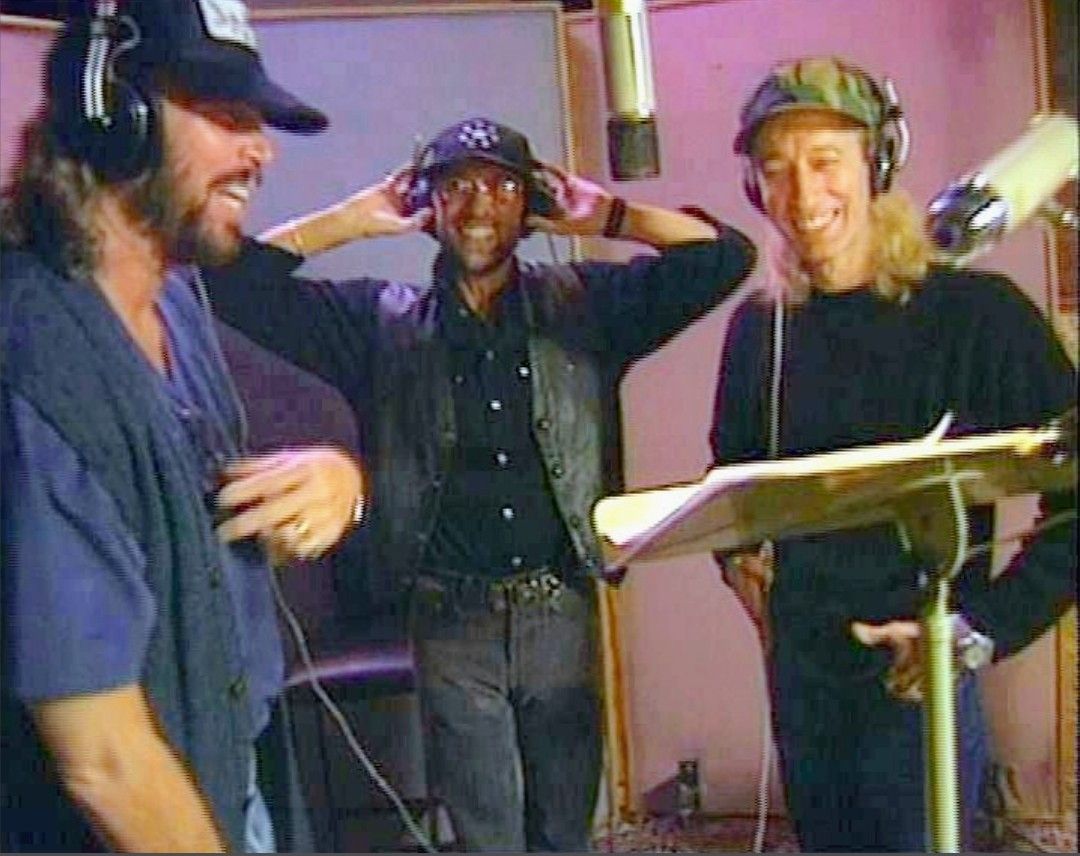
On the Bee Gees’ last studio album, Embrace let Robin Gibb carry a late burst of dance-floor brightness without losing the group’s emotional undertow.
Embrace, recorded by the Bee Gees for their 2001 album This Is Where I Came In, sits in a fascinating corner of the group’s final studio release. It is not the song most casual listeners reach for first when they think of Barry, Robin, and Maurice Gibb. It was not the great public calling card of the album in the way the title track became. Yet as a late-career album cut, it reveals something deeply telling about the Bee Gees at the turn of the millennium: they were still willing to move, still willing to let rhythm pull them forward, and still able to place one unmistakable voice inside a changing pop landscape. With Robin Gibb at the center, the track draws on a sleek, Europop-influenced dance pulse while remaining unmistakably connected to the brothers’ lifelong gift for melody and emotional tension.
This Is Where I Came In arrived in 2001, following decades in which the Bee Gees had already lived several different musical lives. They had been melancholy 1960s balladeers, architects of harmony-rich pop, disco-era world conquerors, and later craftsmen of adult contemporary songs with a polished emotional surface. By the time this album appeared, there was no need for them to prove that they belonged to pop history. The more interesting question was what they still wanted to say as a band. The album answered that question not with one single style, but with a collection that allowed the brothers’ individual personalities to show through: Barry’s warmth and melodic authority, Maurice’s grounding musical instincts, and Robin’s singular, tremulous intensity.
That is where Embrace becomes more than a side note. Its dance-oriented setting could have been treated as a simple nod to contemporary production, but the track has a different kind of pull because Robin’s lead vocal does not behave like a carefree club voice. Robin always had a way of sounding as if he were reaching across a distance, even inside an uptempo arrangement. His tone could be bright and urgent, yet edged with a kind of vulnerability that made the song’s surface shimmer feel less simple than it first appeared. On Embrace, that contrast matters. The beat suggests motion, but the voice suggests longing. The arrangement moves forward, while the singer seems to hold something in place just long enough for the listener to feel it.
The Europop influence gives the track a crispness that separates it from the Bee Gees’ classic late-1970s dance identity. This is not an attempt to recreate the fevered atmosphere of their disco era, nor does it lean on nostalgia as a shortcut. Instead, it sounds like the group stepping into a cleaner, more synthetic pop environment and testing how their melodic instincts might live there. The rhythm is direct, the feel is streamlined, and the production gives Robin space to rise above the track rather than disappear into it. That balance is crucial. The Bee Gees could always stack harmonies into something almost architectural, but here the emotional drama comes from how one voice threads through the pulse.
Hearing Embrace within the full arc of This Is Where I Came In also changes its weight. The album was the final studio album released by the Bee Gees as a trio, and that fact inevitably casts a softer light over every track. It can be tempting to listen backward from that knowledge and turn every song into a farewell, but Embrace resists that easy reading. It does not sound like a goodbye. It sounds more like a late flash of curiosity, a reminder that the brothers were not content to simply stand beside their old achievements. Even near the end of their studio journey together, they were still making room for surprise.
Robin’s presence is the emotional key. His voice had always been one of pop’s most recognizable instruments, not because it was conventionally smooth, but because it carried a human quiver that polish could never erase. In a dance track, that quality becomes especially striking. The music invites release, but Robin brings tension. The title itself, Embrace, suggests closeness, contact, a gesture of acceptance; yet the way the song moves makes that closeness feel active rather than settled. It is not a still embrace. It is an embrace in motion, one caught between the body and the memory, between the night air of modern pop and the long echo of three brothers who had spent a lifetime singing together.
That may be why the track has grown more interesting with time. Late-career songs often carry a burden they did not ask for. They are heard not only as songs, but as evidence: of endurance, adaptation, taste, fatigue, renewal. Embrace is valuable because it does not ask to be treated like a grand monument. It is lighter on its feet than that. It glows in the margins of the album, asking for attention not through spectacle, but through the quiet friction between a dance beat and a voice that refuses to become merely decorative.
For listeners who know the Bee Gees mainly through their biggest anthems, Embrace offers a different doorway. It shows a band whose history was enormous, but whose late work still contained small, revealing turns. It shows Robin Gibb not as a relic of a past sound, but as a singer capable of making a modern track feel unsettled, tender, and alive. And it shows This Is Where I Came In as more than a closing entry in a discography. It was a final studio chapter with loose edges, individual voices, and unexpected flashes of color. In that light, Embrace feels like a dance track with a shadow just beneath its shine, moving forward while carrying the long memory of everything the Bee Gees had already become.
