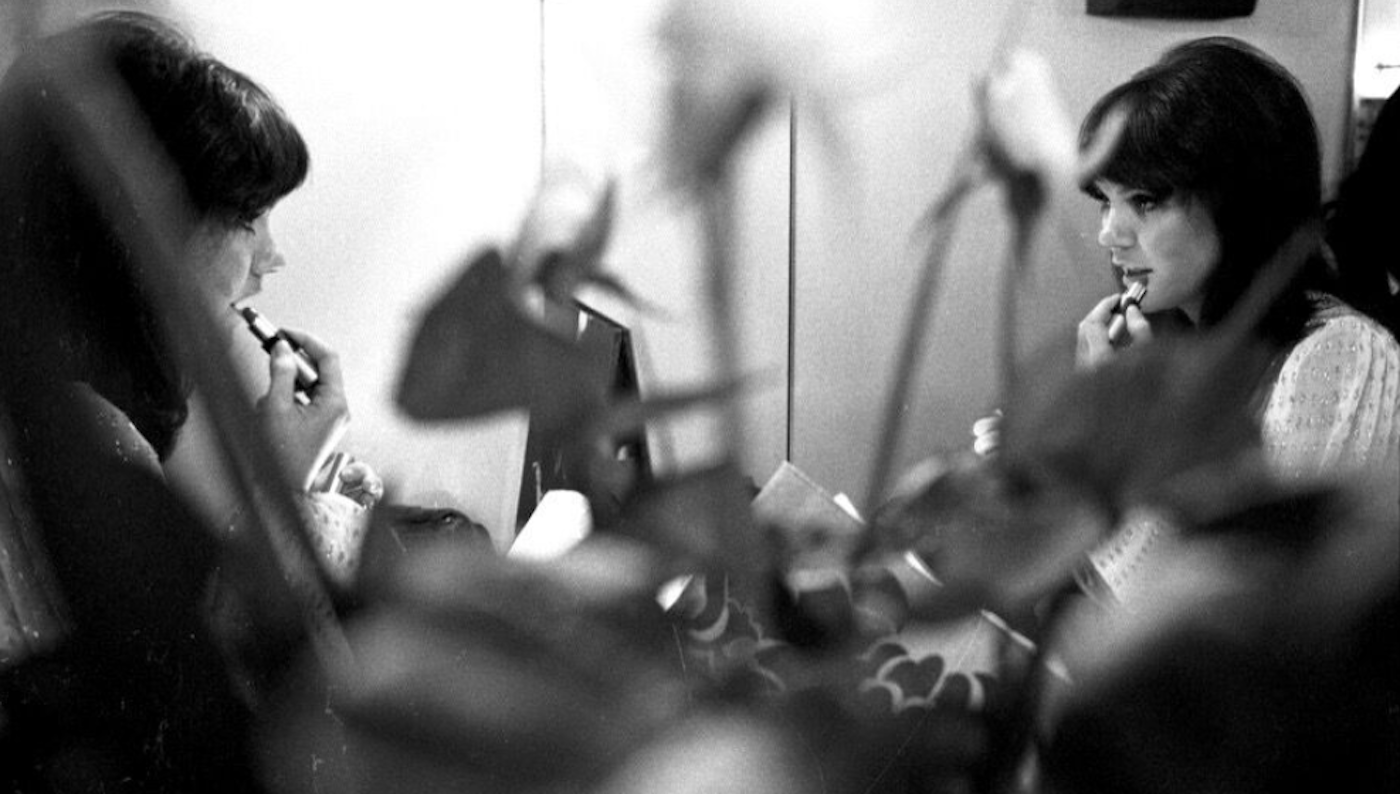
“Sorrow Lives Here” is Linda Ronstadt lowering her voice to a near-whispered truth: sometimes heartbreak isn’t a passing storm—it’s the address you wake up in, the room your heart keeps returning to.
Released as a deep album cut—not a standalone single—“Sorrow Lives Here” never had its own chart “peak” the way the big radio favorites did. Instead, it lived inside a far larger triumph: Simple Dreams, issued on September 6, 1977, recorded May 23–July 22, 1977 at The Sound Factory (Hollywood) and produced by Peter Asher. That album became a cultural cresting wave, spending five successive weeks at No. 1 on the Billboard album chart in late 1977 and ultimately earning 3× Platinum (3,000,000 units) in the United States. In other words: “Sorrow” wasn’t a song fighting for attention in the marketplace; it was a song carried by one of the most dominant records of its era.
And it matters where it sits on that record—quietly but deliberately. On the official track listing, “Sorrow Lives Here” is track 4 (side one), running 2:57, written by Eric Kaz. Nestled among more famous names—Buddy Holly, Warren Zevon, J.D. Souther, Roy Orbison—it arrives like a shaded alcove in a house full of open windows. The album’s hits may be the front porch where everyone gathered—“Blue Bayou,” “It’s So Easy,” “Poor Poor Pitiful Me”—but “Sorrow Lives Here” feels like the back room where you can finally admit what you’ve been holding in all day.
What makes Ronstadt’s performance so affecting is the way she turns a plain sentence into a life story. The title—“Sorrow Lives Here”—doesn’t say “I’m sad,” or “I’m hurting,” as if grief were a passing mood. It says sorrow has moved in. It pays rent. It knows where the cups are kept. That’s the emotional genius of the song: it frames heartbreak as something domestic—quiet, habitual, almost embarrassingly familiar. And Ronstadt, with that rare combination of power and restraint, sings it in a way that never begs for sympathy. She simply tells the truth, and the truth has weight.
Critically, it also reveals a side of Simple Dreams that can be missed if you only remember the radio. This album is often praised for its interpretive brilliance—Ronstadt stepping into other writers’ shoes and making their stories feel newly lived. On “Sorrow Lives Here,” she does exactly that, but with a particular kind of dignity: she doesn’t overact the pain. She lets the ache sit in the center of the room, unadorned. The arrangement supports that approach—no grand melodrama, no theatrical curtain call—just a steady, grown-up pulse that suggests the singer isn’t encountering sorrow for the first time. She’s learned its habits. She knows how it speaks.
The song’s deeper meaning, then, is less about one specific heartbreak and more about the way heartbreak can become a companion—unwanted, but stubbornly loyal. It’s the moment when you realize you’re not merely mourning a person; you’re mourning the version of yourself that once believed things would turn out differently. In that sense, “Sorrow Lives Here” is not only sad—it’s wise. It understands that grief is not always loud. Sometimes it’s quiet housekeeping in the mind: replaying conversations, reconsidering choices, living with the echo of something that ended while life kept insisting on continuing.
And perhaps that’s why this track endures, even without a chart statistic to point to. Because the best “ranking” for a song like “Sorrow Lives Here” isn’t in numbers—it’s in recognition. It’s in the small, involuntary nod when Ronstadt sings the title and you realize she isn’t describing a lyric. She’s describing a place.
