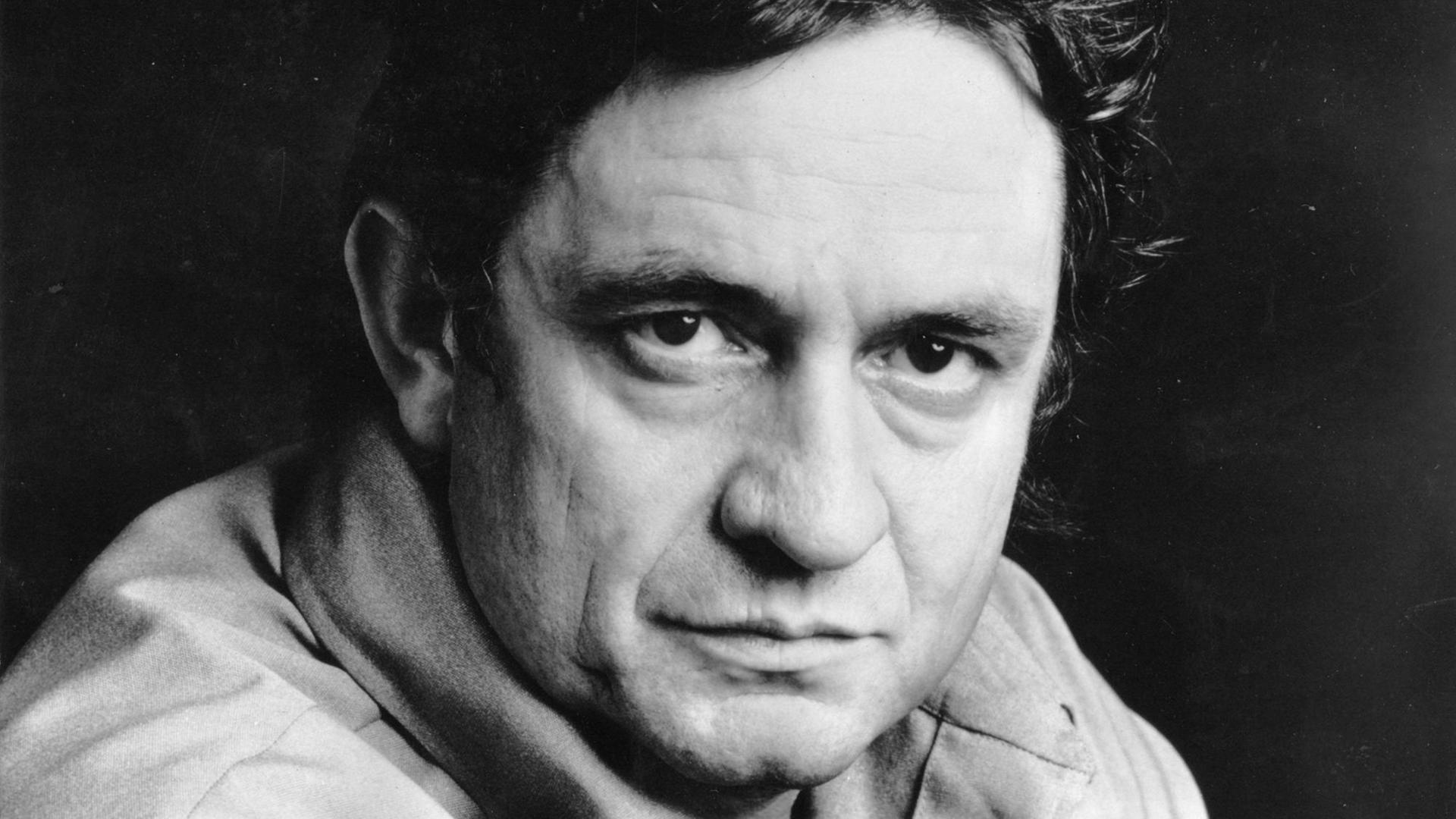
A young Johnny Cash turned a promise into rhythm, and restraint became his signature sound.
In 1956, Johnny Cash released I Walk the Line on Sun Records, the Memphis label where his early voice found its first hard outline. Written by Cash and produced in the Sun orbit shaped by Sam Phillips, the single became his first number one country hit. That fact matters, but the record’s deeper importance lies in how little it seems to need. It does not announce greatness with orchestral sweep or vocal display. It advances with a clipped, steady pulse, as if the song is measuring each step before taking it.
By the time I Walk the Line appeared, Cash had already introduced himself with records such as Cry! Cry! Cry! and Folsom Prison Blues. He was not yet the monumental figure later generations would inherit, but many of the elements were already in place: the low baritone, the plainspoken moral tension, the sense of movement created by guitar, bass, and space. What I Walk the Line did was gather those elements into a form so direct that it became inseparable from him. The song did not merely suit Cash; it helped define what people would hear when they heard his name.
The arrangement is built around the now-familiar Cash rhythm, often described as a freight-train or boom-chicka-boom feel. Yet its force comes from discipline rather than speed. The guitar pattern keeps the song in motion without crowding the voice. The bass gives the track a physical floor. There is no ornamental excess, no attempt to soften the edges for elegance. The music sounds practical, almost workmanlike, and that practicality gives the lyric its weight. A vow set to a rhythm this firm begins to feel less like a romantic flourish and more like a daily act of will.
One of the recording’s most striking details is Cash’s low humming before the verses. It has often been understood as a way of finding the next pitch as the song moves through its key changes, but on the record it becomes more than a technical marker. It feels like a private moment left in public view: a breath, a check of balance, a man placing his voice before he states his promise again. The hum humanizes the performance. It reminds the listener that steadiness is not the same as ease.
Lyrically, I Walk the Line is simple enough to be remembered after one hearing. Its central phrase, anchored by the line of devotion to the person addressed, carries the shape of a pledge. The song is often heard as a fidelity vow from a young musician whose career was beginning to take him away from home. Cash does not sing it as a polished declaration from a distance. He sings it close to the ground, with the gravity of someone naming a standard he intends to keep. The tension is built into the language: walking the line means staying true, but it also suggests that the line is narrow, visible, and always underfoot.
That tension is crucial to Cash’s early artistry. His voice could sound severe without becoming cold, tender without becoming delicate. In I Walk the Line, he does not oversell the emotion. He lets the repetition do the work. Each verse circles the promise again, and each return makes the commitment feel less decorative. The changing keys keep the song from becoming static, but the rhythm refuses to loosen. It is a clever musical design disguised as plain speech, and that disguise is part of its brilliance.
The Sun Records setting also matters. The label’s mid-1950s recordings often thrived on compression, immediacy, and a sense that personality could be captured before it was fully polished. Cash’s sound at Sun was lean because it had to be, but the leanness became expressive. On I Walk the Line, the room around the instruments feels almost as important as the instruments themselves. Silence is not empty; it sharpens the beat. The lack of embellishment leaves nowhere for the singer to hide.
As Cash’s career expanded, I Walk the Line remained one of the songs most closely attached to him. Later decades would bring prison albums, network television, gospel recordings, collaborations, and stark late-career reinventions. Against that larger story, the 1956 Sun single can seem almost modest. But modesty is exactly what gives it lasting authority. It catches Cash before the myth fully hardened, at a moment when his art was still being shaped by small choices: a muted guitar pattern, a low hum, a vow repeated with care.
The song’s achievement is not only that it became a hit, or that it became a signature. It is that it made restraint feel dramatic. Johnny Cash found a way to turn moral pressure into rhythm, to make a promise move like a train, to let a plain voice carry complicated human weight. In I Walk the Line, the power is not in perfection. It is in the effort to remain steady, measure by measure, while the road keeps moving beneath the feet.
