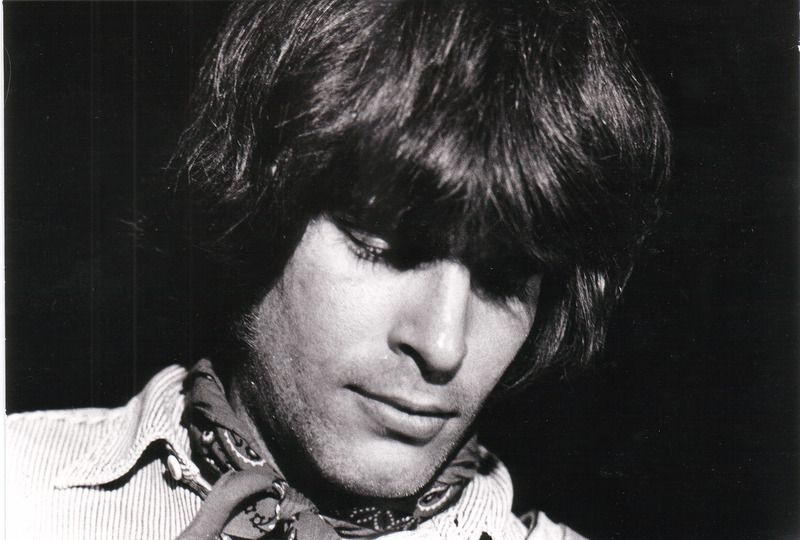
Before Creedence found its lean swamp-rock voice, The Golliwogs struck a rawer spark.
In 1966, The Golliwogs released Fight Fire, a short, forceful garage-rock single on Fantasy Records that placed a young John Fogerty at the front of the sound with urgent vocals and aggressive guitar. The band was not yet known as Creedence Clearwater Revival, though the essential four-man core was already there: John Fogerty, Tom Fogerty, Stu Cook, and Doug Clifford. Heard from the far side of Creedence’s fame, the record can seem like a rough sketch. Heard on its own terms, it is something more revealing: a band still close to the garage floor, learning how much power could fit inside a few compressed minutes.
Fight Fire belongs unmistakably to the mid-sixties world of American garage rock, when young groups were turning compact amplifiers, sharp riffs, and impatient rhythms into declarations of identity. It does not have the relaxed, earthy swing that would later define Creedence. It has no broad river imagery, no mythic Southern weather, no folk-blues storytelling polished into a radio-perfect shape. Instead, it arrives with impact. The guitar feels clipped and serrated, the rhythm section presses forward, and the vocal does not glide over the track so much as push through it.
That vocal is one of the record’s most fascinating details. The mature John Fogerty voice would become instantly recognizable: nasal, gritty, focused, and capable of sounding both old and young at once. On Fight Fire, the grain is already present, but it has a different pressure. It sounds less like a settled signature than a young singer discovering the usefulness of force. There is bite in the delivery, yet it is not theatrical excess. Fogerty’s singing works because it stays narrow and intent, as if the song’s energy has been concentrated into a single beam.
The guitar work carries a similar sense of compression. Rather than spreading out into psychedelic color or blues-band looseness, it keeps the song tense and economical. The attack matters more than decoration. Each phrase seems designed to move the record forward, and that discipline points toward the future even when the surface still belongs to garage rock. Creedence Clearwater Revival would later become famous for arrangements that left very little waste: drums with a steady center, bass lines that served the song, guitars that cut cleanly, and vocals that seemed built for direct transmission. Fight Fire is earlier, rougher, and less fully formed, but the instinct for economy is already audible.
The title itself gives the performance a useful frame. Fight Fire suggests confrontation, and the record behaves accordingly. It does not linger over reflection or build a dramatic narrative. It comes at the listener in a burst, with the kind of contained aggression that made many garage singles of the period feel like dispatches from basements, school dances, and small regional scenes. Yet The Golliwogs were not merely copying the climate around them. Inside the record’s raw style is the beginning of a musical personality that would later become far more exact: direct, unsentimental, rhythmic, and alert to the power of a memorable hook.
The Golliwogs period is sometimes treated as prehistory because the name that followed became so much larger. That is understandable, but it can flatten the music into a footnote. Fight Fire matters because it catches the musicians before the mythology had gathered around them. There is no famous front-porch atmosphere yet, no fully developed Creedence identity, no sense that these Bay Area players would soon make records that sounded as if they had been pulled from older American soil. What is present is a working band testing the edge of its sound and a young John Fogerty beginning to understand how his voice could command a record without overexplaining it.
That makes the single valuable in a way that goes beyond rarity or chronology. It shows artistic growth before it becomes graceful. It shows a future style still carrying the friction of trial and error. The roughness is not something to apologize for; it is the evidence. The guitar’s scrape, the vocal’s insistence, and the song’s compact momentum all suggest musicians who had not yet found the final shape but already knew that softness was not the only path to feeling. Sometimes the early root of a great sound is not tenderness or polish. Sometimes it is pressure.
Listening to The Golliwogs play Fight Fire now, the temptation is to search for Creedence in every bar. The more rewarding experience is to let the single remain what it was: a 1966 garage-rock record with its sleeves rolled up, driven by a young singer and guitarist whose later authority had not yet fully arrived. Its power lies in that unfinished state. Before the voice became familiar, before the band name changed, before the songs opened onto bigger American landscapes, there was this hard little flame, bright enough to show where the road was beginning.
