
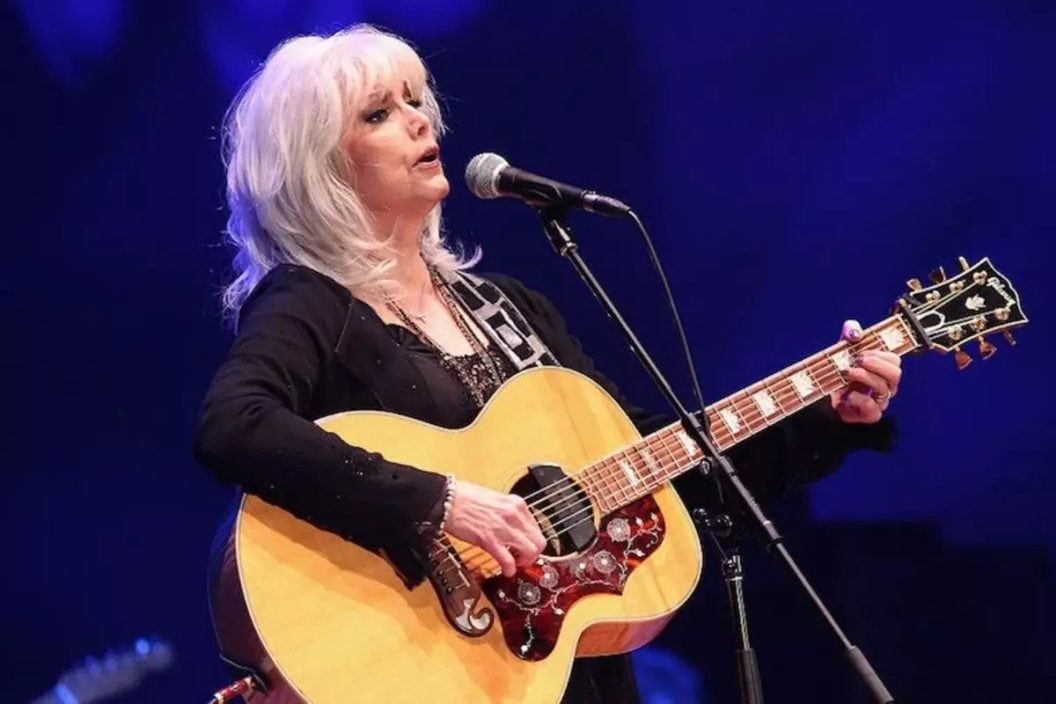
“Jambalaya” was already country immortality in Hank Williams’s hands — but Emmylou Harris made it feel so bright, loose, and joyfully alive that the old classic suddenly seemed to grin a little wider.
Country fans absolutely know the original. Hank Williams released “Jambalaya (On the Bayou)” in July 1952, and it was no ordinary hit: it spent 14 non-consecutive weeks at No. 1 on the U.S. country chart and became one of the most recorded songs in his catalog. It was later inducted into the Grammy Hall of Fame, which tells you just how foundational it had become long before Emmylou Harris came near it.
That is exactly why the question is so much fun: did Emmylou make it even more irresistible? She certainly did not replace Hank. Nobody really does. But she found a different energy inside the song. Harris recorded “Jambalaya” for Elite Hotel, released on December 29, 1975. It was not a standalone single, so it had no separate chart peak of its own, but it lived on an album that became her first No. 1 country album and helped establish her as a major force in 1970s country music.
That album context matters, because Elite Hotel was where Emmylou Harris proved that her gift was not only sorrow, grace, and country purity. She could also bring real lift to a song. The album is full of strong material, but “Jambalaya” stands out because it lets her show another side of herself: playful, rhythmic, quick on her feet, and perfectly at home inside an old chestnut that could easily have turned into mere repertory. It did not. In her hands, it feels lived again. The album’s documented personnel also explain part of that spark, with players including James Burton, Rodney Crowell, Emory Gordy Jr., Glen Hardin, Hank DeVito, Linda Ronstadt, and others contributing to the richly textured sound around her.
What Hank’s original has is authority. It is concise, charismatic, and completely central to the song’s identity. But what Emmylou adds is a kind of ease. Her version does not sound burdened by the song’s legendary status. She sings it as though she is delighted by it. That matters. “Jambalaya” is supposed to move. It is a song of food, flirtation, dancing, bayou life, and motion. Harris leans into that buoyancy without making the song slick or forced. She keeps the old-country heart of it, but adds a touch of country-rock brightness and feminine lightness that make the whole thing feel fresh rather than dutiful. The result is not “better” than Hank in any absolute sense, but it is undeniably more breezy and, for some listeners, more immediately inviting.
That may be the real answer. Hank Williams made “Jambalaya” immortal. Emmylou Harris made it sound like immortality could still have fun. She did not deepen it into tragedy or turn it into some solemn tribute. She made it swing, smile, and sparkle. That is often what the best Emmylou covers do: they do not argue with the original; they reveal a second life inside it. And because “Jambalaya” is such a naturally infectious song to begin with, that second life can feel awfully close to irresistible.
So if the question is whether Emmylou made “Jambalaya” even more irresistible, my answer is this: Hank owns the crown, but Emmylou absolutely added the grin. She turned a country monument into something nimble, warm, and joyfully replayable — the kind of version that reminds you a standard is not truly alive unless somebody can still step into it and make it dance again.
