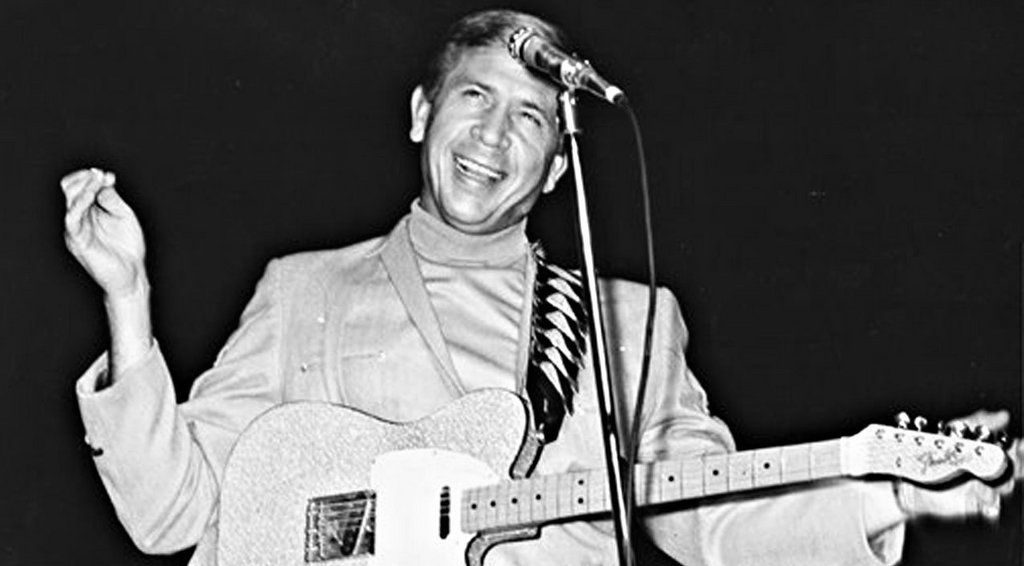
A title this easygoing should feel light on its feet, yet “Act Naturally” reveals something richer — a country song that laughs at heartbreak while quietly admitting how much it hurts.
Some songs survive because they are grand. Buck Owens’ “Act Naturally” survived because it was clever enough to smile through humiliation and honest enough to let the bruise show anyway. Released on March 11, 1963, it became Buck Owens and the Buckaroos’ first No. 1 hit on Billboard’s country chart, beginning the chart-topping run that would turn Owens into one of the defining figures of 1960s country music. It first reached the top on June 15, 1963, and spent four non-consecutive weeks at No. 1, with a total of 28 weeks on the country chart.
What makes “Act Naturally” so memorable is the sly sadness tucked inside the joke. On the surface, it is playful almost to the point of throwaway charm: a man so newly heartbroken that he jokes he could become a movie star simply by playing someone miserable, because sorrow now comes to him without rehearsal. That idea is funny in the way great country songs often are — funny because the pain underneath it is real. The singer does not cry out for sympathy. He shrugs, lets the line land, and somehow sounds even lonelier for not making a scene.
That balance was one of Buck Owens’ great strengths. He understood that country music could be sharp, catchy, and emotionally direct without becoming heavy-handed. In “Act Naturally,” he never overplays the hurt. He keeps the tone dry, almost casual, and that restraint is exactly what makes the song so effective. Heartbreak here is not wrapped in self-pity. It is turned into posture, wit, and survival. The man in the song may be wounded, but he is still standing upright, still delivering his own sorrow with a half-smile. That is a very country kind of dignity.
The story behind the song adds another lovely twist. Johnny Russell wrote it, with Voni Morrison receiving co-credit after helping get the song to Owens. Russell later recalled that Buck Owens did not even like “Act Naturally” at first. It was Don Rich, Owens’ close musical partner, who heard the demo, liked it, and helped change Buck’s mind. Owens eventually recorded it on February 12, 1963, and that hesitation now feels almost impossible to imagine, because the song sounds so perfectly made for him.
Perhaps that is one of the reasons fans still love the song so deeply. It feels effortless now, but it very nearly might not have happened in the form we know. And once it did happen, it changed everything. “Act Naturally” was not just another good Buck Owens single. It was the one that opened the bigger door. Before long, he would become a dominant force on the country charts, but this was the record that first made the promise impossible to miss.
There is also something enduring about the way the song traveled beyond its original world. The Beatles later recorded it in 1965, with Ringo Starr taking the lead vocal, and that alone says a great deal about the song’s reach. A Buck Owens hit built from country wit and heartbreak crossed into Beatles history without losing its identity. Decades later, Owens and Starr even cut a duet version together, giving the song another affectionate afterlife. But even with all that later fame, the emotional center of “Act Naturally” still belongs to Buck’s 1963 recording.
What lasts, finally, is the song’s wisdom about embarrassment and pain. So many heartbreak songs want to sound noble in their suffering. “Act Naturally” chooses something more human. It lets heartbreak look a little foolish. It lets disappointment be public. It lets the wounded man joke about himself before anyone else can do it for him. And in that gesture, the song becomes strangely touching. It understands that one of the oldest ways people survive sorrow is by turning it into a line they can bear to say out loud.
So Buck Owens’ “Act Naturally” remains much more than a catchy country classic. It is a perfect small drama: witty, wounded, and effortlessly memorable. A man gets left behind, makes a joke of it, and in doing so tells the truth more clearly than a grand lament ever could. That is why the song still feels fresh after all these years. It knows that heartbreak does not always arrive in tears. Sometimes it comes with a grin that gives the whole game away.
