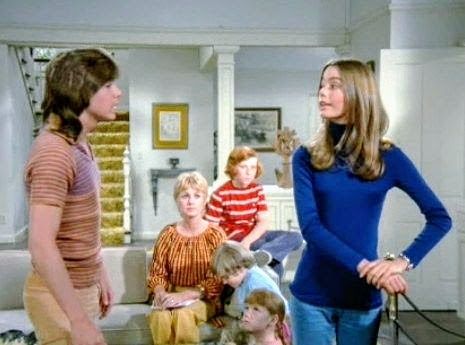
Summer Days is one of those rare The Partridge Family recordings that smiles like television pop but feels like a goodbye already beginning.
By 1971, The Partridge Family was no longer just a clever television idea. It was a genuine pop force, and David Cassidy had become the voice that gave the whole enterprise its emotional charge. That is what makes Summer Days so special. It was not released as one of the group’s major U.S. singles, so it did not earn its own standalone run on the Billboard Hot 100. But it arrived during one of the hottest stretches of the group’s career, from the 1971 album Sound Magazine, a record that kept them in the Billboard Top 10. The same era also produced major hits like Doesn’t Somebody Want to Be Wanted, which reached No. 6, and I’ll Meet You Halfway, which climbed to No. 9. In other words, Summer Days came from the very center of the group’s commercial peak, even if it lived just outside the spotlight reserved for the big singles.
And perhaps that is exactly why the song has endured so beautifully for listeners who return to it. Without the pressure of being a chart headline, Summer Days had room to breathe. It could simply be what it is: a gentle, wistful, finely crafted piece of early-’70s pop that reveals something quieter and more human beneath the bright surface of the Partridge Family phenomenon. This was the genius of the group at its best. Yes, the image was sunny. Yes, the television format was family-friendly. Yes, the records were polished with precision. But under all that, there were moments when the music carried a tenderness that felt very real. Summer Days is one of those moments.
The song’s meaning rests in a very familiar idea, but it handles that idea with uncommon grace. Summer, in pop music, usually stands for freedom, young romance, warm air, open roads, and the feeling that life has suddenly become easier. Yet the best songs about summer are rarely just cheerful. They understand that the season is precious because it passes. That is the ache inside Summer Days. Even before the last note, the song feels aware that bright days do not stay bright forever. Its melody moves with lightness, but the emotional current is deeper than light entertainment. This is not a song about endless youth. It is a song about how quickly youth begins to turn into memory.
That emotional turn only works because of David Cassidy. He is the reason the record does not float away as pleasant background music. Cassidy had one of the most recognizable voices in pop at the time: clear, youthful, melodic, and instantly likable. But what often made him more interesting than his teen-idol image suggested was the vulnerability inside that brightness. On Summer Days, he does not oversing. He does not force drama where the song asks for delicacy. Instead, he carries the wistful center with restraint. He sounds as though he is standing inside the sunshine and already noticing the shadows at the edge of it. That is a difficult feeling to sing, especially in a piece of polished TV-pop, and Cassidy gives it exactly the right touch.
There is also something quietly poignant about hearing him in this 1971 moment. By then, David Cassidy was not merely the smiling face of a hit series. He was becoming an international star, adored on magazine covers and concert stages, but also increasingly aware of the limits of the image being built around him. He wanted to be taken seriously as a musician, and listeners who go back to songs like Summer Days can hear why. Even within the carefully managed world of Bell Records, producer Wes Farrell, and top Los Angeles session players, Cassidy could locate a sincere emotional center. He found a way to make manufactured pop feel personal, and that talent mattered more than many critics admitted at the time.
Sound Magazine remains an important album for that reason. It captures The Partridge Family at a moment when the formula was still commercially powerful, but also musically refined enough to deliver more than sugar-coated hooks. The big hits were there, certainly, but the album cuts often reveal the richer emotional texture. Summer Days belongs to that quieter tradition of beloved non-singles: songs that never dominated the charts themselves, yet slowly became essential to fans because they said something the hits could only hint at.
What lingers now is not simply nostalgia for a television era or a famous face. It is the feeling the record leaves behind. Summer Days understands that the loveliest seasons of life often become meaningful at the very moment we realize they will not last. That is why the song still glows. It is gentle without being slight, melodic without being empty, and sentimental without losing its dignity. Most of all, it reminds us that David Cassidy was more than a pop idol in a perfect frame. In songs like this, he was the quiet pulse of longing inside the picture, the voice that turned a bright 1971 recording into something far more lasting than simple sunshine.
