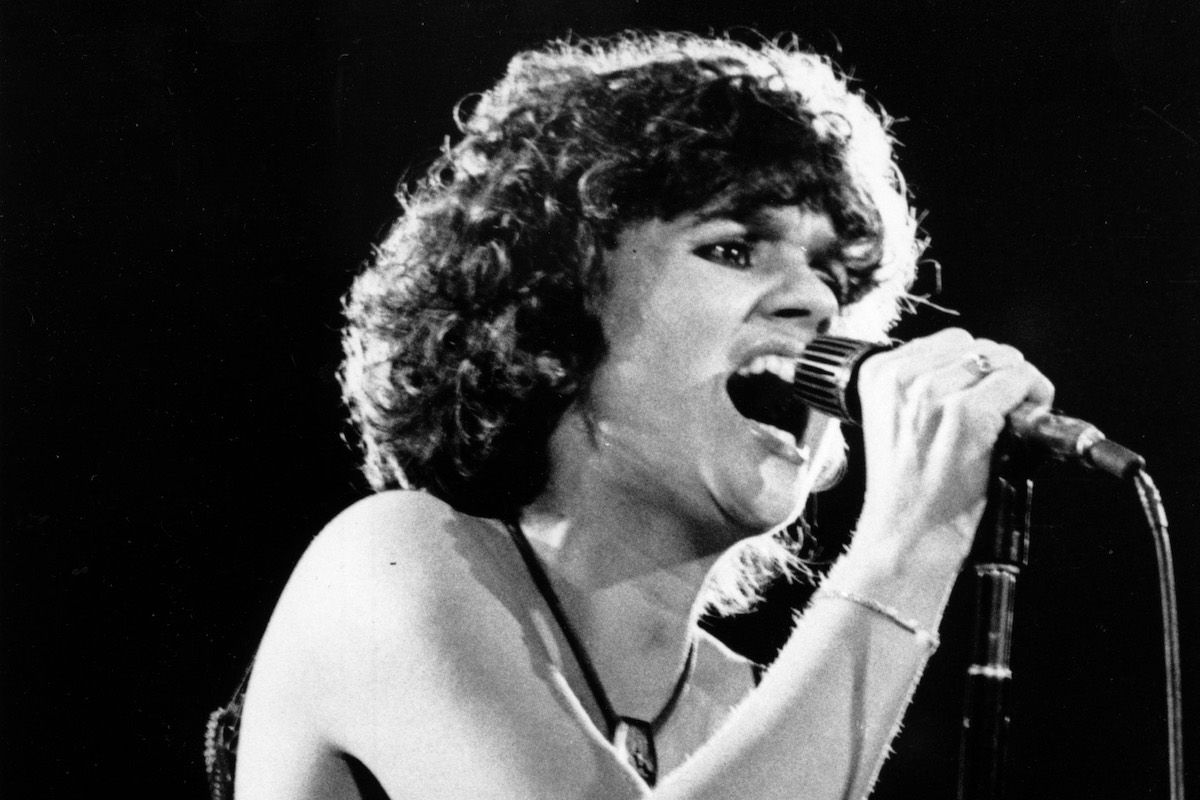
Poor Poor Pitiful Me became far more than a cover on Simple Dreams—it was the moment Linda Ronstadt carried Warren Zevon’s sharp, restless songwriting into the warm center of late-1970s country-rock radio.
When Linda Ronstadt recorded Poor Poor Pitiful Me for her 1977 album Simple Dreams, she did something that only the finest interpreters ever truly manage: she kept the soul of the original while changing its entire public destiny. Released as a single, Ronstadt’s version climbed to No. 31 on the Billboard Hot 100 and reached No. 1 on Billboard’s Hot Country Singles chart in early 1978. That was not a small crossover footnote. It was a decisive moment, both for her and for Warren Zevon. Before Zevon became widely known through Werewolves of London, Ronstadt had already taken one of his songs and carried it into millions of homes, car radios, and late-night memories.
To understand why that mattered, it helps to remember where Simple Dreams stood in Ronstadt’s career. The album was a phenomenon, spending five weeks at No. 1 on the Billboard album chart and confirming that she had become one of the defining American voices of the era. Yet what made her special was never just vocal power. Plenty of singers could hit a note. Ronstadt knew how to choose songs. She heard what lived inside them before the wider audience did. On Simple Dreams, she moved effortlessly between rock, country, pop, and folk, and Poor Poor Pitiful Me fit that world beautifully: sharp enough to feel modern, earthy enough to feel lived in, melodic enough to stay with you after the needle lifted.
But the story really begins with Warren Zevon, who wrote and first recorded the song for his 1976 album Warren Zevon, produced by Jackson Browne and Waddy Wachtel. Zevon’s original version had the qualities that would define so much of his work: dark humor, emotional danger, a deadpan shrug in the middle of trouble, and a sense that pain and comedy were often only a line apart. He was already admired inside songwriting circles, and Ronstadt had been one of his great early champions even before Simple Dreams. She had recorded Carmelita and Hasten Down the Wind, both Zevon songs, showing long before the mass audience caught on that she recognized something rare in his writing. So when she chose Poor Poor Pitiful Me, it was not a casual cover. It was part of an ongoing act of artistic faith.
What changed in Ronstadt’s version was not the song’s intelligence, but its frame. Zevon’s original felt like it came from the dim edge of the Los Angeles night: funny, bruised, a little dangerous, and not especially interested in softening itself for polite company. Ronstadt, working with producer Peter Asher, reshaped the song into something more open, more radio-friendly, and more rhythmically inviting. She also adjusted some of the original’s more provocative lyrical details, making the song more accessible to mainstream country-rock playlists of the day. That mattered because the late 1970s were full of records living at the border of rock and country, but not every song could cross that line gracefully. Ronstadt’s could.
And yet she did not drain it of character. That is the crucial point. Her reading of Poor Poor Pitiful Me still carries the song’s mischievous self-awareness. The title phrase sounds like self-pity, but in both Zevon’s writing and Ronstadt’s performance there is a slyness underneath it, as if the narrator already knows how dramatic the complaint sounds. Ronstadt leans into that tension beautifully. She sings the words with a mix of ache and cool control, never turning the song into parody, never overselling the hurt. The result is something very distinct from Zevon’s original, but no less true. In her hands, the song becomes less menacing and more resilient. The misfortune remains, but so does the ability to keep moving.
That is one reason the song landed so strongly on country radio. Country audiences have always understood songs about hard luck, regret, and romantic trouble, but they also respond to clarity. Ronstadt’s version delivered Zevon’s wit in a form that felt immediate and singable. The arrangement is clean and muscular, with the easy confidence of Southern California country-rock at its commercial peak. Nothing feels cluttered. The groove moves forward. Her voice sits at the center like a bright, unshakable line of truth. Even listeners who knew nothing about Zevon as a songwriter could hear the hook, the attitude, and the emotional weariness folded into the chorus.
There is a deeper meaning to the song, too, beyond its catchy surface. Poor Poor Pitiful Me is not simply a complaint song. It is a song about what people say when they are trying to laugh at their own chaos before it catches up with them. Beneath the shrug lies exhaustion. Beneath the joke lies experience. Ronstadt understood that instinctively. She never treats the lyric as mere sass. She gives it a human weight. That is why her interpretation lasted. It sounds playful at first, but there is a tremor underneath it—the recognition that romantic trouble, bad decisions, and private loneliness often arrive wearing a clever smile.
In hindsight, the song also marks something larger in American popular music. Linda Ronstadt was one of the great interpreters of her generation, and Poor Poor Pitiful Me is one of the clearest examples of how a cover version can enlarge a songwriter’s reputation rather than merely borrow from it. She did not replace Warren Zevon; she translated him for a broader audience. She took his angular, literate, late-night writing and placed it inside the mainstream current of the time. For many listeners, this song was one of the first real invitations into Zevon’s world.
That is why the record still matters. Not only because it was a hit, and not only because Simple Dreams remains one of the essential albums of the era, but because this performance captures something lasting about Ronstadt’s gift. She could hear the hidden future inside a song. With Poor Poor Pitiful Me, she heard that a sharp, sardonic Warren Zevon composition could become a country-rock favorite without losing its bite. Decades later, that still feels like a small miracle of taste, instinct, and timing.
