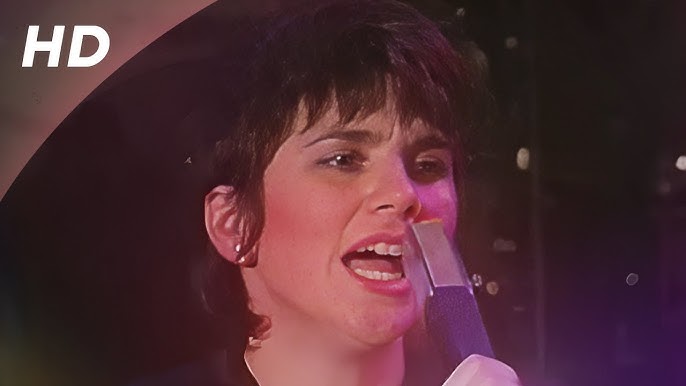
Up to My Neck in High Muddy Water captures Linda Ronstadt at a crucial early-career moment, when her voice was already bigger than the frame around it and her future was beginning to come into view.
Released in 1968 on Linda Ronstadt, Stone Poneys and Friends, Vol. III, Up to My Neck in High Muddy Water belongs to that fascinating stretch of an artist’s life when promise has already become undeniable, but destiny has not yet fully arrived. It is not one of the most famous titles in the Linda Ronstadt catalog, and it was never the kind of blockbuster single that fixed itself in radio history. Yet for anyone who listens beyond the obvious hits, this recording tells a very important story. It catches Ronstadt in motion, still part of the Stone Poneys, but already sounding like someone who would not remain confined for long.
The chart context matters here. By the time Vol. III appeared, the group was still living in the long shadow of Different Drum, the song that had carried them to No. 13 on the Billboard Hot 100 in late 1967. That earlier success had put Ronstadt’s voice in front of a national audience and changed the way the label looked at the group. Up to My Neck in High Muddy Water did not become a comparable chart event on its own, and that is part of why it remains so revealing. It was not a hit built for easy glory. It was a track from a transitional record, one that showed where the emotional center of the act truly was.
Even the album title tells its own quiet story. Rather than presenting the trio simply as the Stone Poneys, the record was billed as Linda Ronstadt, Stone Poneys and Friends, Vol. III. That was more than a design choice. It reflected a real shift in identity. Formed in the Los Angeles folk-rock scene with Kenny Edwards and Bobby Kimmel, the group had begun as a shared venture, drawing from folk, country, and West Coast pop. But after Different Drum, it became harder to ignore that Ronstadt’s voice was the defining force. On Vol. III, that truth is impossible to miss.
Up to My Neck in High Muddy Water has a title that feels almost cinematic. You can hear struggle in it before the first full impression of the arrangement even settles in. The phrase suggests being overwhelmed, trapped, and still somehow moving forward. That gives the song an immediate emotional pull. In Ronstadt’s hands, it does not sound like melodrama. It sounds like grit. There is tension in the performance, but also steadiness. She does not plead with the material. She stands inside it. That quality would become one of the great signatures of her career: vulnerability without weakness, feeling without self-pity, power without unnecessary show.
Musically, the track sits in that rich late-1960s borderland where folk-rock was beginning to toughen into something earthier and more country-inflected. There is movement in the rhythm, a sense of weather and pressure in the arrangement, and a directness that keeps the song from floating away into abstraction. Ronstadt was still very young here, but what is striking is how fully formed her instincts already were. She knew how to find the emotional center of a song. She knew how to make a line feel lived in. And she knew, even then, that strength in singing often comes from restraint as much as force.
The story behind the song is really the story behind the album and the moment. Vol. III arrived when the original shape of the group was already changing. The commercial afterglow of Different Drum had brought attention, but it had also created imbalance. Labels chase momentum, and when one voice emerges as the clear focal point, group democracy often becomes difficult to sustain. That tension hangs over much of this period in Ronstadt’s career. Listening now, Up to My Neck in High Muddy Water feels almost symbolic. The title itself sounds like a description of an artist caught inside change, navigating industry expectation, band identity, and her own rapidly expanding artistic possibilities.
What gives the recording its lasting value is that it reveals Ronstadt before the full arc of fame. This is years before Heart Like a Wheel, before the arena-level confidence, before she became one of the defining voices of 1970s American music. On this recording, you hear the roots of all that. You hear the folk singer, the country interpreter, the rock vocalist, and the emotional storyteller beginning to merge into one unmistakable sound. That is why songs like this matter. They show us the artist before the mythology hardens.
So while Up to My Neck in High Muddy Water may not sit beside Ronstadt’s biggest chart triumphs, it deserves a place among her most meaningful early recordings. It captures a threshold. It reminds us that some songs are important not because they dominated the charts, but because they revealed a future in progress. In 1968, on Vol. III, Linda Ronstadt was still officially part of a group. But the voice, the command, and the emotional authority already belonged to someone the wider world would soon know on her own terms.
