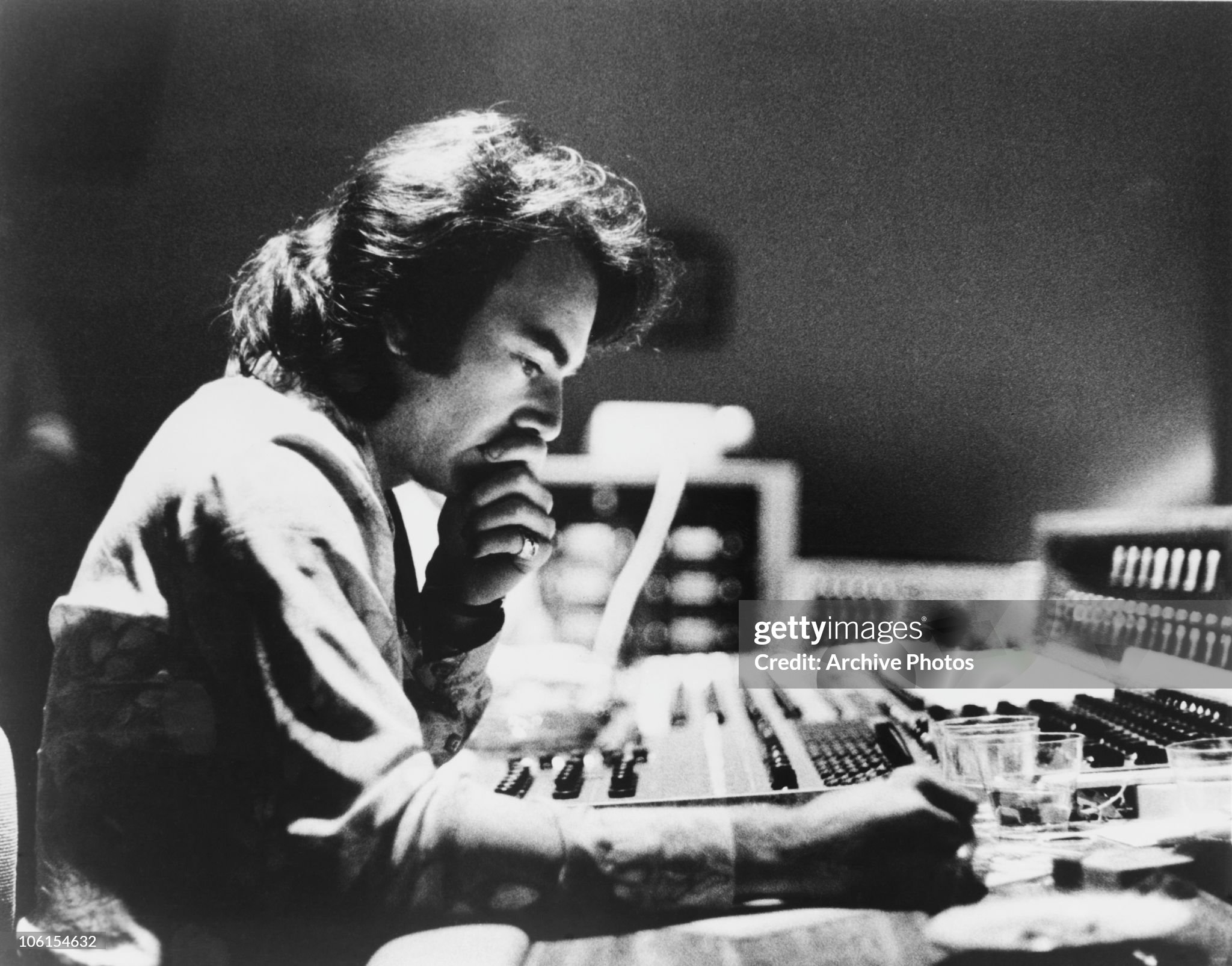
Neil Diamond’s 1969 version of “Mr. Bojangles” hears Jerry Jeff Walker’s wandering dancer not as folklore, but as a man trying to keep grace alive after the applause has thinned.
Neil Diamond recorded “Mr. Bojangles” for his 1969 album Touching You, Touching Me, a Jerry Jeff Walker cover from a moment when the song had not yet settled into the wider American songbook. Walker had introduced the composition in 1968 on his album Mr. Bojangles, drawing on his account of meeting a street performer in a New Orleans jail. The man used the name “Bojangles,” sang, danced, spoke of the dog he had lost, and gave Walker the raw outline of a song that felt part tall tale, part confession, part late-night memory.
By the time Diamond brought it into Touching You, Touching Me, he was no longer just a young songwriter with Brill Building-sharpened instincts. The Uni Records years were opening a bigger room around his voice: more drama, more orchestration, more reach. The album arrived in the same period as “Holly Holy”, a major early Diamond recording that showed how naturally he could turn pop structure into something almost sermon-like without losing the common touch. Against that backdrop, “Mr. Bojangles” was an intriguing choice. It was not his story, and yet it gave him one of the subjects he understood best: a performer standing between public charm and private ache.
Walker’s original has the looseness of someone retelling a scene that still smells of the room it came from. Diamond’s cover is different. He does not try to sound like a rambling Texas troubadour or a jailhouse witness. He smooths the frame, steadies the spotlight, and lets the song pass through his own theatrical instincts. That difference matters. In Diamond’s hands, the dancer becomes less a character found by accident and more a figure observed from the front row: bright enough to entertain, worn enough to make the brightness feel costly.
The song itself is built on a deceptively simple movement: a waltzing memory, a name repeated until it becomes both mask and refuge, and a chorus that seems light until one listens to what surrounds it. “Dance” is the public command; the verses are the private evidence. Diamond understood the tension. His phrasing often leans into clean lines and bold vowels, but here the control becomes part of the interpretation. He does not tear the song open. He holds it carefully, as if too much force would turn empathy into performance.
That restraint gives his 1969 version its own place among the many readings of “Mr. Bojangles.” The Nitty Gritty Dirt Band would soon make the song familiar to a much wider audience with a warm country-folk reading, while other singers would find their own paths through Walker’s story. Diamond’s version sits in an earlier light. It catches the song before its edges had been softened by repetition, when Walker’s narrative still felt newly lifted from a specific encounter rather than a standard waiting to happen. The cover does not replace Walker’s voice; it translates the song into Diamond’s emerging language of pop theater.
There is also something revealing about hearing Diamond sing a song about a dancer who survives through movement and timing. Diamond’s own art has always depended on timing of another kind: the pause before a chorus opens, the held note that feels like a hand on a shoulder, the way a simple phrase can become communal when delivered with conviction. On “Mr. Bojangles,” those gifts are turned inward. The chorus does not simply invite applause; it asks what remains of a performer when the applause is no longer the whole truth.
As a track on Touching You, Touching Me, the cover also broadens the album’s emotional range. The record contains Diamond originals and carefully chosen interpretations, and this one suggests an artist listening beyond his own mythology. He is drawn not to glamour but to aftermath, not to triumph but to endurance. The arrangement’s polish does not erase the grit inside the song; instead, it creates a small distance that lets the listener see the character’s dignity. Diamond was often at his most compelling when grandeur and vulnerability occupied the same space, and “Mr. Bojangles” gave him a modest stage on which to test that balance.
More than five decades later, Diamond’s 1969 cover is worth returning to not because it is the definitive version, but because it is a revealing one. It shows a famous songwriter recognizing the emotional architecture of another writer’s story. It shows Jerry Jeff Walker’s rough-edged memory already beginning its long life in other voices. And it shows Neil Diamond approaching a borrowed song with enough discipline to leave room for the stranger at its center. The dancer is still there, tapping through the verses, smiling because the song requires it, carrying a sorrow the melody refuses to flatten.
