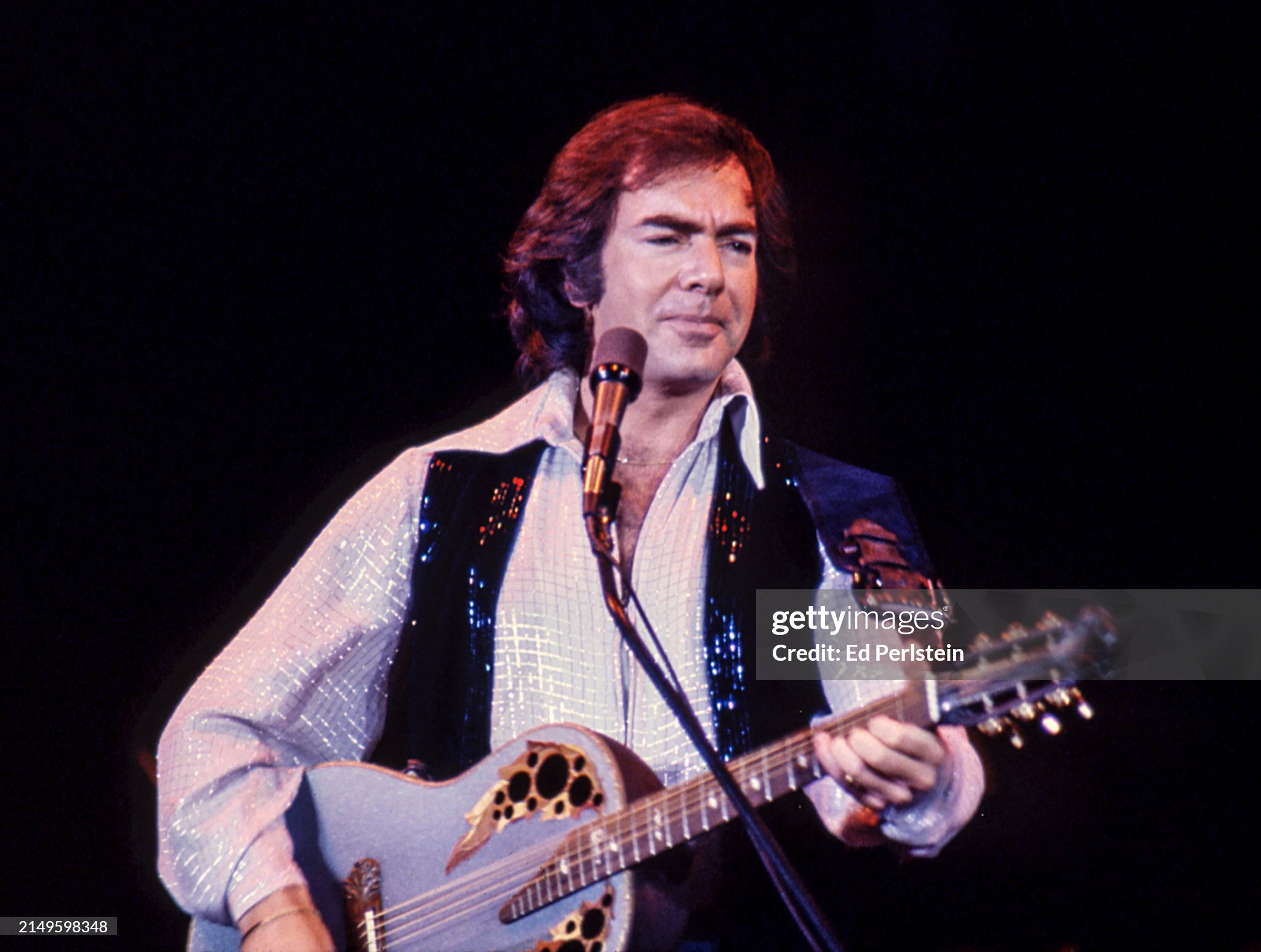
In 2001, Neil Diamond found a modest but meaningful radio opening with a love song that sounded less like a comeback bid than a promise carefully kept.
You Are the Best Part of Me, released in 2001 as a single from Three Chord Opera, marked a small but telling chart milestone for Neil Diamond: the song reached the Billboard Adult Contemporary Top 30 at a time when radio was moving quickly, formats were narrowing, and veteran songwriters often had to fight for space beside newer voices. It was not the kind of chart moment that arrived with fireworks or a cultural stampede. Its strength was quieter than that. It proved that Diamond’s gift for direct emotional address still had a place on the airwaves, especially with listeners who valued melody, craft, and a voice that could make devotion feel lived-in rather than decorative.
By the time Three Chord Opera appeared, Diamond had already spent decades moving between pop, rock, adult contemporary, Broadway-sized drama, and the intimate confession of a man alone with a tune. His name carried memories of Sweet Caroline, Cracklin’ Rosie, Song Sung Blue, and the sweeping emotional world of Jonathan Livingston Seagull. But 2001 was not 1971, or 1981, or even the late 1980s. The music business had changed its clothes several times over. Youth culture dominated much of mainstream pop, and many of Diamond’s contemporaries were being treated by commercial radio as figures from another room in the house of popular music.
That is why the Adult Contemporary Top 30 placement of You Are the Best Part of Me matters beyond the number itself. It was a reminder that certain kinds of songwriting do not depend on fashion as much as they depend on emotional recognition. The song did not try to disguise Diamond as something he was not. It did not chase a modern sheen so aggressively that his personality disappeared inside the production. Instead, it leaned into what he had always understood: a simple phrase, if sung with enough steadiness and belief, can carry more than ornament can.
The title alone tells you the emotional center. You Are the Best Part of Me is not a cryptic image or a clever turn meant to impress from a distance. It is plain speech, almost startlingly open, built around gratitude. In Diamond’s hands, that kind of simplicity has often been more complicated than it first appears. He has always been drawn to statements that seem direct but gather weight through repetition, phrasing, and the grain of the voice. Here, the sentiment is not youthful infatuation. It sounds more like the language of someone looking across years and recognizing that love, at its deepest, becomes part of one’s own structure.
Three Chord Opera as an album title also says something important about Diamond’s belief in songwriting. The phrase suggests humility and grandeur at once: three chords, the most basic tools of popular music, and opera, a form associated with scale, drama, and heightened feeling. That tension fits Diamond’s career. He could write for stadiums and still begin from a phrase that might fit inside a kitchen conversation. On You Are the Best Part of Me, the drama is not in vocal acrobatics or theatrical excess. It is in restraint, in the sense that the singer is not trying to conquer the emotion but to honor it.
The 2001 single also belongs to a particular moment in Diamond’s later career, before the stripped-down 12 Songs era would reframe him for a new wave of critics and listeners. Three Chord Opera still carried the polished adult pop atmosphere associated with his established audience, but beneath that surface was a songwriter continuing to ask what a simple declaration could still do. Could a love song released in the early twenty-first century sound sincere without seeming old-fashioned? Could a veteran artist speak in his own musical accent and still find room on contemporary radio? The song’s Top 30 showing on the Adult Contemporary chart answered, in a modest but real way, yes.
Adult Contemporary radio has often been misunderstood as a soft landing place, but for artists like Diamond it served as a vital bridge. It was where melody could still breathe, where a lyric did not have to hurry, where a familiar voice could return without needing to apologize for age, memory, or sincerity. When You Are the Best Part of Me entered that space, it carried with it the long echo of Diamond’s earlier triumphs, but it did not merely ask to be remembered. It asked to be heard in the present tense.
What remains affecting about the song now is that its chart achievement feels human-scaled. It was not a world-conquering hit, and that may be part of its charm. It was a late-career radio signal, a brief opening in the noise, a sign that Diamond’s way of writing love as both devotion and identity still reached people. Some songs announce themselves as milestones because they dominate their moment. Others become meaningful because they quietly survive inside it.
More than two decades later, You Are the Best Part of Me stands as one of those gentler markers in the Neil Diamond story: a 2001 single from Three Chord Opera that found its audience not by pretending to be larger than life, but by sounding like a man placing one clear feeling on the table and trusting it to matter. In a career filled with bigger choruses and brighter lights, that kind of modest certainty has its own grace.
