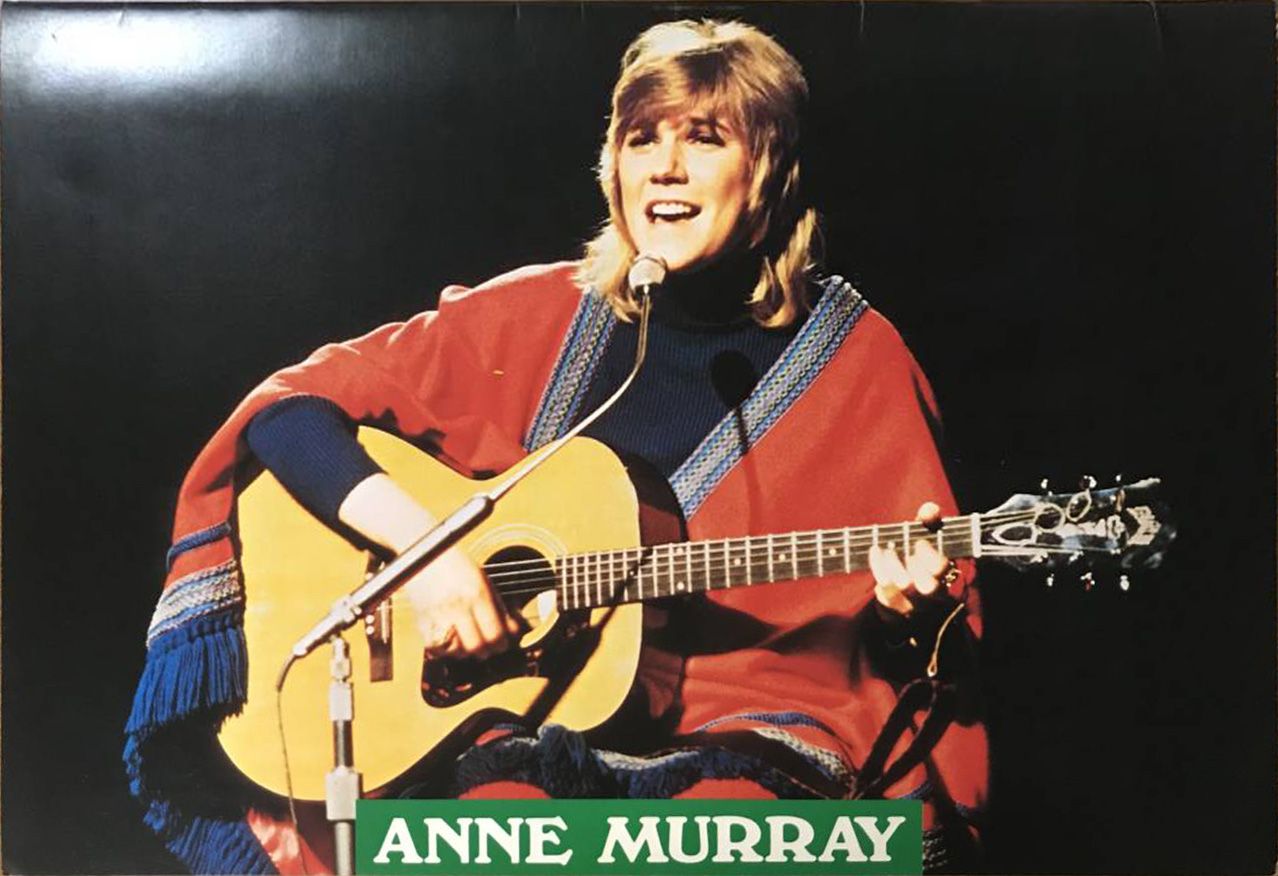
A modest Canadian song became Anne Murray’s first great crossing, carried by calm, clarity, and restraint.
In 1970, Anne Murray released “Snowbird” as the single that would come to define the early shape of her career. Drawn from her album This Way Is My Way, the song was written by Canadian songwriter Gene MacLellan and became a gold-certified breakthrough in the United States as well as a defining hit at home. Its success was not built on spectacle. It arrived with the feeling of a window opening in a quiet room.
That quietness matters. “Snowbird” is a song of motion, but not escape in the dramatic sense. Its image is simple: a bird that can leave when the season turns hard, while the human voice remains tied to memory, longing, and emotional weather. In another arrangement, it might have become grand or sorrowful. Murray’s version keeps it light on the surface, almost conversational, allowing the ache to gather beneath the melody rather than announce itself too forcefully.
The recording’s power begins with Murray’s voice. She sings with a clean, centered tone that feels close without being confessional in an exaggerated way. There is little strain in the performance, and that lack of strain becomes part of the meaning. She does not chase the song’s sadness; she lets it pass through a melody bright enough to disguise some of its loneliness. The result is a recording that can sound cheerful from a distance and quietly wounded up close.
The arrangement supports that balance. Its country-pop shape is gentle, with an easy rhythmic lift and a melodic directness that helped it travel beyond one audience. It could belong to country radio, adult contemporary playlists, and mainstream pop listeners without changing its identity. That was part of its cross-border strength. “Snowbird” did not need to sound like an export product. It sounded complete in itself: a Canadian song, sung by a Canadian artist, with enough clarity to feel familiar wherever it landed.
For Murray, the single arrived at a crucial moment. This Way Is My Way introduced her beyond regional recognition, and “Snowbird” gave that introduction a lasting center. Before the long run of later hits and the broader public image of Anne Murray as one of Canada’s most recognizable voices, this song established something essential about her art. She could make understatement feel decisive. She could sing a lyric of hurt without turning it into display. She could offer warmth and distance at the same time.
The song’s American success also carried cultural weight. In the early 1970s, Canadian popular music was still fighting for regular visibility beyond its own borders. A gold-certified U.S. single by a Canadian female solo artist was not merely a personal milestone; it suggested that a voice from outside the usual American pop centers could enter the conversation without surrendering its character. Anne Murray did not cross over by becoming louder or flashier. She crossed over by remaining precise, calm, and unmistakably herself.
That restraint is one reason “Snowbird” became her signature song rather than only an early hit. Signature songs are not always the most elaborate recordings in an artist’s catalogue. Often they are the ones that reveal a durable truth about a performer’s gifts. Here, Murray’s gift is not simply vocal beauty, though the voice is undeniably central. It is judgment: knowing how much feeling to release, how much to hold back, and how to let a listener discover the emotional shadow inside a bright tune.
Gene MacLellan’s writing gives her the perfect frame. The lyric’s central metaphor is plain enough to be remembered after one hearing, but it leaves room for interpretation. The snowbird may represent freedom, seasonal survival, or the wish to outrun heartbreak. Murray does not narrow the image. She sings it as if the bird’s flight is both enviable and impossible, a graceful movement that the narrator can imagine but not fully claim. That tension gives the song its lingering tenderness.
With time, the recording has come to feel like an origin point rather than a relic. It holds the atmosphere of 1970 country-pop, but its appeal does not depend only on period sound. It still communicates the experience of wanting release while standing still, of watching something light move across a heavy season. That feeling is not bound to one decade. It is part of why a song so modest in scale could become so large in memory.
The cross-border breakthrough of “Snowbird” is therefore not just a story of certification, radio play, or career momentum. It is the story of how a measured performance can travel farther than force. Anne Murray made the song feel open enough for millions of listeners to enter, yet personal enough that it never lost its center. The flight in “Snowbird” belongs to the bird, but the endurance belongs to the voice that stayed behind and sang with such quiet conviction.
