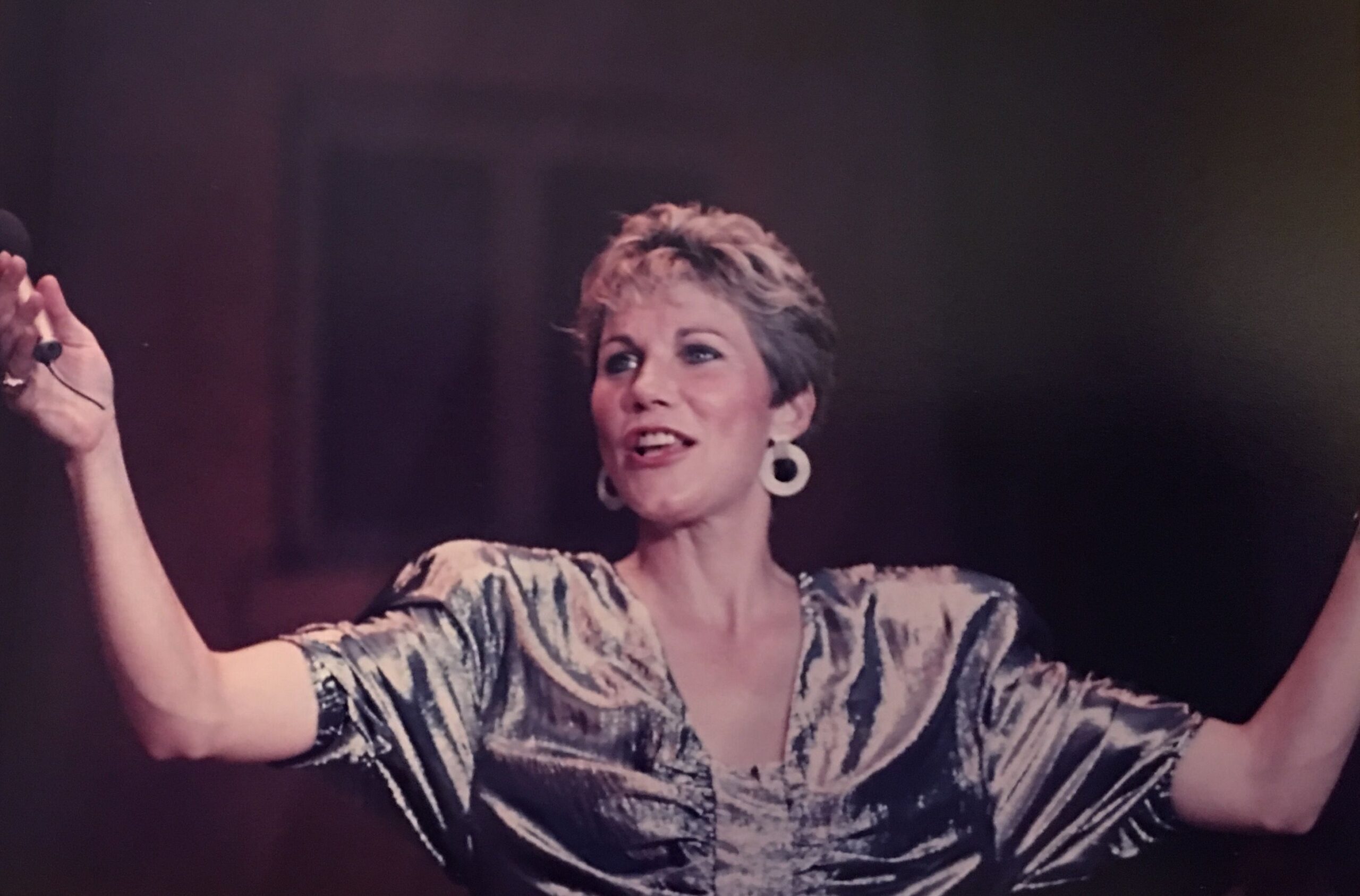
A song of gratitude rather than longing, You Needed Me gave Anne Murray one of the most deeply felt performances of her career—and reminded popular music that softness can be powerful.
Released in 1978 from the album Let’s Keep It That Way, You Needed Me became the defining crossover triumph of Anne Murray’s long career. Written by Randy Goodrum, the song rose to No. 1 on the Billboard Hot 100, reached No. 1 on the Adult Contemporary chart, and climbed into the Top 5 on Billboard’s country chart. It was not merely a hit. It was the record that gave Murray her only American pop No. 1, confirmed her extraordinary reach across genres, and helped earn her the Grammy Award for Best Female Pop Vocal Performance. In commercial terms, it was monumental. In emotional terms, it was even larger.
Part of what made You Needed Me feel so different in 1978 was its emotional direction. Popular love songs often revolve around desire, heartbreak, or dependence. This one does something quieter and, in many ways, wiser. It is built around gratitude. The singer is not pleading to be loved. She is looking back at a moment of weakness and recognizing the person who helped restore her sense of self. That shift matters. In a songbook full of need, You Needed Me speaks about being lifted, steadied, and believed in. That is why it lingers. It does not simply ask for affection; it honors the grace of being seen when one has nearly disappeared into doubt.
Randy Goodrum, still early in what would become a distinguished songwriting career, wrote the song with remarkable directness. There is no ornate poetry here, no unnecessary cleverness. Lines such as “You gave me strength to stand alone again” and “You put me high upon a pedestal” are plainspoken, but they carry the weight of lived feeling. The song’s strength lies in that simplicity. It understands that some of the most important truths in life are not dramatic at all. They are quiet recognitions, spoken almost humbly, after the storm has passed.
For Anne Murray, that emotional honesty was the perfect fit. Long before this single, she had already built a reputation as one of the most warm, reliable, and emotionally precise voices in popular music. From Snowbird onward, she had a gift for making a song feel close to the listener, never overplayed, never pushed too hard. On You Needed Me, she brought that gift to full bloom. She does not oversing a single phrase. Instead, she lets the melody breathe. Her phrasing is tender but steady, intimate without becoming fragile. It is the sound of someone who understands that restraint can make a feeling more believable, not less.
The production on You Needed Me deserves praise as well. Appearing on Let’s Keep It That Way, the recording is polished, but never crowded. The arrangement gives Murray room to inhabit the lyric. There is softness in the instrumental backing, yet there is also enough lift to keep the song from sinking into sentimentality. That balance is crucial. If the record had been heavier, it might have felt melodramatic. If it had been lighter, it might have drifted away. Instead, it holds its center beautifully, allowing the song’s sincerity to lead.
Its chart success was significant for another reason: it reminded the wider American audience that Anne Murray was not confined to one lane. She had already been admired in country and adult contemporary circles, but You Needed Me carried her all the way to the top of the pop chart. For many listeners, that was the moment when her voice became inseparable from a certain kind of comfort—clear, intelligent, deeply human comfort. In the late 1970s, when radio could be crowded with larger gestures and louder personalities, Murray triumphed with calm conviction. That alone says a great deal about the song’s power.
There is also something timeless in the song’s meaning. At first glance, the title You Needed Me sounds almost backward, as though the emotional spotlight should fall on the singer’s need instead. But that is the genius of it. The title suggests mutual importance. Beneath the gratitude, there is a quiet realization that love is not only about being rescued; it is also about being called into usefulness, tenderness, and presence for someone else. That idea gives the song an emotional maturity many hits never reach. It is not adolescent infatuation. It is recognition. It is the memory of a bond that mattered because it restored dignity.
Decades later, the record still carries the same hush it always did. It has not aged into nostalgia alone; it has remained emotionally legible. New listeners may first hear a beautifully sung late-1970s ballad, but those who stay with it hear something deeper: the relief of being understood. That is why Anne Murray’s version remains the standard. Others have recorded the song, but her performance has the rare quality of sounding both personal and universal at once. She sings as if she is speaking to one person, and somehow reaches millions.
In the end, You Needed Me stands as one of the finest examples of what Anne Murray did better than almost anyone—turn quiet feeling into lasting music. It was a chart-topper, yes. It was an award-winner, certainly. But more than that, it was a reminder that gentleness is not weakness, and that some songs stay with us because they say, in simple language, what the heart has known all along. In a career full of elegant recordings, You Needed Me remains one of the most enduring: a soft song, a major hit, and a deeply human piece of music that still feels like truth.
