A modest answer record gave Kitty Wells a public voice—and country music had to make room for it.
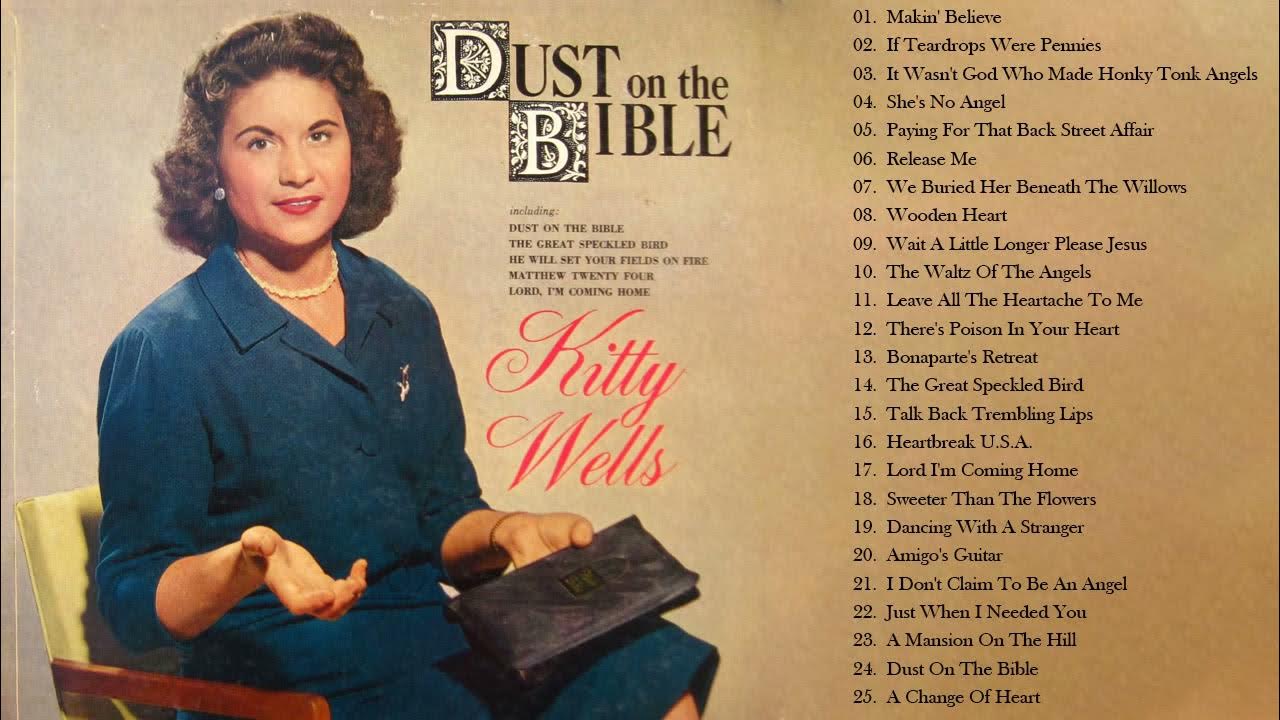
In 1952, Kitty Wells recorded “It Wasn’t God Who Made Honky Tonk Angels”, an answer song to Hank Thompson’s hit “The Wild Side of Life.” Released by Decca, it reached No. 1 on the country chart and became a career-defining record for Wells. Just as importantly, it placed a woman’s perspective at the center of a commercial country hit at a time when the genre’s marketplace was still largely arranged around male voices, male narrators, and male judgments.
The song’s power begins with its plainness. It does not thunder. It does not ask to be admired for its daring. Wells sings as if she is simply correcting the record. That is part of what made the recording so striking. “The Wild Side of Life” had included the line, “I didn’t know God made honky tonk angels,” casting a familiar story of lost love through the image of a fallen woman. “It Wasn’t God Who Made Honky Tonk Angels,” written by J. D. Miller, turns toward that accusation and answers it without ornament: “It’s a shame that all the blame is on us women.”
That sentence is the hinge of the record. In the early 1950s, country music often drew from moral landscapes of home, temptation, drinking, infidelity, and regret. Women appeared in those songs frequently, but they were not always granted the right to explain themselves. Wells’s performance does not dismiss sorrow or sin; it widens the frame. The song suggests that the honky-tonk story is not created by women alone, and that men who stray, abandon, or deceive must also be counted inside the damage. For a record built in the familiar answer-song tradition, its social charge was unusually direct.
Musically, the recording works because it refuses to overstate its case. Wells’s vocal is steady, measured, and clear. She does not sing as an avenger. She sings as someone who has lived close enough to the subject to know that blame is easier than truth. The arrangement stays within the country sound of its era, with a modest pace and a melody connected to a long folk and country lineage also heard in songs such as “I’m Thinking Tonight of My Blue Eyes.” That familiarity matters. The song did not sound like a rebellion from outside the tradition. It sounded like the tradition answering itself.
That may be why its impact reached beyond the novelty of a reply record. An answer song could easily have disappeared after its topical moment passed. Instead, “It Wasn’t God Who Made Honky Tonk Angels” became attached to Wells’s identity and helped define what her presence meant in country music. Before the record, Wells had performed and recorded, but this hit gave her a public role that was larger than a single release. It helped establish her as a major female country artist in a period when that status was difficult to achieve on the charts.
The record’s success also exposed a tension in country music’s public life. Its subject was frank enough that some broadcasters and institutions treated it cautiously, yet listeners carried it to the top of the country chart. That contrast is revealing. The song was not built from scandalous language; it was built from moral reversal. It took a phrase that blamed women and replied that responsibility was shared. In doing so, it made space for audiences who had heard the old story too many times and recognized the missing half.
Wells did not have to abandon restraint to make that space. Her artistry rests in the calmness of the delivery. She sounds neither meek nor theatrical. She allows the lyric to do its work, and that discipline gives the performance its authority. There is a particular kind of courage in singing a controversial idea as if it were common sense. Wells’s voice carries that courage quietly. She does not try to win an argument by force; she makes the argument feel inevitable.
The historical importance of the song should be understood with care. Women had been part of country and rural music before Wells, and female performers had found success in earlier decades. But Kitty Wells’s 1952 No. 1 marked a crucial commercial breakthrough for a solo female country singer in the modern chart era. It showed labels, radio, and audiences that a woman’s story could lead the market, not merely decorate it. The path that later artists walked was not opened by one record alone, but Wells’s answer song became one of its most visible gates.
Its influence also lies in the kind of woman it allowed country music to hear. The narrator is not untouched by honky-tonk life, nor is she reduced to it. She speaks from within a world of broken promises and double standards, insisting that judgment without context is another form of harm. That perspective would echo through later country songs by women who sang about divorce, desire, labor, motherhood, independence, anger, and survival with increasing directness. Wells’s record did not contain all of those future stories, but it proved there was room for a woman to begin answering back.
More than seven decades later, “It Wasn’t God Who Made Honky Tonk Angels” still feels quietly radical because it is so controlled. Its strength is not in volume but in balance. It carries the sound of a performer stepping into a role history was ready to recognize only after the fact: not simply a singer of someone else’s reply, but an artist whose career would be defined by the dignity of that reply. In that modest correction, Kitty Wells turned an answer song into a lasting inheritance.
