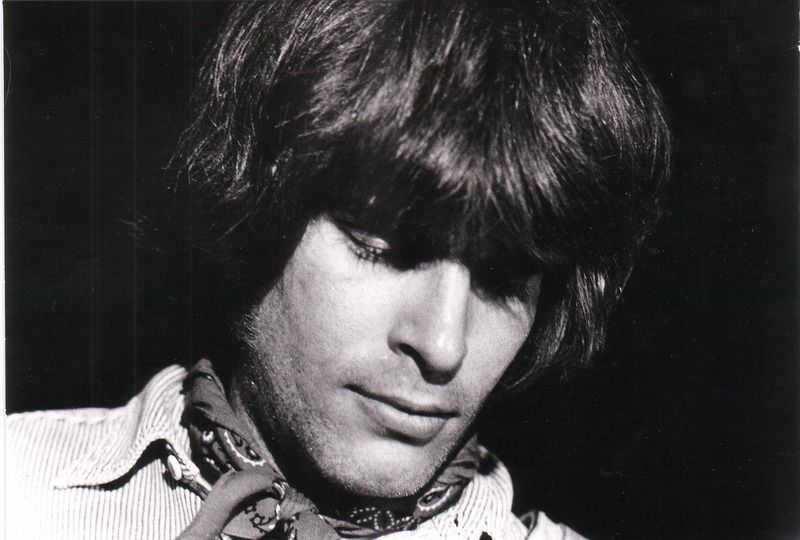
On his 1975 solo album, John Fogerty turned Lonely Teardrops into something both familiar and strangely solitary: a soul classic rebuilt by one man, instrument by instrument.
John Fogerty included his cover of Jackie Wilson’s Lonely Teardrops on his 1975 self-titled solo album, John Fogerty, released by Asylum Records during the difficult early stretch of his post-Creedence Clearwater Revival life. The detail that gives this version its unusual gravity is not just the choice of song, but the way Fogerty made it: he famously played the instruments himself, turning what could have been a straightforward R&B tribute into a private act of reconstruction. For a song born from a big, soaring soul tradition, Fogerty’s version carries the curious tension of a band sound made without a band.
The original Lonely Teardrops, released by Jackie Wilson in 1958, was written by Berry Gordy Jr., Gwen Gordy, and Roquel Davis. It became one of Wilson’s defining hits, reaching across R&B and pop audiences with a force that helped signal where Detroit soul was headed before Motown became a cultural empire. Wilson sang it with astonishing lift: part pleading lover, part gospel-charged showman, part dancer in midair. The title suggested sorrow, but the record moved with buoyancy, turning romantic desperation into rhythmic release. That contradiction was the heart of the song. It cried and it jumped at the same time.
Fogerty, of course, came from a different but deeply related musical world. Creedence Clearwater Revival had made its name by filtering blues, country, rockabilly, swamp rhythm, gospel feeling, and early rock and roll through a sharp, unmistakable American voice. Fogerty did not approach roots music like a museum piece. He absorbed it, tightened it, roughed it up, and sent it back out with a backbeat. By 1975, however, the communal thunder of CCR was gone. The name on the album cover was his alone. The performances were largely his alone. In that setting, Lonely Teardrops becomes more than a cover. It sounds like an artist testing how much noise, memory, and emotional pressure he could generate from inside his own orbit.
That one-man quality matters because the song itself is built on need. In Wilson’s hands, the need reaches outward; it feels like a plea thrown into a crowded room, meant to be answered by horns, voices, dancers, and applause. In Fogerty’s hands, the plea is more compressed. His vocal grain is not Wilson’s smooth athletic glide. Fogerty sings from the throat and the chest, with that weathered edge that made so many Creedence records feel as if they had been hauled out of rain, dust, river water, and gasoline. He does not try to become Jackie Wilson, which is why the cover holds interest. He lets the song pass through his own limitations and strengths, and in doing so, he changes its emotional temperature.
The arrangement also reveals the strange intimacy of the 1975 album. Because Fogerty was handling the parts himself, the track has the character of a craftsman moving around a studio, adding pulse, color, and push until the room begins to answer him. There is a particular fascination in hearing a performer associated with some of the tightest band records of the late 1960s build a performance piece by piece without the natural friction of other musicians. That can make the music feel controlled, even enclosed, but it also gives it a personal charge. The cover is not trying to outshine the 1958 original. It is trying to survive beside it, in another voice and another season.
The self-titled John Fogerty album is often remembered for songs such as Rockin’ All Over the World and Almost Saturday Night, both of which showed how durable Fogerty’s sense of rock and roll motion remained after CCR. But Lonely Teardrops opens a different window into that period. It shows Fogerty reaching backward, not to escape the present, but to reconnect with a language older than his own fame. Covering Jackie Wilson was not an attempt to decorate the album with nostalgia. It placed Fogerty in conversation with one of the voices that helped shape the emotional vocabulary of rock and soul long before genre lines hardened into radio categories.
What lingers is the contrast. Lonely Teardrops was made famous by a singer whose brilliance filled the room with upward motion. Fogerty’s 1975 cover comes from a man newly separated from the band that had defined him for millions of listeners, working with his own hands, chasing the sound until it felt alive enough to release. The sadness in the title, the bounce in the rhythm, and the solitude of the recording all meet in one place. It is not the definitive version of the song, and it does not need to be. Its value lies in hearing a rock and roll survivor take a soul standard apart, rebuild it alone, and leave enough rough edges showing for the loneliness to feel earned.
