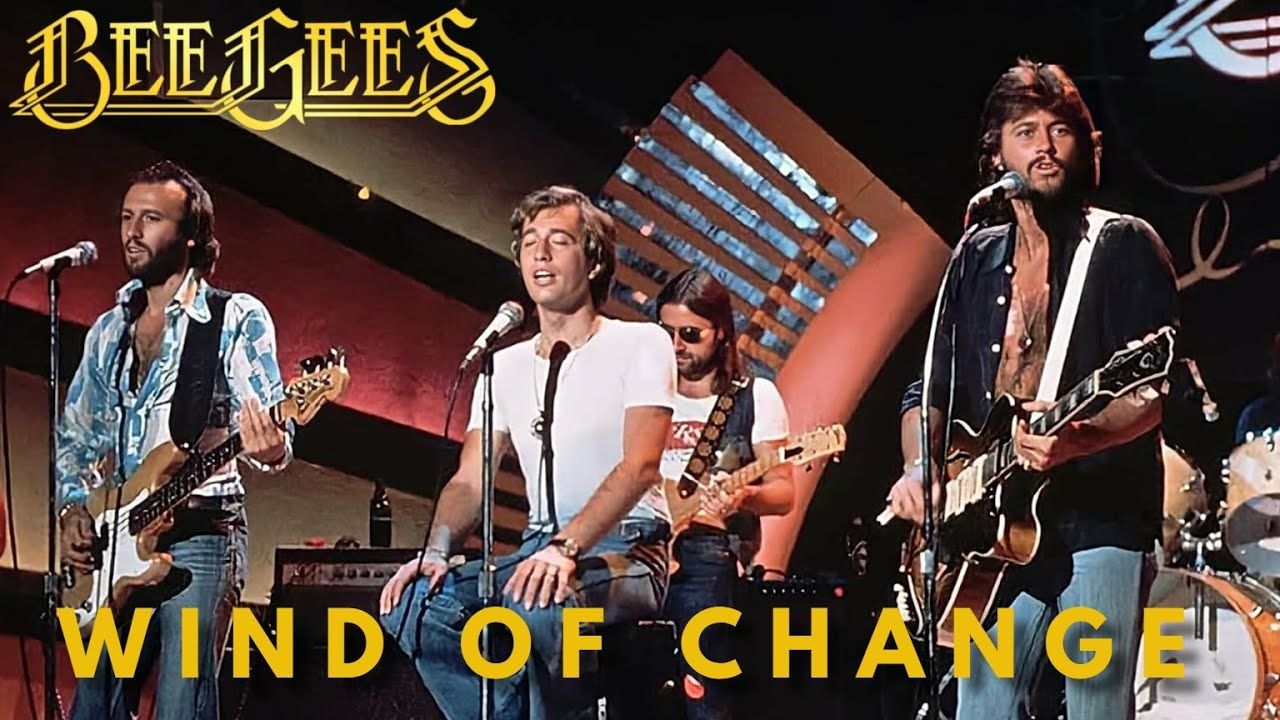
On “Soldiers”, the Bee Gees let the disco glare fall away and tested how their harmonies could survive inside a cooler, more deliberate 1981 sound.
“Soldiers” appears on Living Eyes, the 1981 Bee Gees album that arrived after the overwhelming commercial shadow of Saturday Night Fever and Spirits Having Flown. By that point, Barry, Robin, and Maurice Gibb were not simply following the next pop fashion. They were trying to move. The world had spent several years hearing their falsettos pour out of dance floors, radios, movie screens, and television specials, until the Bee Gees became almost too closely identified with one cultural moment. Living Eyes was not a denial of that success, but it did feel like a careful step away from it. In that setting, “Soldiers” matters because it shows the brothers reshaping their sound without abandoning the emotional architecture that had always made their music recognizable.
Released in 1981, Living Eyes came during a complicated period for the group. Disco had become a word many listeners and critics were eager to reject, even when the musicians involved had roots far deeper than the dance boom. The Bee Gees had been song craftsmen long before the white suits and nightclub pulse became shorthand for their name. They had written baroque pop, folk-leaning ballads, dramatic late-sixties singles, country-colored laments, and sleek R&B-inflected records. Yet after the late seventies, reinvention was not optional. It was a question of artistic survival.
“Soldiers” sits inside that question with a restrained kind of confidence. Rather than reaching for the full disco lift that had defined their most famous late-seventies recordings, the track leans into a more measured studio atmosphere. Its synth accents do not dominate the song like a novelty device; they frame it. They give the record a crisp early-eighties surface, a sense of glass and voltage around voices that still belong unmistakably to the Gibb brothers. The result is not a sharp break from the past so much as a change in lighting. The harmonies are still there, but they feel placed in a different room.
That difference is important. On “Soldiers”, the title itself suggests endurance, discipline, and the emotional cost of pushing forward. The song does not need to be heard as a grand statement to feel revealing. Its significance lies in the way the Bee Gees sound alert to the moment around them. The rhythm is less about communal release than internal movement. The electronic colors hint at a decade that was beginning to favor polish, precision, and new studio textures. Against that surface, the brothers’ voices carry something older: melody as memory, harmony as family language, pop craftsmanship as instinct.
The Living Eyes album was produced by the Bee Gees with their longtime collaborators Albhy Galuten and Karl Richardson, part of the creative circle that had helped shape their late-seventies sound. But the album did not simply repeat that formula. It moved toward adult pop, soft rock, and the emerging sheen of the new decade. In some places, it sounds as if the group is deliberately lowering the temperature, letting the arrangements breathe differently, choosing reflection over spectacle. “Soldiers” belongs to that evolution. It is a track that rewards attention not because it overwhelms, but because it marks a band thinking carefully about how to continue after becoming a symbol of something larger than themselves.
There is a particular tension in hearing the Bee Gees during this era. Their gifts were never gone, but the public conversation around them had shifted. A group that had once been praised for melodic sophistication could suddenly be treated as the emblem of an exhausted trend. That makes “Soldiers” feel more human in hindsight. It is not the sound of artists chasing applause with the easiest familiar move. It is the sound of musicians adjusting their weight, listening to the room, and trying to find a way forward without cutting themselves loose from their own history.
The synth touches now feel like more than period detail. They reveal how the Bee Gees were beginning to negotiate the early eighties, not by pretending to be a new band, but by letting their songwriting pass through a changed atmosphere. The emotional core still depends on the things they understood best: a melodic line that can carry unease, a chorus shaped by voices that seem to answer one another before the listener has fully understood the question, and a sense that pop music can be elegant without losing its ache.
Heard today, “Soldiers” is a reminder that musical evolution is not always loud. Sometimes it happens in the arrangement, in the choice of restraint, in the refusal to repeat a world-conquering sound simply because everyone remembers it. On Living Eyes, the Bee Gees were standing just beyond the disco spotlight, still visible, still vulnerable, still building songs with the careful hands of writers who knew that survival in music often means learning how to sound like yourself in a room that has changed.
