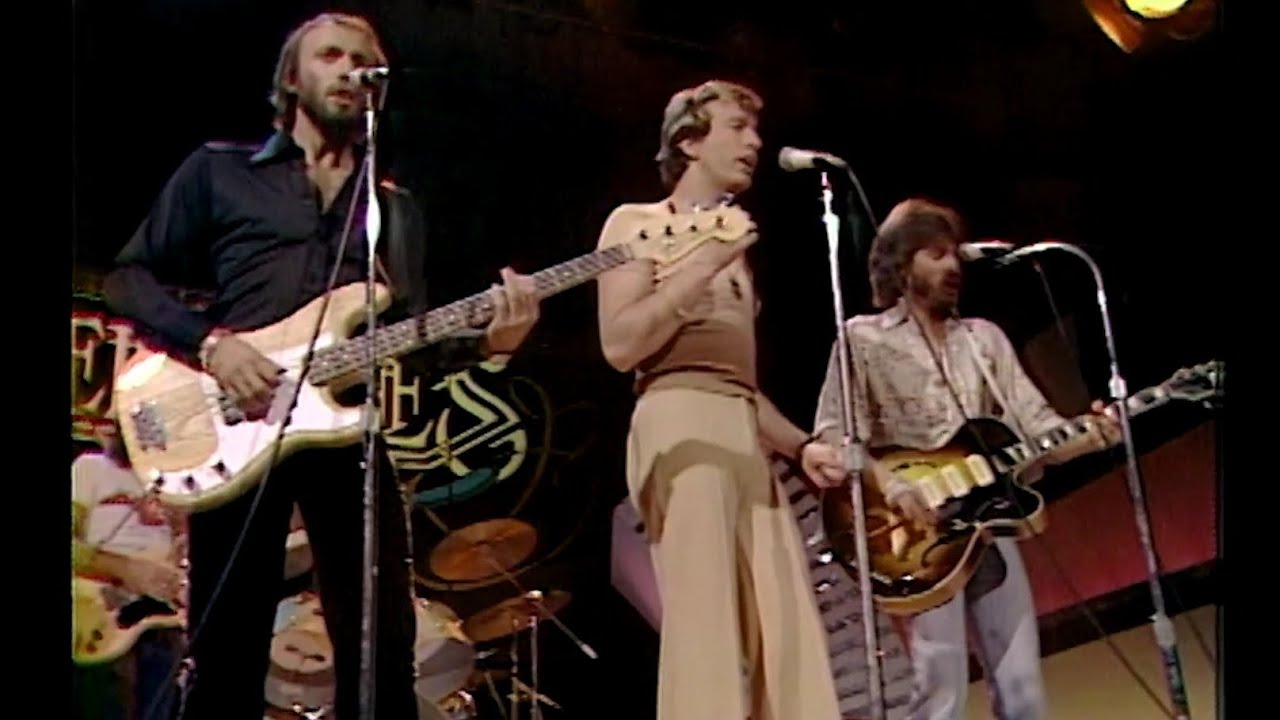
Before the chart hit carried a condemned man’s final plea, Bee Gees placed a lighter, acoustic spark on the other side of the single: Kitty Can, a small song with its own quiet charm.
In 1968, Bee Gees were moving through one of the most fascinating stretches of their early career. The group’s album Idea arrived that year, carrying the ornate melancholy, close harmonies, and melodramatic pop instincts that had made Barry, Robin, and Maurice Gibb such a distinctive force in the late 1960s. Among its better-known shadows stood I’ve Gotta Get a Message to You, a dramatic single sung from the perspective of a man facing execution and desperate to send one last word to someone he loves. It became one of the group’s major hits of the era, reaching No. 1 in the UK and crossing into the American Top 10.
But on the other side of that single sat Kitty Can, a very different doorway into the same creative moment. As the B-side to I’ve Gotta Get a Message to You, it did not carry the same public weight or chart identity, yet that is exactly what makes it worth hearing with fresh attention. B-sides, especially in the age of the 45 rpm single, often revealed a less formal version of an artist: not necessarily unfinished, not necessarily lesser, but freer from the burden of representing the whole campaign. They could be playful, odd, graceful, intimate, or simply allowed to breathe. Kitty Can belongs to that kind of listening.
The contrast between the two sides is striking. The A-side is urgent and theatrical, built around a life-or-death message and the rising pressure of a final confession. Kitty Can, by comparison, moves with a breezier touch. Its acoustic-driven feel gives it a lighter body, a sense of movement that does not ask to be monumental. It is not trying to stare down fate. It is not arranged to sound like a verdict. Instead, it has the nimble quality of a song that slips into the room, smiles briefly, and leaves a melody behind before anyone has made too much ceremony of it.
That modesty is part of its appeal. The Bee Gees of the Idea period were often drawn to big emotional shapes: doomed lovers, strange narrators, loneliness dressed in formal pop clothing, harmonies that could make even a simple phrase feel suspended in air. Yet they were also capable of quick, tuneful pieces that showed how deeply melody ran through the brothers’ writing. Kitty Can does not need the grand architecture of their most famous ballads. It works because it catches the group in a more relaxed register, letting the acoustic pulse and vocal blend suggest brightness without flattening the song into mere cheerfulness.
There is also something very 1968 about the way the track sits between polish and informality. Pop records of that moment could still feel like crafted objects, with concise structures and clear hooks, but they were also expanding in color, texture, and personality. Idea itself reflected a band willing to combine chamber-pop drama, folk-leaning softness, and the slightly surreal emotional atmosphere that marked much of the Bee Gees’ pre-disco catalog. Within that frame, Kitty Can feels like a smaller panel in the painting: not the image reproduced on the poster, perhaps, but one that helps the full picture make sense.
Listening to it as a B-side also changes the emotional temperature. If someone bought the single for I’ve Gotta Get a Message to You, they were buying a song of pleading intensity. Turning the record over would have been an act of discovery, almost a private reward. The needle drops, and instead of the gallows, there is motion; instead of the last phone call, there is a song with air around it. That flip from anguish to lightness is not a contradiction so much as a reminder of how wide the Bee Gees’ early palette already was.
In the long story of the group, Kitty Can will never carry the same public recognition as the hits that framed the late 1960s for them. It was not built for that role. Its importance lies in a subtler place: the space where fans learn that a catalog is more than its famous titles, and that sometimes the overlooked side of a single preserves a band’s personality with unusual clarity. It shows the Gibbs not as mythic figures or chart fixtures, but as working songwriters with more melodies than a single A-side could hold.
That is the lasting pleasure of Kitty Can. It asks for no grand announcement. It simply belongs to the moment when the Bee Gees were still young, ambitious, melodic, and restless, placing a breezy acoustic song behind one of their darkest early hits. To hear it now is to remember the old ritual of turning a record over and finding, not an afterthought, but another small room inside the same house.
