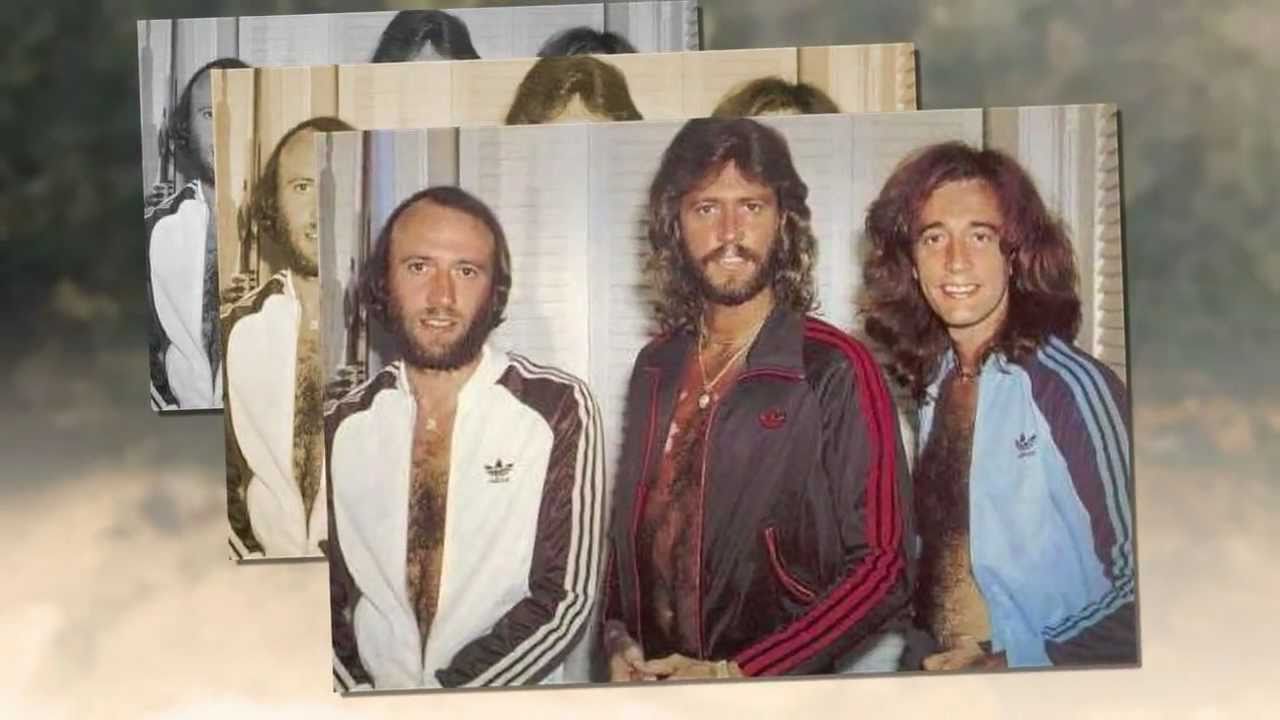
Too Much Heaven was more than one of the Bee Gees’ most beautiful ballads; at the 1979 Music for UNICEF Concert, it became a song of compassion, purpose, and shared human feeling.
There are songs that arrive as hits, and there are songs that seem to arrive with a soul already inside them. “Too Much Heaven” by the Bee Gees belongs to that second category. By the time it was sung at the Music for UNICEF Concert in January 1979, it was no longer just another exquisitely crafted ballad from the trio who had dominated the late 1970s. It had taken on a deeper meaning, because Barry, Robin, and Maurice Gibb pledged the song’s publishing royalties to UNICEF, transforming a tender love song into a public act of generosity. That decision gave the performance a moral weight that still feels moving decades later.
The timing matters. The Music for UNICEF Concert, formally known as A Gift of Song: The Music for UNICEF Concert, was held on January 9, 1979, at the United Nations General Assembly in New York. It brought together some of the biggest artists in the world for a global charitable cause tied to the International Year of the Child. This was not simply another television special or celebrity gathering. It was meant to harness the reach of popular music for children in need around the world. In that setting, “Too Much Heaven” found a meaning beyond romance. Its softness suddenly carried a sense of responsibility.
That alone would have been memorable, but the song was also a commercial milestone. Released as a single in late 1978 from the album Spirits Having Flown, “Too Much Heaven” climbed to No. 1 on the Billboard Hot 100 in January 1979, becoming the Bee Gees’ fourth consecutive U.S. chart-topper. In the UK Singles Chart, it reached No. 3. It also topped the adult contemporary chart in the United States, which says a great deal about the song’s wide emotional reach. It was not a ballad carried by fashion alone. It was embraced because it sounded intimate, patient, and sincere at a time when the group could easily have chosen only to repeat the disco thunder of their biggest successes.
And that is part of what makes the story so affecting. The Bee Gees were coming off an extraordinary run linked to Saturday Night Fever, where their music had become practically synonymous with the era itself. They could fill dance floors with ease. Yet “Too Much Heaven” moved in the opposite direction. It floated instead of pulsed. It whispered where other hits demanded attention. Built around falsetto harmonies, gentle rhythm, and a melody that seems to drift upward like a prayer, the song revealed another side of the group’s artistry: restraint, tenderness, and emotional precision.
Musically, it is one of their most elegant recordings. Barry Gibb’s lead vocal carries a silken ache, while the harmonies from Robin and Maurice create that unmistakable Bee Gees blend—fragile on the surface, perfectly controlled underneath. The arrangement never hurries. It allows the feeling to gather slowly. Even the title, “Too Much Heaven”, suggests not excess in the usual pop sense, but an overwhelming closeness, as if joy itself might be almost too much to bear. In another context, that might have remained the whole story. At the UNICEF concert, however, those words seemed to expand. The song began to feel less like private devotion and more like a gentle statement that love must reach beyond the self.
The royalty donation is the detail that changes everything. Popular music history is full of charity performances, but not every song becomes permanently tied to a charitable act in the way this one did. By donating the publishing royalties from “Too Much Heaven” to UNICEF, the Bee Gees gave the song a lasting afterlife. The gesture was practical, not symbolic alone. It meant the success of the record would directly support children around the world. That is why the performance at the 1979 concert still resonates. It was not merely artists lending their fame to a cause for one evening; it was a moment when a hit record was deliberately attached to something larger than chart success.
There is also something deeply poignant in the contrast. The song itself is delicate, almost feather-light, and yet the cause behind it was enormous. That tension gives the performance its power. The Bee Gees did not need to rewrite the song to fit the event. They sang it as it was, and somehow that made it more moving. Its beauty was not interrupted by the charity message; it was illuminated by it. The performance suggested that tenderness is not small, and that softness can carry real consequence.
For listeners who return to “Too Much Heaven” now, it often feels richer than memory first allows. Yes, it is one of the finest ballads in the Bee Gees catalog. Yes, it stands as a key track from Spirits Having Flown, the album that proved the group’s artistic range extended far beyond the disco label so often placed upon them. But it is also a reminder of a rare moment when global fame, songwriting craft, and public conscience met in the same place. That is not nostalgia speaking. That is history.
In the end, the legacy of “Too Much Heaven” is inseparable from that January 1979 night. The song topped charts, filled radios, and confirmed the Bee Gees as master craftsmen of modern pop. Yet its deepest echo may come from the fact that it was offered to the world with open hands. What began as a ballad became a gift. And because of the Music for UNICEF Concert, it still sounds not only beautiful, but meaningful.
